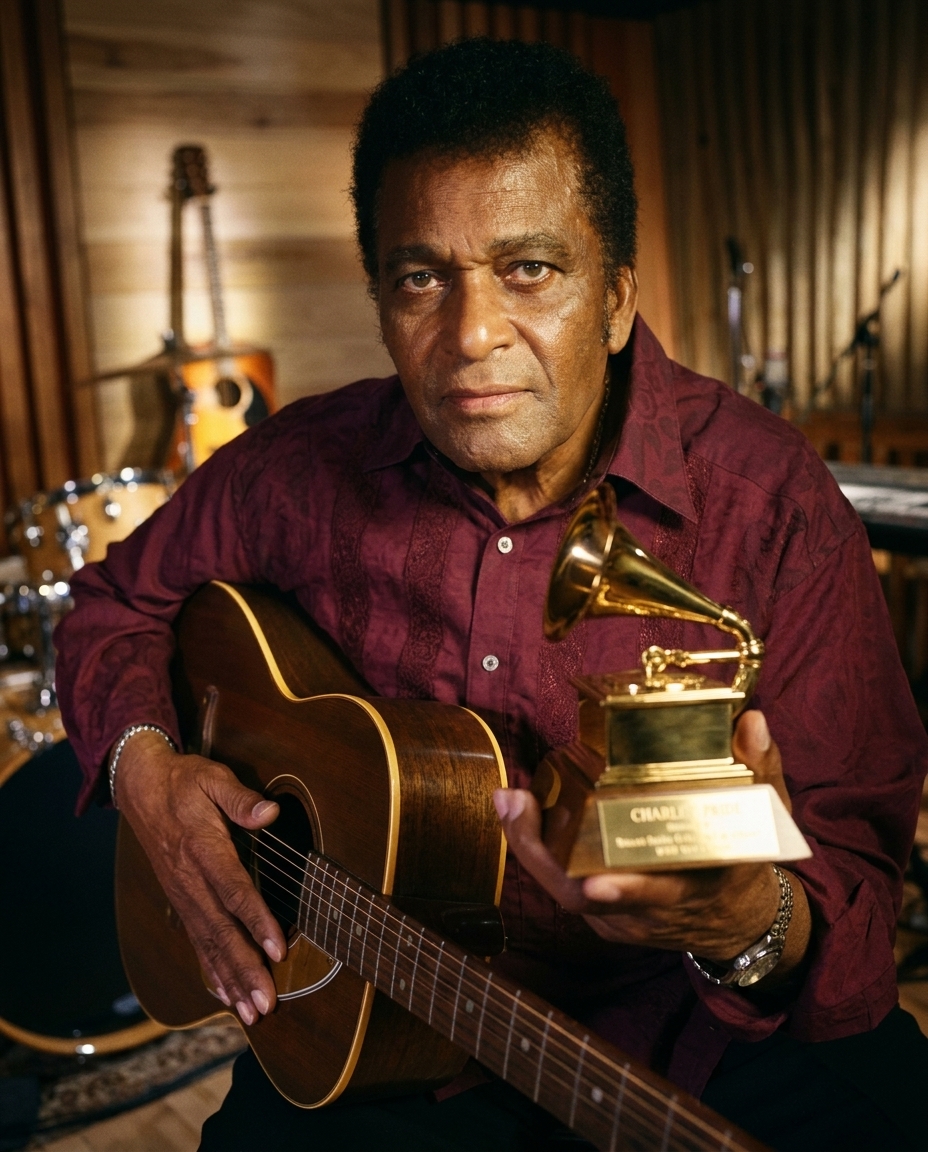
The Song That Introduced Charley Pride Before America Knew His Face
Most people remember Charley Pride for the bright confidence of Kiss an Angel Good Mornin’. Others think first of Is Anybody Goin’ to San Antone, the kind of song that could light up a jukebox in any town. Those hits made Charley Pride a star. But they were not the first chapter of his story.
If there was one song that truly changed everything, it was a quieter beginning. A record that arrived before fame, before awards, before packed arenas. A song released at a time when country music was not ready to face what it was hearing.
America in 1965 Was Divided
The mid-1960s were years of open tension and painful resistance. Civil rights marches filled the news. Segregation still shaped daily life across much of the country. Nashville, though known for music and hospitality, was hardly untouched by those realities.
Inside the music business, country radio had a familiar image of who belonged. Executives knew how artists were marketed. Fans knew what they expected to see. Into that world came a voice so rich and steady that it stopped people in their tracks.
Chet Atkins, one of the most respected men in the business, heard something special in Charley Pride. The voice was warm, honest, and unmistakably country. But Atkins also understood the obstacle standing in the room before anyone said it out loud.
A Demo Tape With No Face Attached
When Chet Atkins carried Charley Pride’s demo tape to Los Angeles, he did something telling. He brought the music, but not the image. No photo. No biography. No warning.
RCA executives listened and loved what they heard. They signed Charley Pride on the strength of the sound alone. Only after the decision was made did they learn the singer was Black.
That moment says much about the era. If they had seen Charley Pride first, the conversation might have gone differently. But they heard the truth before they saw anything else.
The First Single That Spoke Louder Than Charts
In 1966, RCA released Charley Pride’s first single, (The Snakes Crawl at Night). The song was co-written by Mel Tillis and produced by Cowboy Jack Clement. It carried a traditional country feel, filled with storytelling and the steady emotional pull listeners expected from the genre.
Yet when the record was promoted, one detail stood out. There was no publicity photo. Many disc jockeys played the single for months without knowing who the singer was.
They simply heard a country voice.
The song did not become a major hit. It did something more important. It proved that Charley Pride belonged on the radio because of talent, not because of image, trend, or controversy.
Sometimes the most important records are not the ones that top the charts. They are the ones that change what people believe is possible.
From a Mississippi Farm to the Grand Ole Opry
Charley Pride was the son of sharecroppers from Sledge, Mississippi. His path to Nashville was not easy or expected. But once the door cracked open, he kept pushing forward with grace and determination.
By 1967, Charley Pride stood on the stage of the Grand Ole Opry. For many in the audience, it was a shocking moment. Some had never imagined seeing a Black country singer in that setting. Then Charley Pride began to sing.
The room changed quickly. Surprise gave way to applause. Applause became admiration. By the end, the crowd rose to its feet.
The Song That Defined the Fight
Kiss an Angel Good Mornin’ made Charley Pride a household name. But (The Snakes Crawl at Night) may be the song that best defines what he overcame.
It arrived in an industry afraid to show his face. It asked listeners to judge only the music. And when they did, they heard exactly what country music was supposed to sound like: heart, story, truth, and soul.
Some songs entertain. Some songs become hits. And some songs quietly break down walls that everyone else pretended were permanent.
Charley Pride’s first single did exactly that.