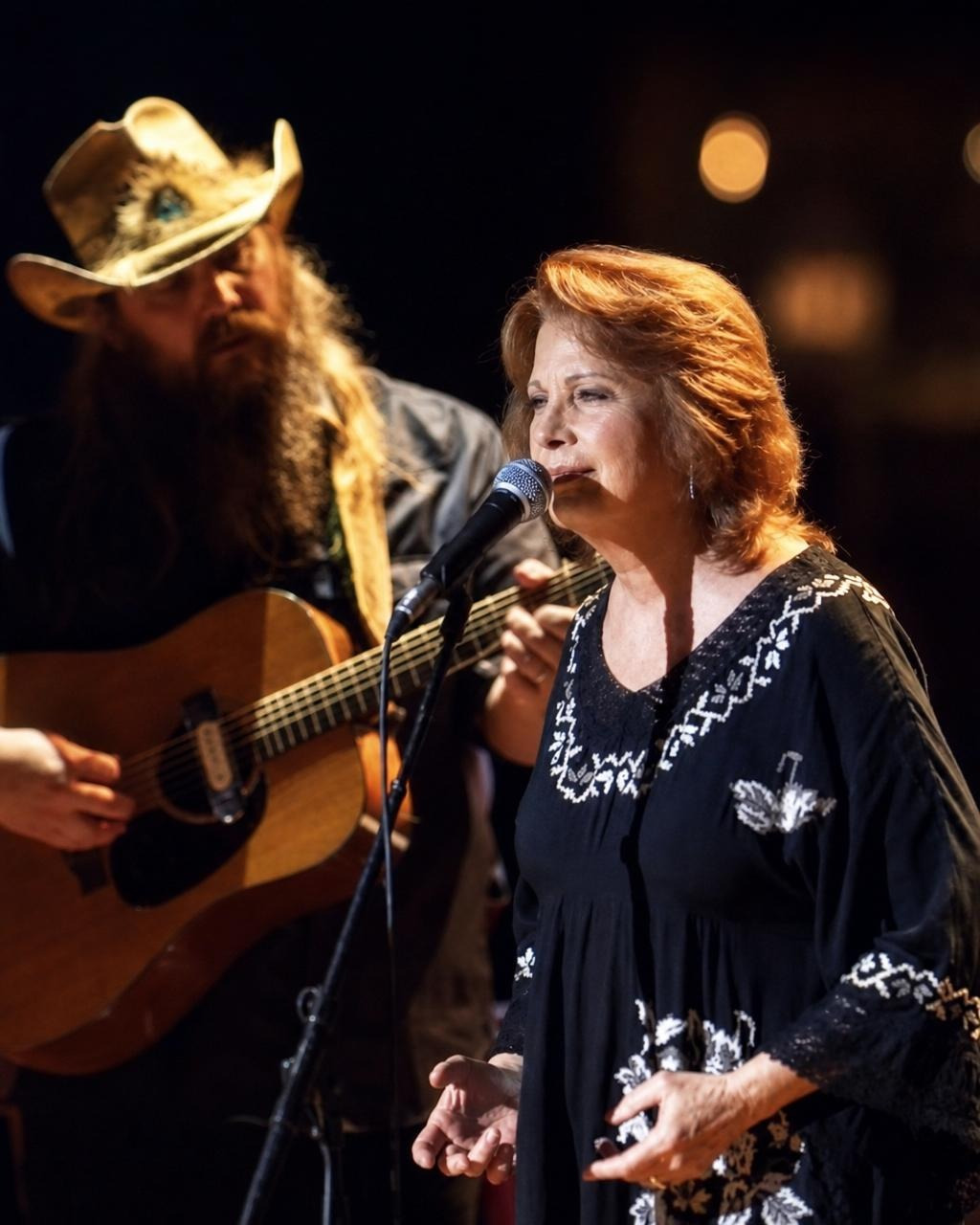
Chris Stapleton Stood Beside Patty Loveless, and the Song Still Belonged to Her Father
When Patty Loveless first tried to record “You’ll Never Leave Harlan Alive” in 2001, the song did not come easily. The words were heavy, and the story inside them felt bigger than a performance. It was a song about coal country, hardship, and the kind of family history that never fully leaves a person behind.
At the center of that struggle was a simple, powerful gesture. Patty Loveless’ husband and producer, Emory Gordy Jr., placed a photograph on the music stand. It was a picture of Patty Loveless’ father, John Ramey, a Kentucky coal miner whose life carried the weight of the mine and whose health eventually paid the price for that work.
“Sing it to your father,” Emory Gordy Jr. told Patty Loveless.
That changed everything. Patty Loveless did not just sing the song after that. Patty Loveless lived inside it. The grief, pride, and memory in the lyrics took on a new shape, not as a performance, but as a daughter speaking to the past.
A Song That Refused to Stay in the Studio
“You’ll Never Leave Harlan Alive” is the kind of song that seems to travel with the people who hear it. Written by Darrell Scott, it captures the hard truth of life in the mountains, where families often inherit both strength and sorrow. Patty Loveless carried that story with a voice that made every line feel personal.
More than twenty years later, the song found new life on the CMA Awards stage. This time, Patty Loveless stood beside Chris Stapleton, while Darrell Scott played dobro and Morgane Stapleton added harmony. Chris Stapleton had the kind of voice that could fill an arena, but on that night, he chose restraint. He did not try to overpower the moment. He helped hold it steady.
What Made the Performance So Powerful
For six quiet minutes, the bright energy of an awards show faded away. The stage became something older and more intimate: a memory of the mines, a mountain song, a daughter singing toward her father’s photograph. Patty Loveless did not perform as a star revisiting a classic. Patty Loveless sang as someone returning to the place where the song had first taken root.
Chris Stapleton’s role mattered because it was so respectful. Chris Stapleton stood beside Patty Loveless, not in front of her. That choice gave the performance its deepest power. It reminded the audience that country music is often strongest when it honors the people and places that shaped it.
Why the Moment Stuck With Fans
The performance resonated because it felt honest. There was no rush to impress, no need for spectacle. Instead, the room was filled with memory, loss, and gratitude. Patty Loveless brought the song back to the father who inspired it, and Chris Stapleton helped make room for that return.
In that sense, Chris Stapleton did more than accompany Patty Loveless. Chris Stapleton helped country music remember where songs come from: from working families, from hard years, from the quiet love passed down through generations.
Patty Loveless did not just sing a classic that night. Patty Loveless sang a family story. And because Chris Stapleton stood beside Patty Loveless with care, that story reached the room exactly as it was meant to: clear, sorrowful, and alive.