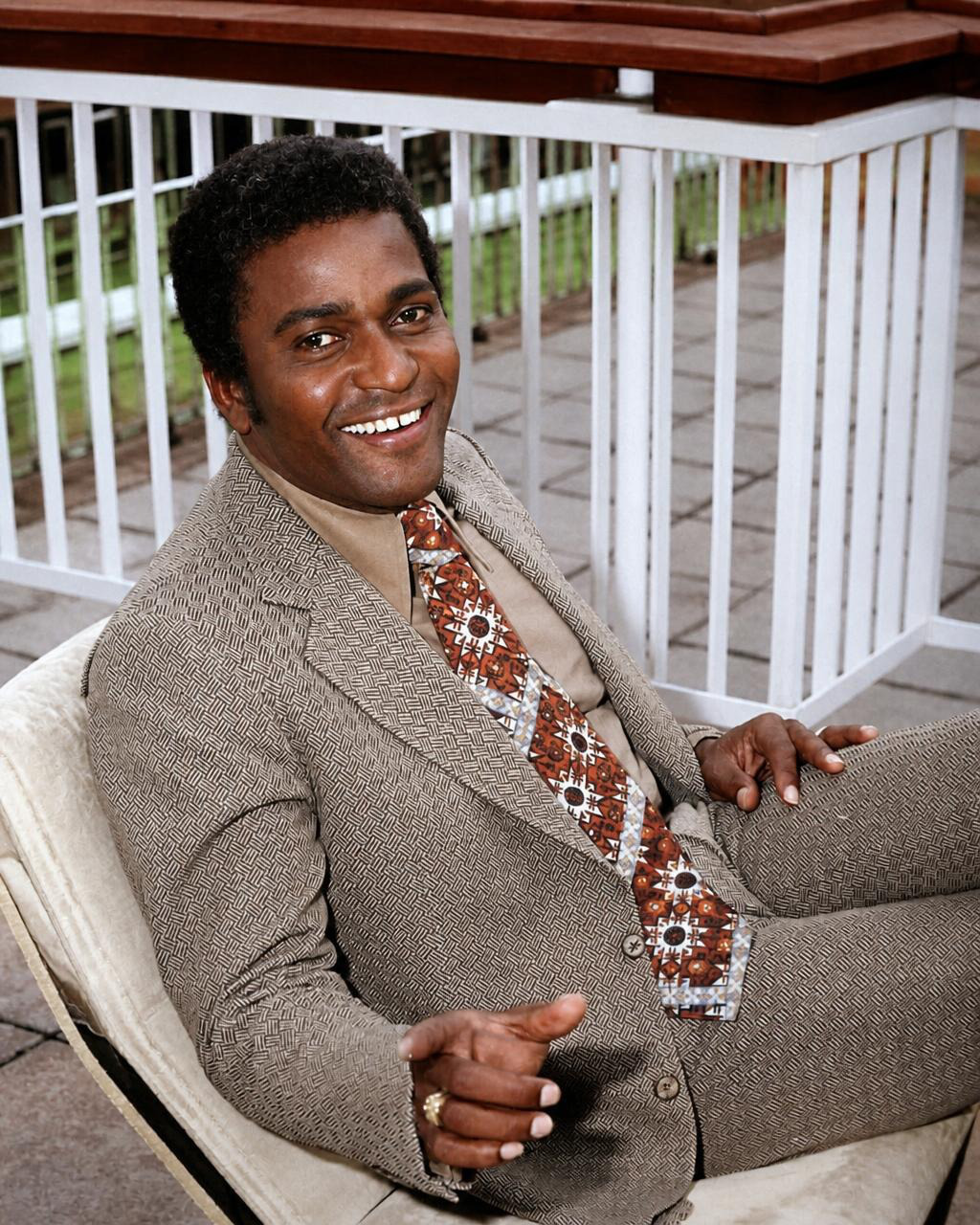
At 35, Charley Pride Reached No. 1 for the First Time — Then Returned 28 More Times
In July 1969, Charley Pride stood at a turning point that felt bigger than a chart position. His song, “All I Have to Offer You (Is Me)”, reached No. 1 on the country chart, and the milestone carried the weight of every step that came before it. By then, Charley Pride had already lived several lives. He had chased baseball, worked in a Montana smelter, and found his way into a Nashville music business that had made very little room for a Black country singer.
That first No. 1 did not arrive out of nowhere. It came after years of perseverance, after hard travel and hard-earned belief, and after audiences slowly began to realize that Charley Pride’s voice belonged on the radio as naturally as any other country voice of the era. His rise was not only about talent, though the talent was unmistakable. It was also about persistence in a world that had not always expected him to succeed.
Once listeners heard him, though, the reaction was clear. The voice was warm, steady, and deeply convincing. It carried heartbreak without forcing it, and joy without losing its edge. In the years that followed, the hits kept coming. “I’m So Afraid of Losing You Again,” “Is Anybody Goin’ to San Antone,” “Kiss an Angel Good Mornin’,” and many more would follow, each one strengthening the sense that Charley Pride had become a permanent part of country music. By the end of his chart run, he had earned 29 No. 1 country singles.
A Voice Country Music Could Not Ignore
Charley Pride’s success mattered because it happened in a place that had not been built for him. He did not simply place one song at the top and vanish. He kept returning, again and again, until his presence became impossible to treat as an exception. The first No. 1 proved Nashville could make room for him. The next 28 proved country music had needed him all along.
That impact was recognized by fellow artists who admired him openly. Garth Brooks said, “I absolutely worship him.” Tanya Tucker was just as direct, calling Charley Pride “one of the greatest singers of all time.” Those words reflect something larger than praise. They point to the respect Charley Pride earned across generations.
More Than a Chart Story
It is easy to tell this story as a simple run of hits, but Charley Pride’s journey was never that simple. He became a symbol of what happens when talent meets determination and when an audience is finally ready to listen more carefully. His career helped widen country music’s idea of who could stand at its center.
Charley Pride’s first No. 1 in July 1969 was a breakthrough. The 28 that followed became a legacy. Together, they told a lasting story: not that Charley Pride was an exception, but that country music was better because Charley Pride was in it.