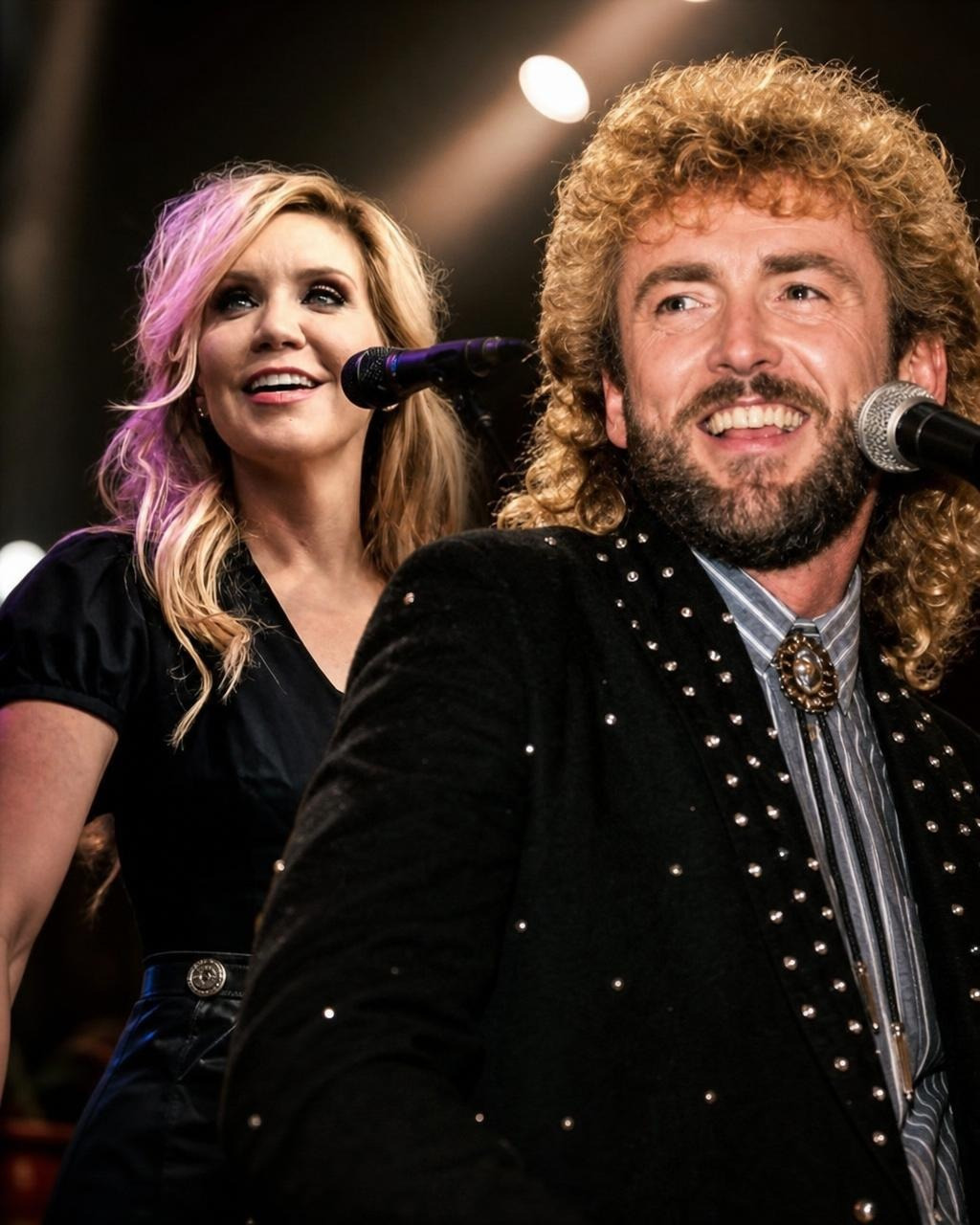
Alison Krauss Didn’t Try to Take Keith Whitley’s Song Away From Him. She Sang It Like She Was Leaving a Light On.
By the time Alison Krauss recorded “When You Say Nothing at All,” the song already carried a kind of memory with it. Keith Whitley had made it unforgettable first. His version was soft, fragile, and full of feeling that seemed to know time was running out. When he sang, it never felt like he was pushing the song forward. It felt like he was holding onto it for as long as he could.
After Keith Whitley’s death, the song did not disappear. It stayed behind like a room that still remembers the people who once filled it. That is part of why “When You Say Nothing at All” has always meant more than a simple love song. It feels like a conversation that continues even after the voice in it is gone.
Alison Krauss Met the Song With Quiet Respect
In 1994, Alison Krauss and Union Station recorded the song for a Keith Whitley tribute album. Alison Krauss was never the kind of artist who needed to overpower a melody to make it matter. Her strength was in restraint. She could step into a song gently and still leave a deep mark on it.
Her version of “When You Say Nothing at All” did not try to compete with Keith Whitley. It did something more tender. It listened. It kept the song alive without pretending the earlier version had not already done the hard emotional work.
There was no need for Alison Krauss to raise her voice. The emotion was already there, waiting in the silence.
Why Her Version Connected So Strongly
Alison Krauss sang the song with a clear, unforced calm. The performance had bluegrass stillness in it, but also something deeply human. It sounded like someone standing just outside a doorway, trying not to disturb the moment, yet saying everything that mattered anyway.
That is what made the recording stand out. Alison Krauss did not add drama to the song. She revealed what was already inside it. The silence became part of the melody. The spaces between the words began to carry their own weight.
Listeners responded quickly. Radio picked up the song, and it found a much wider audience than anyone may have expected. Alison Krauss’s version reached No. 3 on the country chart and won CMA Single of the Year in 1995. Still, the chart success only tells part of the story.
The Real Reason It Lasted
People remember the song because Alison Krauss understood its heart. Keith Whitley sang like a man offering love while standing close to loss. Alison Krauss sang like someone carefully keeping that love visible after the moment had passed.
That is why the song still feels special. It was never about replacing Keith Whitley. It was about honoring what he left behind. Alison Krauss did not take the song away from him. She sang it like she was leaving a light on, so the feeling would not vanish completely.
And that is the rare power of a truly great interpretation. It does not erase what came before. It gives it a longer life.