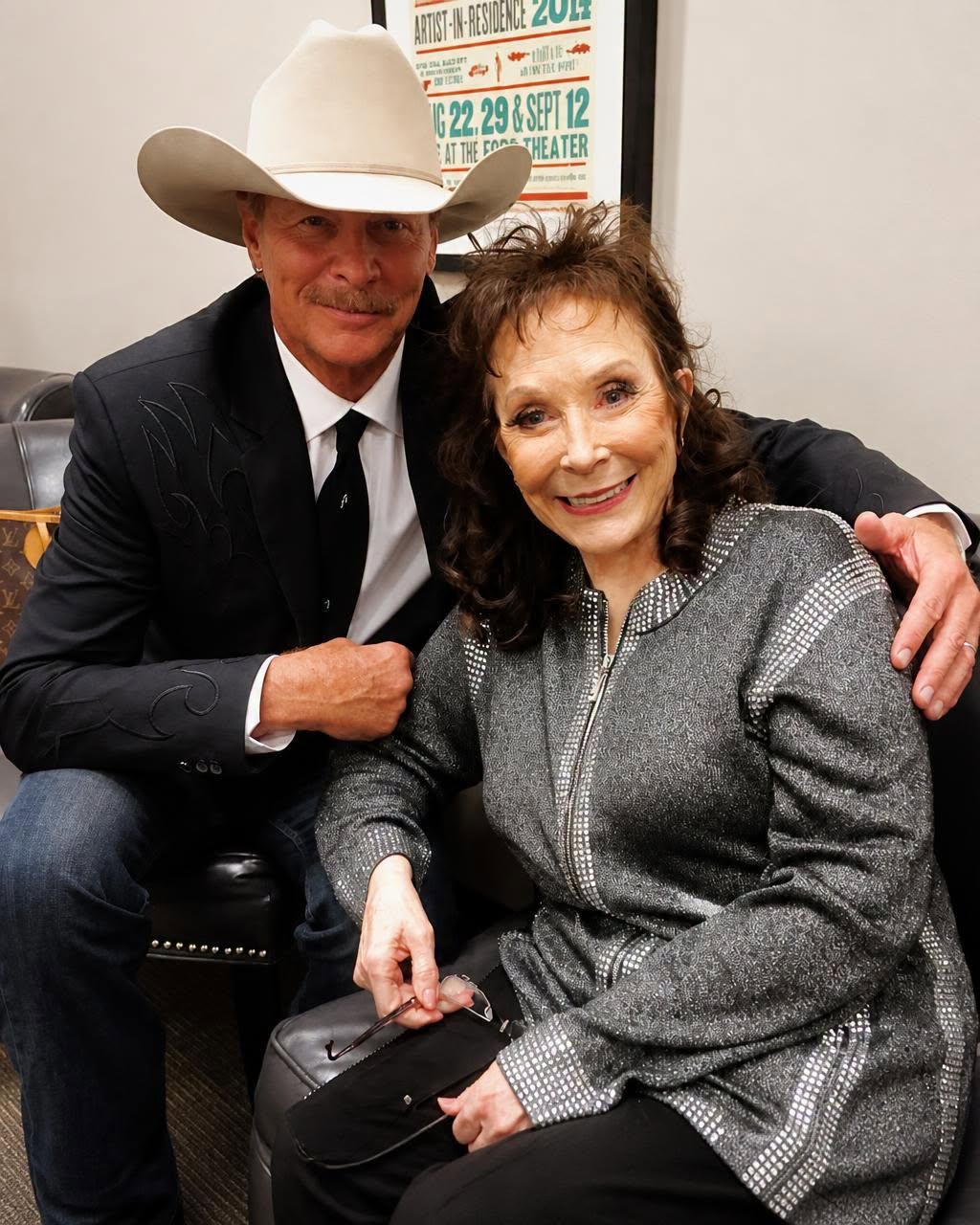
When Alan Jackson Honored Loretta Lynn Without Singing Her Songs
Twenty-six days after Loretta Lynn died, the Grand Ole Opry House felt like a room holding its breath. The tribute was not loud, not flashy, and not built around the biggest hits everyone expected. Instead, Alan Jackson chose something quieter and more personal: a song he had written for his own mother after she died.
Loretta Lynn died on October 4, 2022, at her home in Hurricane Mills, Tennessee, at the age of 90. Her family said she passed away peacefully in her sleep. For decades, she had done something rare in popular music: she wrote and sang about real life without softening it for comfort. Her songs told the truth about hard marriages, cheating husbands, poverty, motherhood, and the choices women made when they had almost no choices at all.
That honesty was part of her power. Loretta Lynn did not wait for permission to talk about private pain. She turned private pain into public music, and millions of listeners recognized themselves in it. At a time when some radio stations and gatekeepers wanted country music to stay polite and predictable, Loretta Lynn kept bringing life back into the room.
So when Alan Jackson stepped onto the Opry stage in late October 2022, he was not simply honoring a legend. He was answering her in the language she understood best: lived experience. He had asked Loretta Lynn’s family for permission to sing “Where Her Heart Has Always Been”, a song he had written for his own mother’s funeral. The choice carried weight because it came from the same place Loretta Lynn always sang from — memory, loss, and love that does not disappear just because a person is gone.
Some tributes are performed. Others are felt.
Alan Jackson did not need to imitate Loretta Lynn to honor her. He honored her by choosing a song rooted in family and grief, the kind of song that asks listeners to sit still and remember someone they loved. It was a fitting gesture for a singer who spent her life making room for the ordinary heartbreaks that shape people more than fame ever will.
Loretta Lynn’s legacy endures because she sang about the parts of life many people were told to hide. Alan Jackson’s tribute reminded everyone that the deepest honors are often the simplest ones. Twenty-six days after her death, the Opry stage became less a concert platform and more a place of farewell.
Which Loretta Lynn song still feels personal to you?