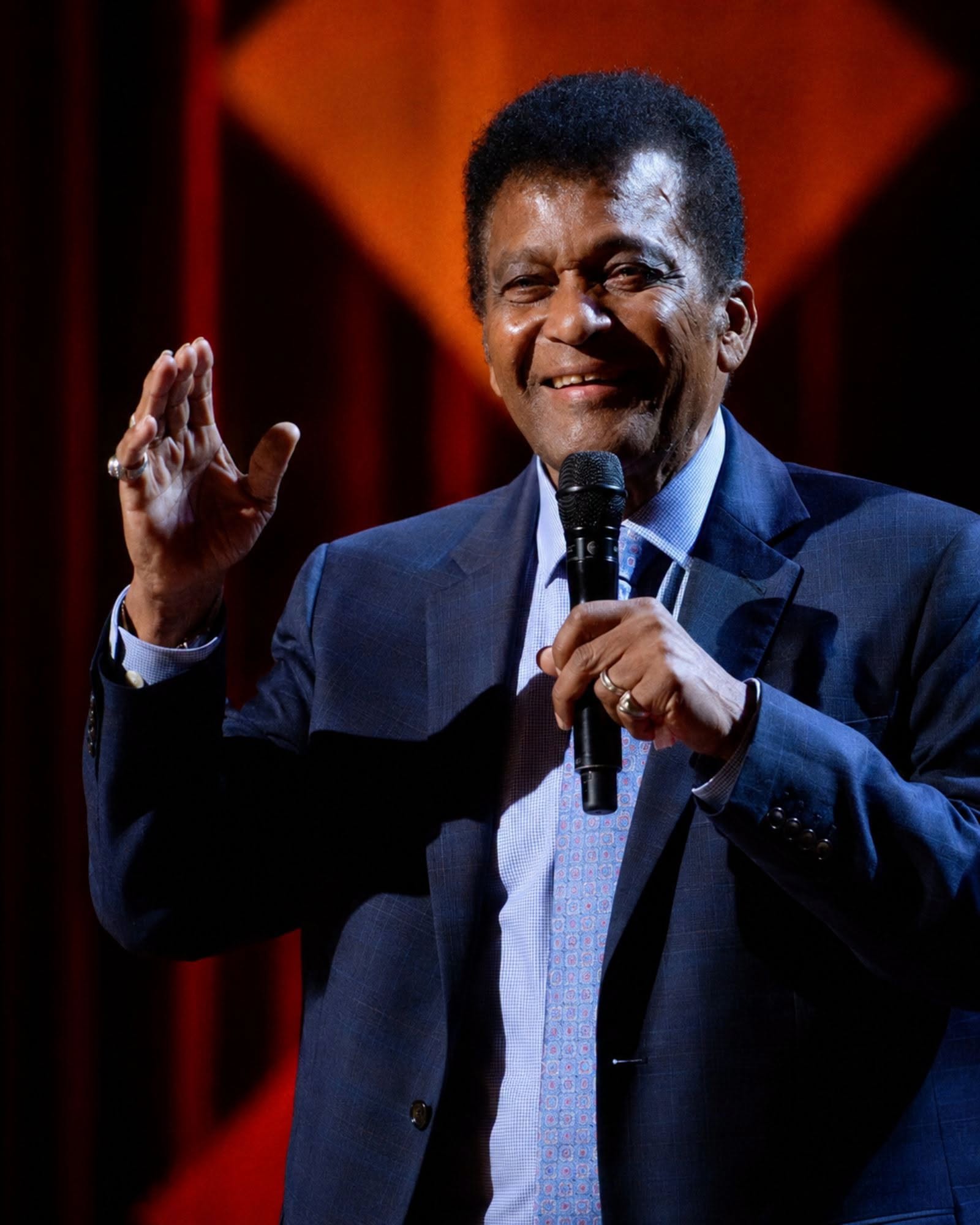
Charley Pride’s Last Big Night: The Voice That Carried Him All the Way Home
On November 11, 2020, in Nashville, Charley Pride stood beneath the lights of the CMA Awards and accepted the Willie Nelson Lifetime Achievement Award. He was 86, and for a few minutes, the room seemed to hold still around him. It was a night built to honor a career, but it also felt like something more intimate: a public thank-you to a man whose voice had outlived barriers, trends, and expectations.
Charley Pride was not supposed to become country music royalty in the eyes of a skeptical industry. He was born in Sledge, Mississippi, one of eleven children, the son of a sharecropper. He picked cotton as a boy. He learned early what hard work sounded like and what survival demanded. Later, he played baseball in the Negro American League and sang on the team bus between ballparks, carrying music the way others carried hope.
A voice first, then a face
When RCA released his first records in the 1960s, the music traveled before the image did. That mattered. In an era when prejudice could close doors before a listener even heard a note, Charley Pride’s voice opened them. The songs were warm, clear, and unmistakable. Fans responded, and the hits followed: more than fifty Top 10 songs, a run that turned him into one of country’s most enduring stars.
He did not become a legend by accident. He became one through consistency, grace, and a sound that felt both strong and deeply human. In time, he earned country music’s highest honors and became a symbol of what the genre could be when talent was allowed to speak for itself.
A final stage already waiting
What made that November night especially poignant is that Charley Pride was not there to say goodbye. He already had another date on the calendar: February, in Nashville, for Volunteer Jam. The future still had a place for him. He still had a show booked. He was still moving forward.
But the weeks that followed changed everything. After the CMA Awards, Charley Pride later tested negative multiple times, according to the CMA’s statement. Then, in late November, his condition worsened and he was hospitalized. On December 12, 2020, he died in Dallas at age 86.
He had spent a lifetime proving that a voice could carry farther than doubt.
What remains
Charley Pride’s story is about music, but it is also about arrival. A sharecropper’s son who once sang between ballgames ended up on national television, in front of millions, receiving one of the industry’s greatest honors. The contrast is impossible to ignore. They once hid his photograph. In the end, they celebrated his face, his name, and the unmistakable sound that made him unforgettable.
He never made it to that February show. But the calendar mattered less than the memory. Charley Pride left behind a body of work that still feels alive, and a final public appearance that now reads like a closing chapter written in bright stage lights.