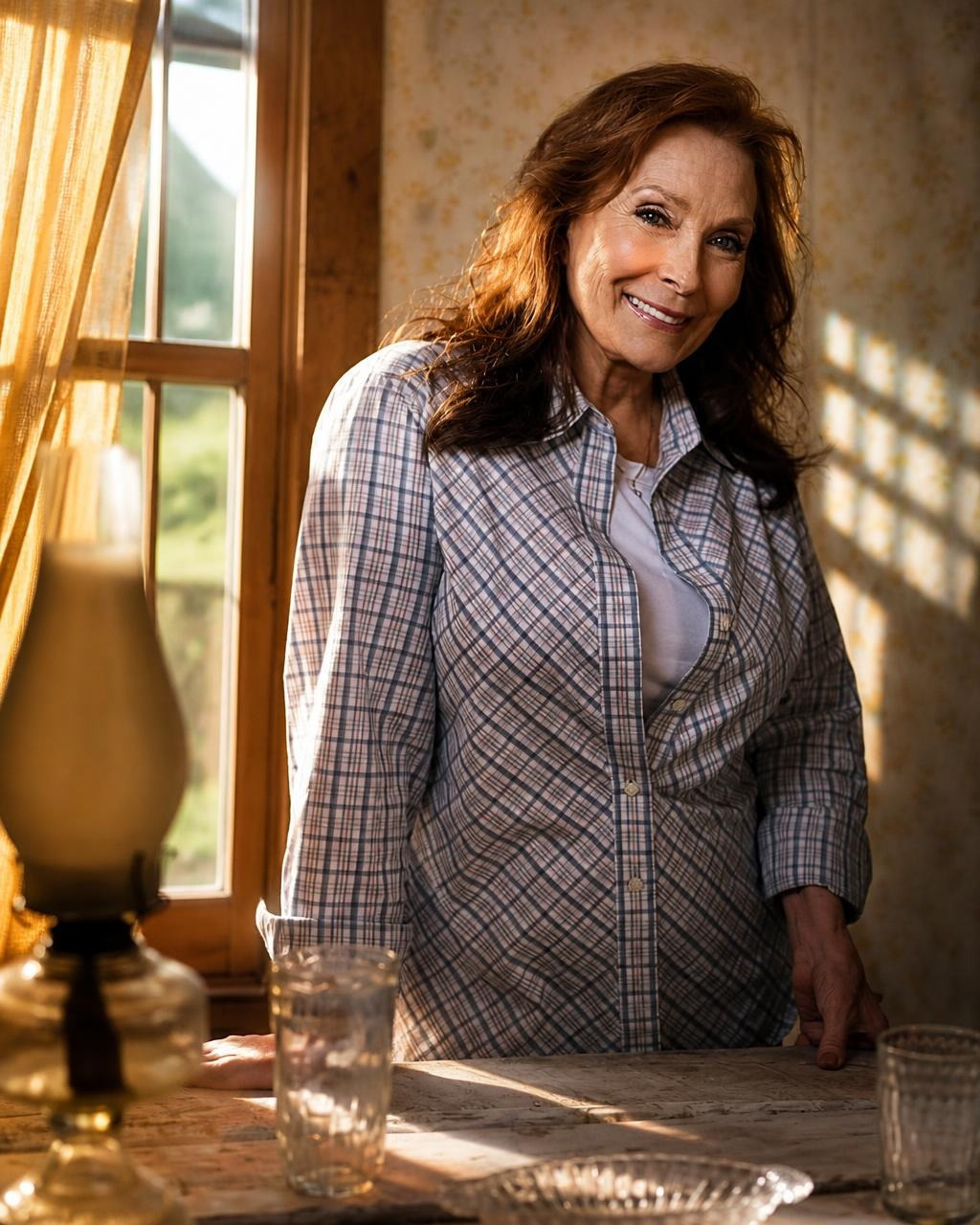
A Backstage Moment That Sparked a Country Classic
Before Loretta Lynn stepped onstage, a nervous young wife came backstage with a worry she could not keep to herself. Another woman, she said, was trying to steal her husband. It was the kind of heartbreak Loretta Lynn had heard in real life, not just in songs, and she listened closely.
According to the story that has followed the song for years, the frightened woman pointed out the other woman in the room. Loretta Lynn took one look and gave her a blunt, unforgettable answer: “Honey, she ain’t woman enough to take your man.” It was plainspoken, sharp, and full of the confidence that would become one of Loretta Lynn’s trademarks.
Then Loretta Lynn went back to her dressing room.
What happened next became part of country music history. In a very short time, Loretta Lynn turned that line into You Ain’t Woman Enough (To Take My Man), a song that captured jealousy, pride, and the stubborn strength of a woman refusing to back down. Released in 1966, the single rose to No. 2 on the country chart, giving Loretta Lynn her biggest hit at that point. The album of the same name became Loretta Lynn’s first No. 1 country album.
Why the Song Stuck
Part of the song’s power came from how direct it felt. Loretta Lynn did not dress the story up with polished distance. She wrote like someone who had lived around real arguments, real marriage, and real emotion. That honesty helped listeners trust her. They heard not just a performance, but a voice that sounded lived-in and fearless.
The timing also mattered. By the mid-1960s, Loretta Lynn was already building a strong career, but You Ain’t Woman Enough pushed her into a new level of recognition. It showed that she could take a moment from everyday life and turn it into a statement that women across the country understood instantly.
A Simple Sentence, A Lasting Legacy
There is something almost unbelievable about how quickly the song came together. A worried wife came backstage looking for reassurance. Instead, she gave Loretta Lynn the spark for one of her signature records. That is the kind of story that feels almost too perfect, yet it fits Loretta Lynn’s career so well: plain talk, strong feeling, and a gift for turning ordinary moments into unforgettable country music.
“Honey, she ain’t woman enough to take your man.”
Years later, the song still sounds fresh because the emotion behind it is so recognizable. Anyone who has ever felt tested, replaced, or underestimated can hear the sting in it. Loretta Lynn did not just write a hit. She gave that backstage moment a second life, and in doing so, she left behind one of country music’s most enduring classics.