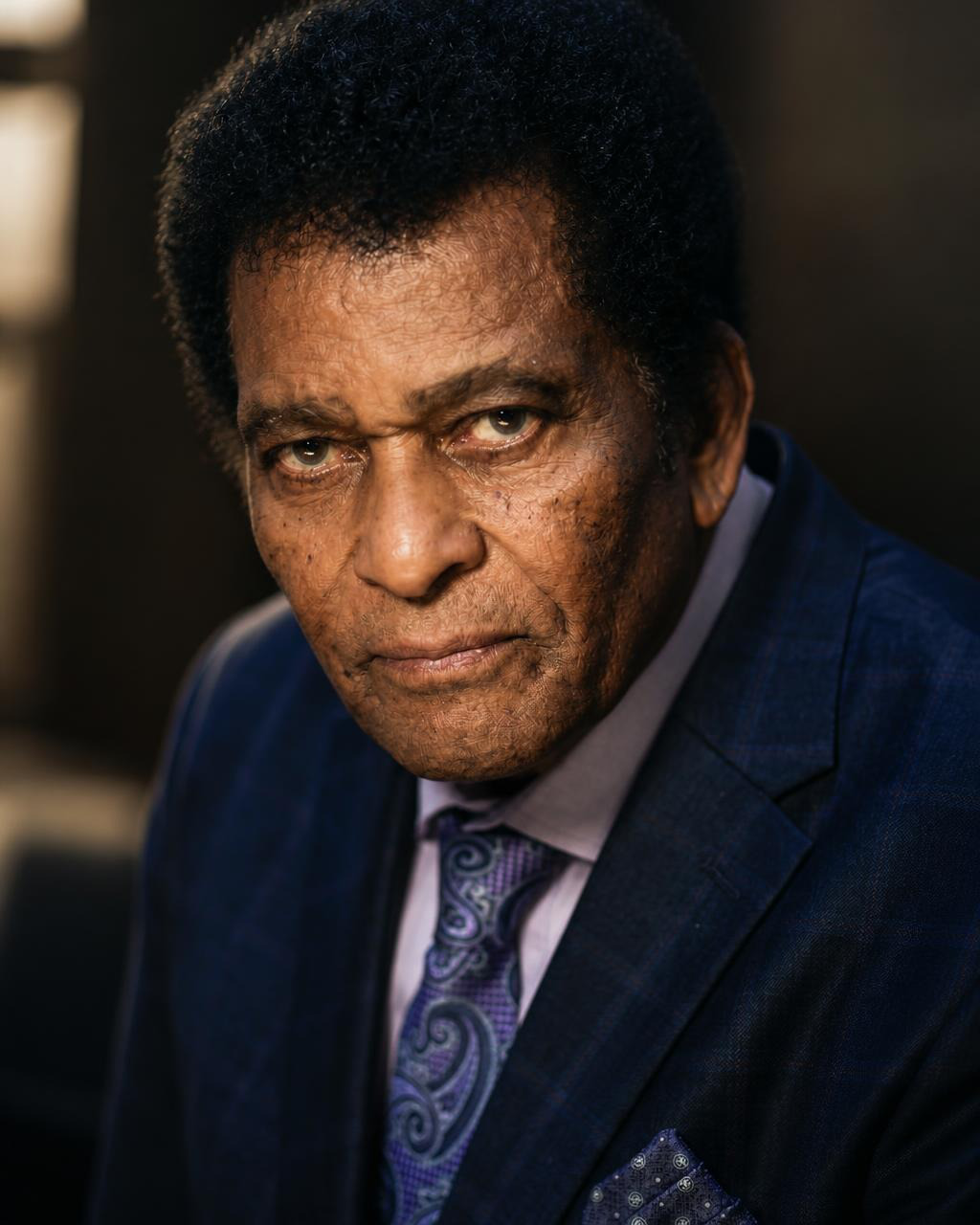
I Never Wanted to Be the Black Country Singer. Just a Country Singer.
In 1966, RCA sent Charley Pride’s first single to country radio with no photograph attached. No glossy press kit. No publicity still. Just the record and the voice. Disc jockeys across the South played The Snakes Crawl at Night for weeks without knowing what the man looked like. The label understood the risk, but it also understood something else: Charley Pride wanted listeners to hear him first.
That kind of entry into music felt unlikely for a boy raised on a cotton farm in Sledge, Mississippi. Charley Pride was born in 1934 in the segregated South, the son of a sharecropper. As a teenager, he left Mississippi to play baseball in the Negro American League, chasing a dream that the major leagues had not yet made room for. Baseball gave him discipline and ambition, but it did not give him the future he wanted. Country music did.
What came next was not a quiet rise. Charley Pride became one of country music’s biggest stars in the 1960s, a voice with warmth and authority that crossed barriers even when the barriers themselves remained in place. But the attention came with a burden. When audiences saw Charley Pride onstage for the first time, he often sensed the room processing what it had not expected. He answered with grace, humor, and a steady reminder that the song mattered more than the surprise.
Charley Pride spent a lifetime asking to be called what he had always been: a country singer.
His story also sits inside the larger story of country music itself. The Grand Ole Opry’s first African American star, DeFord Bailey, had helped define the early years of the show before WSM fired him in 1941. Charley Pride would not become an Opry member until 1993, and in 2000 he was inducted into the Country Music Hall of Fame, an honor that followed a trail blazed by performers who were often remembered too late.
Charley Pride died in Dallas on December 12, 2020, at age 86. But the reason people still return to his story is not only that he was first. It is that he insisted on something simpler and harder: that talent should not need to explain itself before it is allowed to sing. In that sense, Charley Pride changed country music by refusing to treat his identity as the whole performance. He asked for the same courtesy every artist wants — to be heard before he was seen.