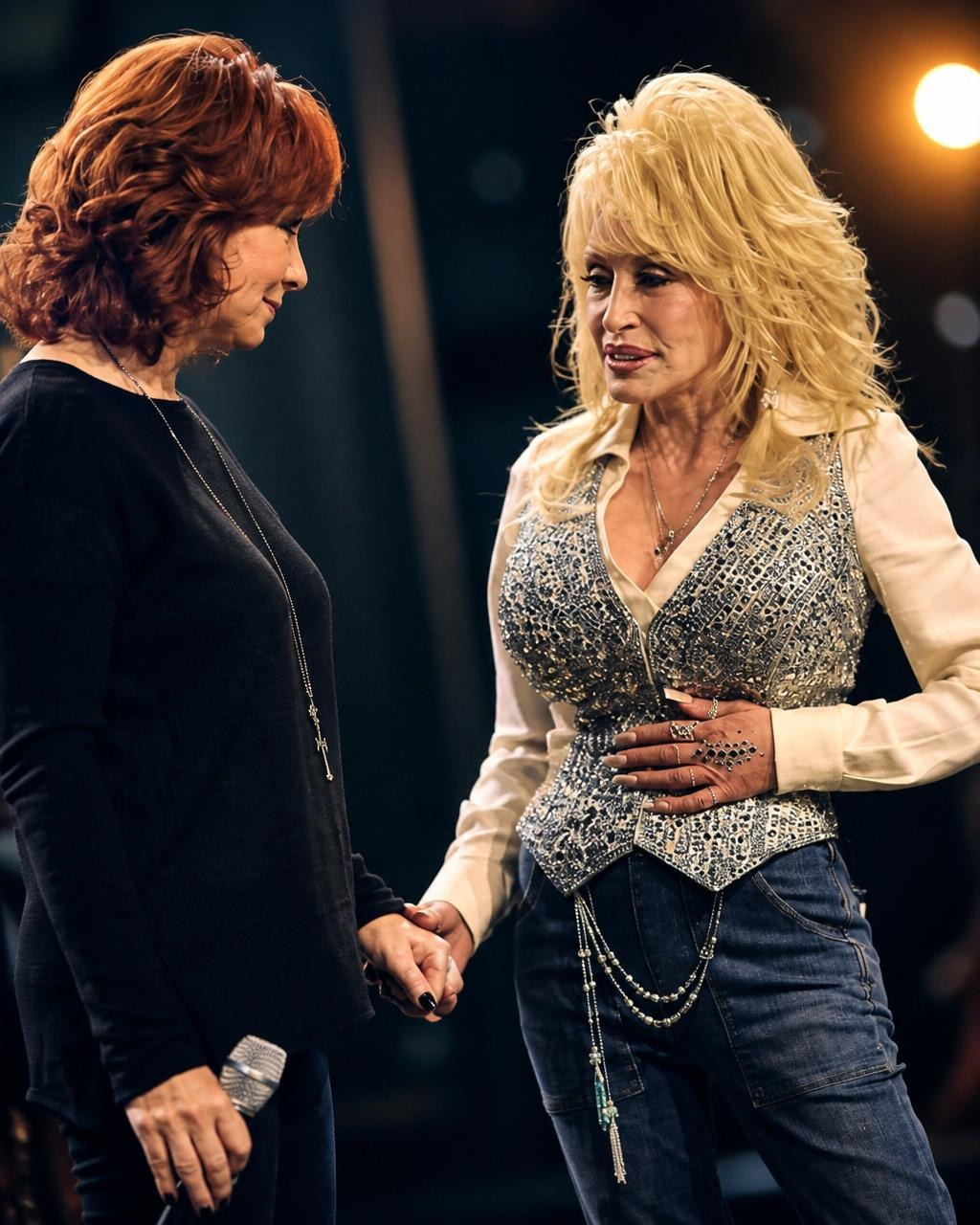
Dolly Parton, Reba McEntire, and the Song That Carried Them Both
Some stories in music are about fame. Others are about kindness that arrives at exactly the right moment. The bond between Dolly Parton and Reba McEntire belongs to the second kind.
A phone call that changed everything
In March 1991, Reba McEntire’s world was shattered after a plane crash following a San Diego show killed eight members of her band and crew. McEntire has spoken for years about how devastating that loss was and how uncertain she felt about returning to the stage. In the middle of that grief, Dolly Parton made a call that Reba McEntire has never forgotten: Dolly Parton offered Reba McEntire her own band so Reba McEntire could keep working and keep going.
It was not a small gesture. It was a deeply personal one. Dolly Parton was offering more than help; Dolly Parton was offering stability, support, and a way forward at a time when Reba McEntire could barely imagine one.
Sometimes the most important thing another artist can give is not advice, but a way to take the next step.
Why that memory still matters
Reba McEntire has continued to share that story because it still carries emotional weight decades later. It reminds fans that the country music world, for all its competition and spotlight, can also be built on loyalty. When one artist hurts, another can reach out in a real, human way.
That is part of why a new version of Dolly Parton’s “Light of a Clear Blue Morning” lands with such meaning. Dolly Parton first wrote the song in the 1970s, during a difficult period, as a message of hope and survival. On January 16, 2026, Dolly Parton released a new recording of the song featuring Lainey Wilson, Miley Cyrus, Queen Latifah, and Reba McEntire. The timing was especially touching, arriving just days before Dolly Parton’s 80th birthday.
A song returns with new voices
The updated recording gives the song a fresh life, but it does not lose its original purpose. “Light of a Clear Blue Morning” has always been about making it through darkness and finding daylight again. Hearing Reba McEntire sing it with Dolly Parton adds another layer: the woman who once received help is now part of the message itself.
It also turns the track into something larger than a celebration. The release carries a charitable purpose, with net proceeds supporting pediatric cancer research at Monroe Carell Jr. Children’s Hospital at Vanderbilt in Nashville. That detail matters, because it connects the song’s hopeful spirit to a real act of giving.
Thirty-five years later, the circle feels complete
Fifty years after Dolly Parton wrote a song about surviving hard seasons, and more than three decades after she extended a hand to Reba McEntire, the music now brings both women together again. The story is simple, but powerful: one artist wrote hope into a song, one artist offered help in a moment of grief, and both of them helped keep that hope alive.
That is why this release resonates. It is not just a collaboration. It is a full circle moment between two women whose careers have been shaped by resilience, friendship, and the quiet power of showing up when it matters most.