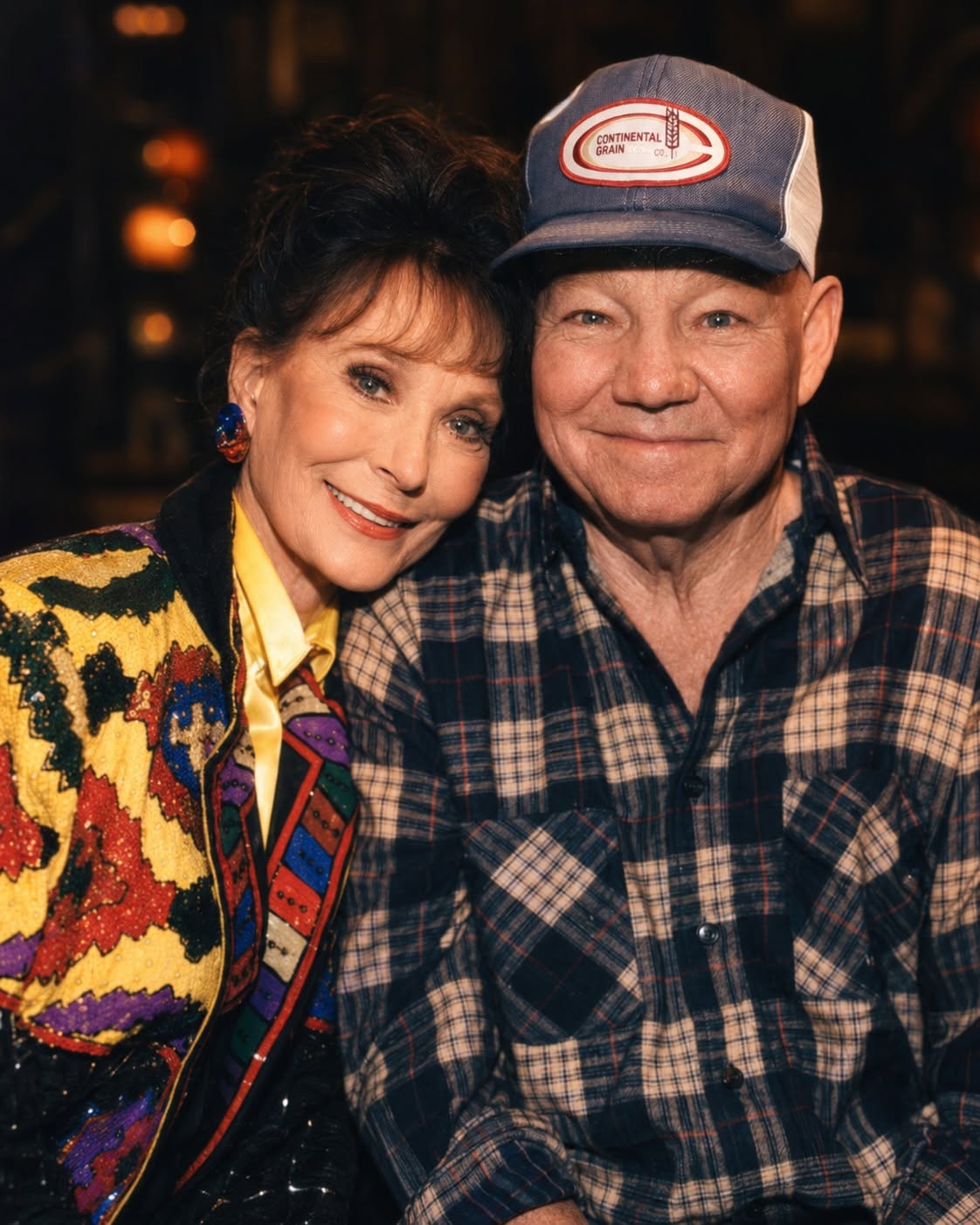
The Guitar, the Silence, and the Song: How Doo Helped Make Loretta Lynn
Before the awards, before the television specials, before Nashville fully understood what it had in front of it, Loretta Lynn was just a young woman singing around her home in Washington. She had a voice that carried feeling even when no one was listening closely. One person was listening closely, though. His name was Doo, and long before the world knew Loretta Lynn, he heard something special in her.
In 1953, Doo walked into Sears and spent $17 on a guitar. It was not a grand gesture, and it was not a polished dream. It was a practical, simple act of belief. He brought that guitar home and told Loretta she ought to learn how to play it. That one decision changed the course of her life.
A Small Gift That Opened a Big Door
For Loretta, the guitar was more than an instrument. It was a beginning. It gave shape to the songs already living inside her, songs about hard work, love, disappointment, and the kind of life that never came with easy answers. She did not come from a polished music world. She came from real life, and that was exactly what made her different.
That $17 guitar became the tool that helped her turn feeling into music. It gave her a way to tell the truth in a voice people could not ignore. Doo may not have known it that day, but he had just helped create one of country music’s most unforgettable careers.
“Doo heard her before anyone else did.”
Chasing a Song Down the Road
When Loretta Lynn released “I’m a Honky Tonk Girl,” the music did not arrive with instant fame and polished support. She and Doo drove from radio station to radio station, asking strangers to give her voice a chance. There was nothing glamorous about the early days. It was work, persistence, and belief mixed together mile after mile.
Doo was there through it all. He had the instinct to hear what others missed, and he pushed Loretta toward the opportunity she deserved. That support mattered, especially in the beginning, when success was still fragile and uncertain. The road was not easy, but they kept going.
A Marriage Full of Fire and Fractures
Their marriage was never gentle. Loretta Lynn did not hide that truth, and she did not soften it for the public. Doo’s drinking, cheating, and temper became part of the emotional landscape of many of her songs. She wrote from experience, and experience was often painful.
Still, she never reduced him to a single word. Loretta Lynn called Doo her toughest critic and her greatest fan. That tension defined much of their relationship. He could be hurtful, but he also believed in her talent in a way that shaped her entire future. Love, in their story, was complicated and uneven, but it was real.
That complexity is part of why her songs still resonate. They were not written from a distance. They came from a life lived up close, with all its contradictions.
The End of Hearing, the Beginning of Silence
Near the end of Doo’s life in 1996, Loretta heard him say something that stopped her cold: “I can’t hear the music anymore.” At first, she thought he meant he simply did not want to hear her sing. But then she realized he truly could not hear. The man who had once heard music in her when others could not was losing it himself.
Before he died, Loretta helped him get hearing aids. It was a small act of care at the end of a long and difficult marriage, but it carried deep meaning. After all the arguments, pain, and distance, she still showed up for him.
During his final days, she sang him “Wouldn’t It Be Great,” a song that held a wish tucked inside it. It asked him to say he loved her just once with a sober mind. That detail gives the moment its heartbreak. It was not just a song. It was a lifetime of feeling condensed into a few aching lines.
What He Gave Her, What She Gave Back
Decades after that Sears guitar, the story came full circle. On one side was the man who first heard Loretta Lynn’s promise. On the other was the woman who carried that promise through pain, fame, family, and loss.
Twenty-six years later, Loretta was buried beside Doo at Hurricane Mills. Even after everything, they remained linked by the life they built together. His first gift to her started a career. Her last songs for him closed a chapter shaped by love, damage, and endurance.
The first man who heard the music in her became the silence behind one of her most painful songs. That is the strange, lasting truth of Loretta Lynn and Doo: he helped open the door, and she turned the hurt of that life into something the world could never forget.