Johnny Cash and the Meaning of Refusing to Apologize
Nashville, at least the polished version of it, wanted Johnny Cash to fit a mold. He was supposed to be clean-cut, safe, and smiling in a way that made everyone comfortable. The music business liked its stars predictable. It liked soft edges, tidy messages, and songs that never made anyone squirm. Johnny Cash was never built for that kind of world.
He wore black when others expected sparkle. He sang about hard lives when others wanted easy comfort. And when people told him to stay away from trouble, he seemed to walk straight toward it, not because he loved chaos, but because he understood people who lived near the edge of it.
The Man Behind the Image
Johnny Cash was not trying to be a rebel for show. That is part of why people still believe him. He had a deep voice, a steady stare, and a way of making every song sound like it had already been lived before it was ever recorded. He did not perform from a distance. He performed like someone standing beside you at the kitchen table after a long night.
When music executives pushed him toward a more polished image, Johnny Cash resisted. He did not care for the idea that art should only be pleasant. To him, music could carry grief, guilt, faith, and redemption all at once. He believed the broken people mattered too.
Johnny Cash understood something many people in power did not: honesty is not always neat, but it is usually unforgettable.
Folsom Prison and the Risk Nobody Wanted
One of the boldest choices of Johnny Cash’s career was the idea of recording a live album inside Folsom Prison. That decision made executives nervous. They worried about image, risk, and how the public might react. A prison was not the kind of place they wanted a major star to associate with success.
But Johnny Cash saw something different. He saw human beings. He saw men who had made terrible mistakes, men living with regret, men who understood songs about loss and consequences better than most radio listeners ever could. He did not go there to be admired. He went there to be heard, and to listen in return.
When he stepped into Folsom Prison and sang “Folsom Prison Blues,” the room came alive with a raw energy no studio could manufacture. The applause was not polite. It was thunderous. It was real. Johnny Cash did not flinch from that reality. He leaned into it.
Why “The Man in Black” Still Matters
Johnny Cash explained that he wore black for a reason. He wore black for the poor and the beaten down. He wore black for prisoners who had already paid for their crimes. He wore black for those whose suffering was easy to ignore. That simple choice became one of the most powerful statements of his career.
In an industry that often celebrates perfection, Johnny Cash reminded people that dignity can exist in places the world prefers to forget. He sang about pain without making it glamorous. He sang about faith without pretending faith was simple. He sang about darkness without denying the possibility of light.
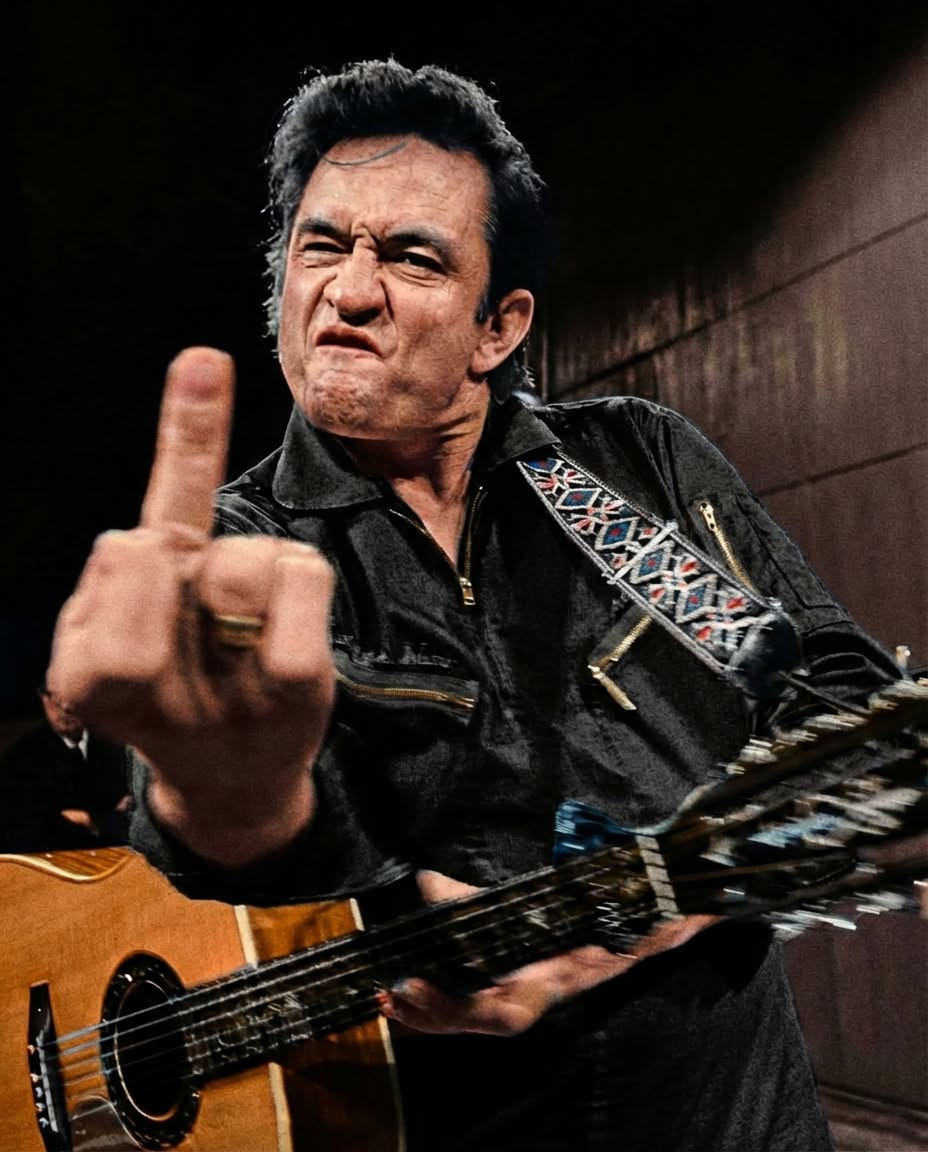
That is why the famous image of Johnny Cash raising his middle finger still gets attention. It was not just a gesture of anger. It was a refusal to be controlled, edited, or softened into something false. It became a symbol of defiance against censorship, hypocrisy, and the pressure to behave for the comfort of others.
A Voice That Did Not Ask Permission
Johnny Cash never sounded like he was asking permission to tell the truth. His baritone voice carried weight because it came from somewhere deeper than image. It sounded like experience. It sounded like sorrow. It sounded like a man who had looked at the world and decided that the people on the margins deserved songs too.
He did not pretend that life was fair. He did not pretend that pain could be erased with a cheerful chorus. Instead, he gave pain a melody and made room for it. That is part of why his music still reaches people who feel misunderstood, overlooked, or judged too quickly.
The Legacy of a Different Kind of Star
Long after the critics moved on, Johnny Cash remained. The fashion changed. The industry changed. The headlines changed. But the songs stayed. They kept their rough edges, their honesty, and their strange comfort.
Johnny Cash did not become unforgettable because he played by the rules. He became unforgettable because he knew when to ignore them. He walked into places that made others uncomfortable. He sang for people many preferred not to see. And he reminded the world that truth does not have to wear a suit, smile politely, or wait for approval.
That is why Johnny Cash still feels alive in the culture today. Not as a polished icon, but as a man who stood in black, looked straight at the camera, and refused to apologize for singing the truth.