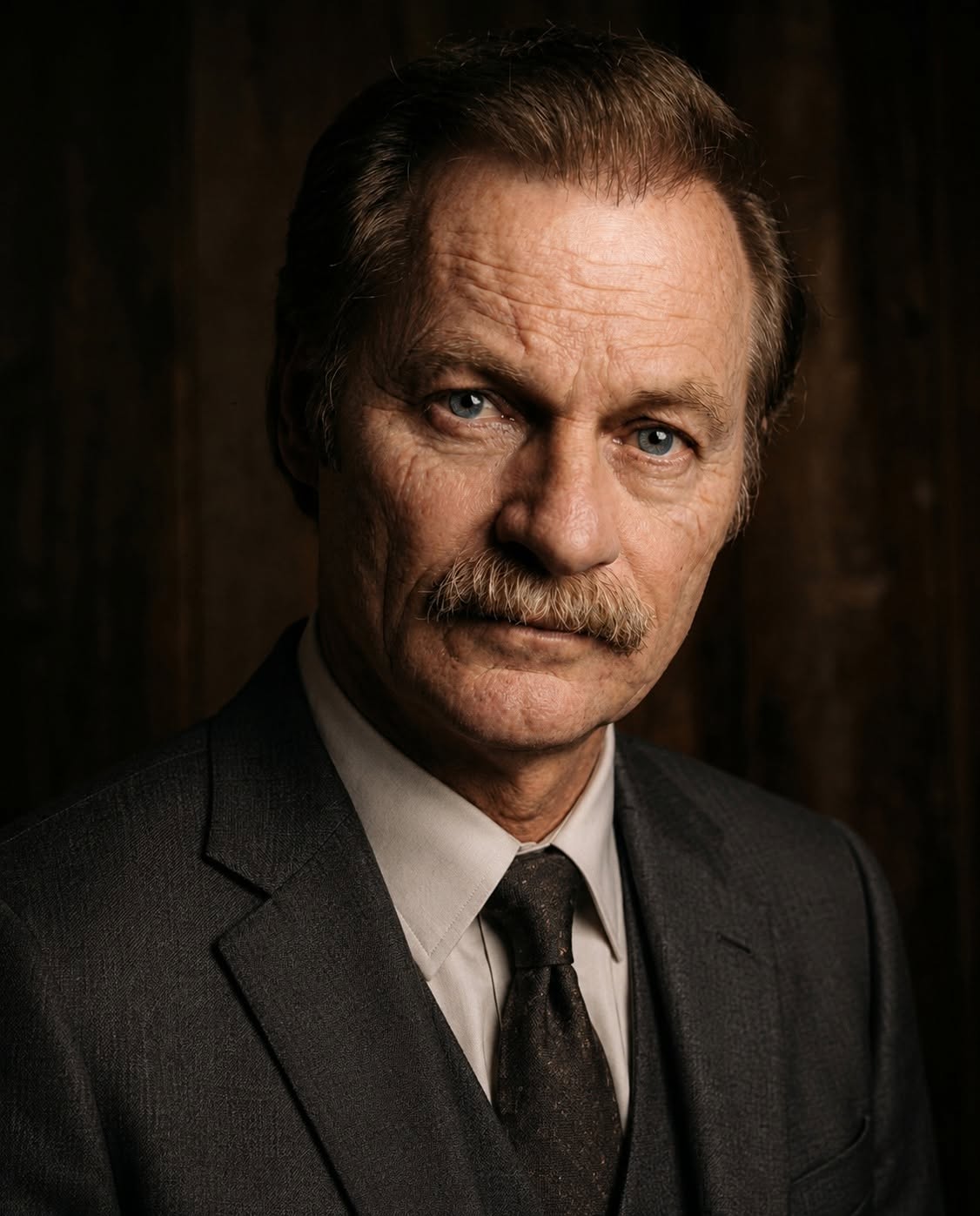
Vern Gosdin Was Called “The Voice” — And Country Music Still Hasn’t Fully Answered His Silence
They called him “The Voice” for a reason. Not because he chased attention. Not because he knew how to play the room. Vern Gosdin earned that title the hard way, with a voice so clear and aching that it sounded like truth before the first line was even finished.
When Vern Gosdin died on April 28, 2009, at a Nashville hospital, there was no giant public farewell, no viral moment, no industry-wide frenzy that matched the size of what he had given country music. He was 74. The news landed softly, almost too softly, for a man whose songs had carried so much heartbreak for so many years.
A singer who kept going when life gave him every reason not to
Vern Gosdin had already survived one stroke. Then another. For many people, that would have been the end of the road. For Vern Gosdin, it was not. He kept writing. He kept singing. He kept moving forward, even when it was obvious that every step took a little more out of him.
He was still working, still thinking about the road, still renovating his tour bus for summer shows when the final stroke came. That detail matters because it says everything about Vern Gosdin. He did not treat music like a performance. He treated it like a calling. Even as his body failed him, he stayed loyal to the life he had chosen.
Vern Gosdin did not sound polished in the shallow sense. He sounded lived-in, wounded, and honest. That was the power of it.
The kind of voice country music does not forget
Country music has no shortage of great singers, but Vern Gosdin belonged to a rare group. His voice had a weight to it, a deep emotional pull that made even a simple lyric feel like a confession. He could sing sorrow without sounding theatrical. He could sing regret without begging for sympathy. That balance is hard to fake, and Vern Gosdin never seemed interested in faking anything.
In December 2008, just months before his death, Vern Gosdin released a massive 101-song box set that gathered four decades of heartbreak across four discs. It was more than a release. It was a statement. A life in songs. A full accounting of what he had carried, what he had lost, and what he had managed to turn into art.
By then, the legacy was already there. “Chiseled in Stone” had won CMA Song of the Year. Nineteen Top 10 singles had carried Vern Gosdin’s name into the hearts of listeners who may not have always known the full story behind the man singing to them. But they knew the feeling. They knew the ache.
Respect from the best in the business
Some artists earn their reputation through constant self-promotion. Vern Gosdin earned his through the respect of other artists. George Strait remembered how Vern Gosdin helped him on his first tour. That kind of memory is not casual. It is the kind of thing people hold onto when someone made their path a little easier.
Emmylou Harris said they did not call him “The Voice” for nothing. Tammy Wynette once said Vern Gosdin was the only singer who could stand next to George Jones. In country music, that is not a throwaway compliment. That is near-sacred praise.
And yet, even with that respect, even with that catalog, even with a voice that seemed to come from somewhere older and wiser than the rest of us, Vern Gosdin never received the kind of institutional recognition many fans believed he deserved.
The question fans still ask
Sixteen years later, the question still hangs in the air: why did the Hall of Fame never open for Vern Gosdin?
It is a question with no satisfying answer for many listeners. Country music has honored loud legends, crossover stars, and polished icons. But Vern Gosdin represented something harder to measure and easier to overlook: emotional authority. He did not just sing songs. He made them believable.
That is why his absence feels so strange. Not because his achievements were small. They were not. Not because his influence was limited. It was not. The silence around his final years and the silence around his biggest recognition gap feel connected, like two parts of the same unfinished sentence.
What remains when the applause fades
In the end, Vern Gosdin’s story is not only about what he received. It is about what he left behind. The songs remain. The recordings remain. The memory of that voice remains, steady and sorrowful and impossibly human.
Country music has a long memory for heartbreak, but sometimes it has a short memory for the people who gave that heartbreak its most honest sound. Vern Gosdin was one of those people. He sang as if he knew time was limited. Maybe that is why every note still feels urgent.
When he died, there was no viral moment. Just a silence. And maybe that is the saddest kind of silence Nashville knows how to make: the silence that follows a man who told the truth better than almost anyone else ever did.
Vern Gosdin was called “The Voice.” Decades later, country music is still living inside the echo of that name.