How a Hank Williams Song Found New Life 50 Years Later
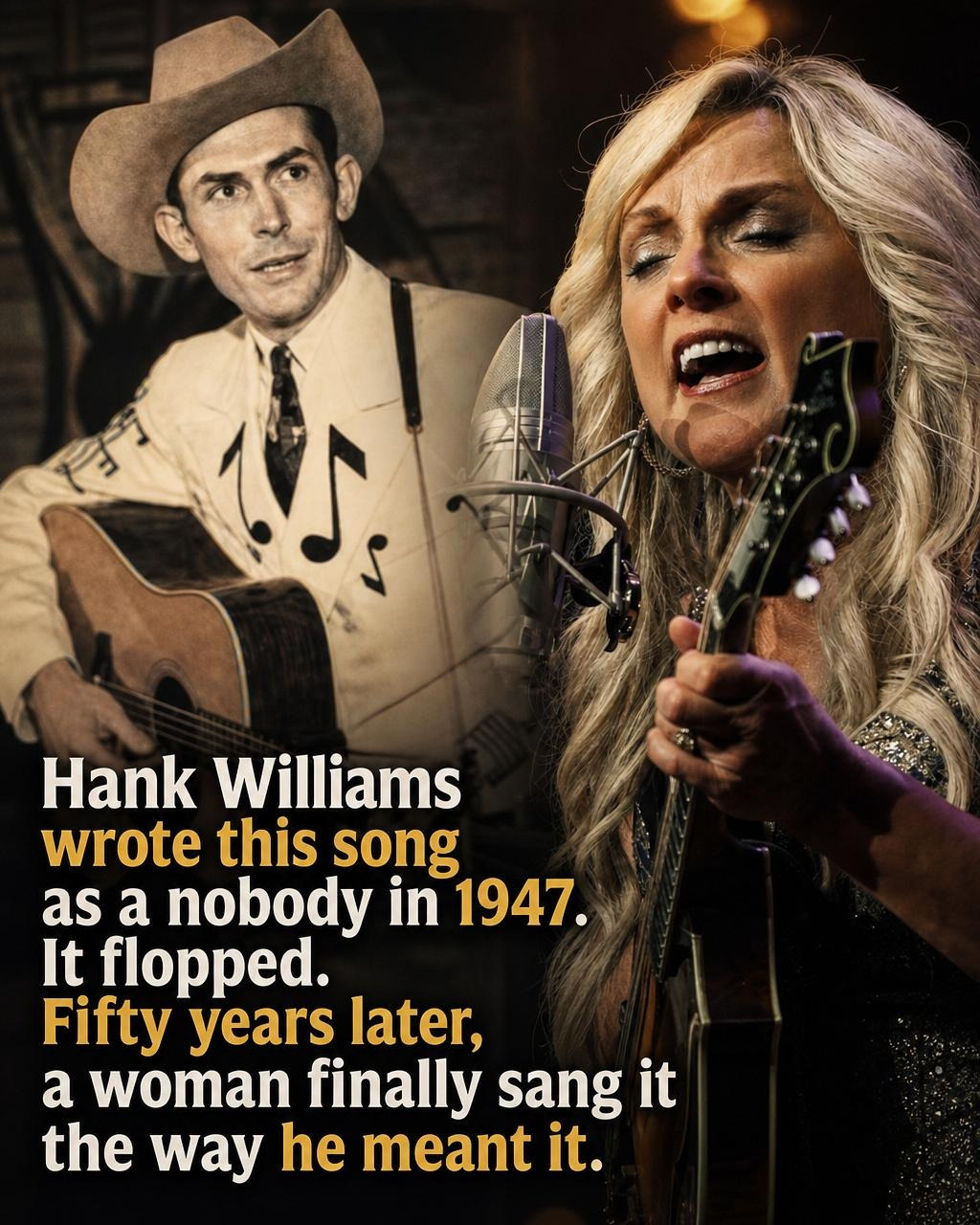
In 1947, Hank Williams was still a young singer with a strong voice and a growing reputation, but he was far from a star. He recorded “My Sweet Love Ain’t Around” during a time when success was uncertain and the future was still wide open. The song had all the raw edges that made Hank Williams unforgettable. His delivery was aching and direct, and Jerry Byrd’s steel guitar moved through the track like a lonely train whistle cutting across an empty night.
And yet, the song did not become a hit. In fact, it was part of a rough start that defined much of Hank Williams’ early recording career. Six of his first seven singles failed to chart. For many artists, that kind of beginning might have been enough to slow everything down. But with Hank Williams, even the songs that missed the spotlight carried a truth that could survive decades.
A Song That Waited Quietly
“My Sweet Love Ain’t Around” never disappeared because it was weak. It disappeared because the world was not ready for it yet. The song held a kind of sadness that felt plainspoken and real. It was about absence, about missing someone, about the ache of loving when the person you want is no longer there. That feeling did not age. It only waited.
More than 50 years later, Rhonda Vincent brought the song back to life on her 2001 album The Storm Still Rages. By then, Rhonda Vincent had already lived music for most of her life. She had been performing since she was five years old and grew up in a family band in rural Missouri, where music was part of daily life and not just a career. When she chose to record a Hank Williams song that had long been overlooked, it was not a novelty. It was a recognition.
Rhonda Vincent Hears What Was Always There
Rhonda Vincent’s version did not simply cover the old recording. It revealed something inside it. Her voice carried the weight of the lyrics in a new way, but it also honored the spirit Hank Williams had placed there from the beginning. The performance felt both fresh and timeless, as if the song had finally found the room it needed to breathe.
Sometimes a song does not fail. Sometimes it just has to wait for the right voice, the right moment, and the right ears.
That is part of what makes country and bluegrass music so powerful. The best songs do not belong to one decade alone. They move across generations, changing shape without losing their emotional center. Rhonda Vincent did not rescue “My Sweet Love Ain’t Around” from history. She proved that it had never really left.
From Nashville Struggle to Bluegrass Treasure
When Newsweek praised Rhonda Vincent for pulling “every last drop of blues right from the soul of bluegrass,” it captured something important about the song’s long journey. Hank Williams had written a record of longing. Rhonda Vincent heard it, respected it, and gave it new life. Between those two moments lies the beauty of American roots music: songs can travel farther than success charts ever predict.
What began as one of Hank Williams’ early disappointments became a bluegrass treasure half a century later. That is not just a comeback story. It is a reminder that art sometimes outlives the moment that first overlooked it.
And sometimes, the song that nobody noticed at the beginning turns out to be the one that lasts the longest.