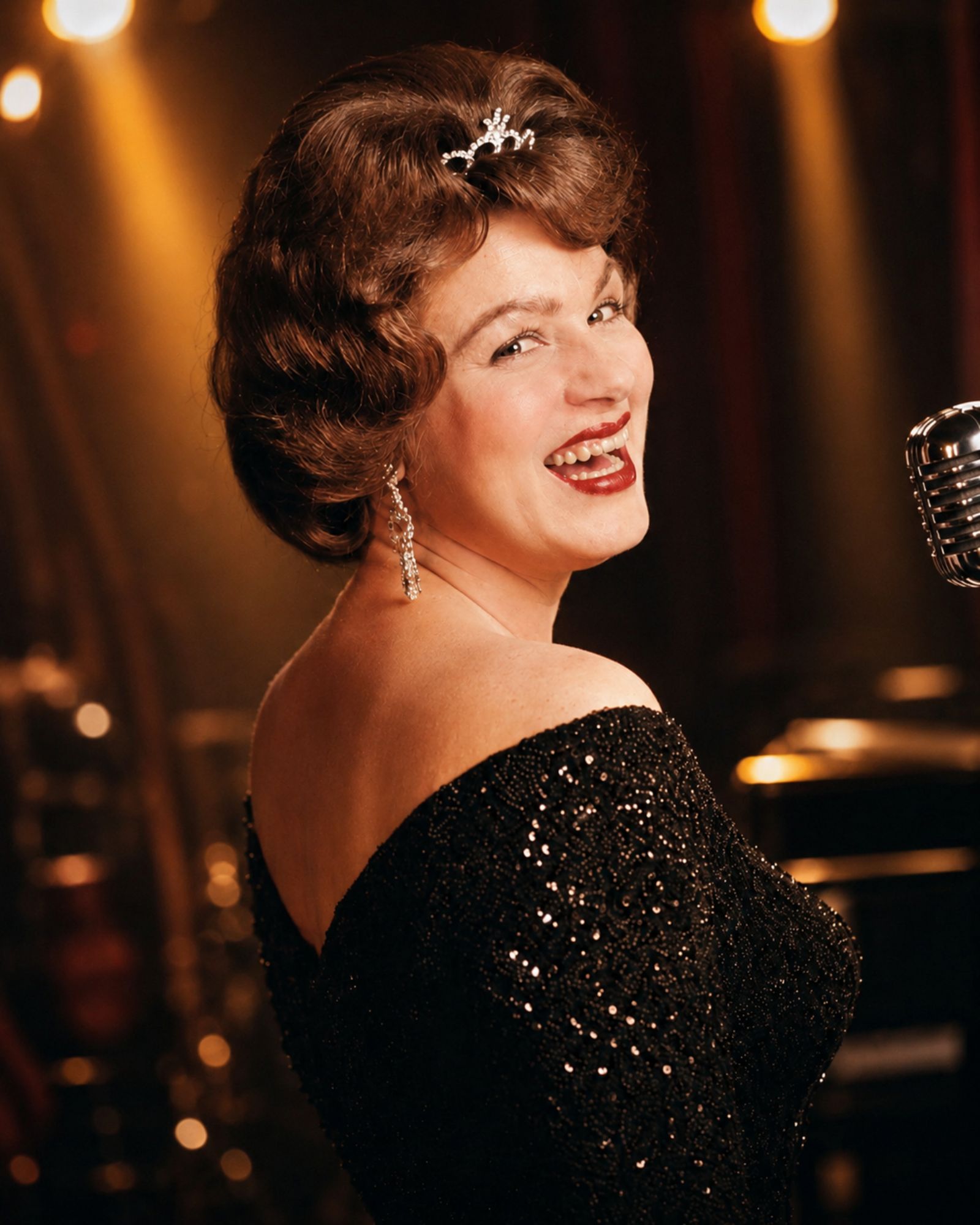
Patsy Cline Recorded Her Greatest Hits With Scars Still Healing on Her Face
In 1961, Patsy Cline survived a head-on car crash that should have ended everything. The windshield shattered. Her face was badly cut. She spent about a month in the hospital, and when she finally stepped back into public life, the scar across her forehead was impossible to ignore. Nashville noticed. People talked. Some even assumed her career was over.
They were wrong.
Patsy Cline was not the kind of artist who quietly disappeared when life got hard. She was already known for a voice that could stop a room, but after the crash, that voice carried something even deeper: weariness, survival, and a kind of hard-earned truth. She returned to the studio while still healing, still hurting, and still determined to sing.
The Return That Changed Everything
What happened next became one of the most important stretches in country music history. Patsy Cline walked back into the studio and recorded songs that would outlive the headlines, the gossip, and even the fear that surrounded her recovery.
She recorded “Crazy”, the Willie Nelson song that so many others could hear but few could truly deliver. Patsy Cline gave it something no one else could: restraint, ache, and elegance all at once. Then came “She’s Got You”, another classic that seemed to carry heartbreak in every line. Later, she recorded “Sweet Dreams”, a performance so rich and vulnerable that it still feels startling today.
These were not just hit records. They were statements of survival.
Every note seemed to say that Patsy Cline had not been broken by the crash. She had been changed by it, yes. But changed did not mean defeated. If anything, the accident sharpened what was already special about her singing. There was more gravity in her voice, more shadow, more strength.
Nashville Thought It Was Over
In those years, image mattered almost as much as sound. A visible scar could become a rumor, and a rumor could become a career problem. Some around Nashville likely believed the accident would slow Patsy Cline down for good. After all, the industry had a habit of moving on quickly from artists who looked fragile or difficult to manage.
But Patsy Cline had already proven she was neither fragile nor easy to dismiss.
She showed up. She worked. She sang with a focus that made people in the room feel like they were witnessing something larger than a recording session. Her voice did not sound like denial. It sounded like experience. That is part of why the songs still matter. They were not polished by comfort. They were shaped by surviving pain and showing up anyway.
A Quiet Warning Before the End
Even after those triumphant studio sessions, Patsy Cline seemed to know life was fragile. Before her final flight, she gave away personal belongings to friends. She spoke with Dottie West and said, “Honey, I’ve had two close calls. The third one will be a charm or it’ll kill me.”
It is the kind of line that sounds almost impossible to forget once you know what came later.
On March 5, 1963, a small plane went down near Camden, Tennessee. Patsy Cline was only 30 years old. She did not get decades to reflect on her legacy. She did not get the luxury of a long retirement or a farewell tour. She got a short, brilliant life that changed the sound of popular music forever.
The Voice That Stayed
Patsy Cline left behind more than hit records. She left behind proof that heartbreak can become art, and that pain does not have to silence a person. Sometimes it makes the truth clearer.
Patsy Cline’s greatest songs feel immortal because they came from a woman who refused to let tragedy define her.
Listeners still return to her music because it feels personal. The records are polished, yes, but never cold. They hold sorrow without drowning in it. They hold beauty without pretending life is simple. That balance is rare, and Patsy Cline made it sound effortless.
So when people ask which Patsy Cline song brings tears, the answer is often different for everyone. For some, it is “Crazy”. For others, “She’s Got You” or “Sweet Dreams”. Maybe that is the real power of her legacy: Patsy Cline sang in a way that made each listener feel seen.
She was told she was done. She came back stronger. And even now, decades later, Patsy Cline still sounds like someone who had more to give than the world had time to receive.