He Picked His Name From a Map. Built a City That Carried It. Now the Map Is Mostly Memory
In 1957, Harold Jenkins looked at a map and found two places he had never belonged to: Conway, Arkansas, and Twitty, Texas. He joined them together, took on a new identity, and became Conway Twitty. It was a bold move, but Conway Twitty had a talent for bold moves. He did not simply change his name. He built a life around it, then built a career large enough to make the name feel permanent.
What happened next was bigger than a stage name. It became a kind of reinvention story that still feels almost impossible today. Harold Jenkins was gone, and Conway Twitty arrived in his place, complete with a voice that could stop people in their tracks. Smooth, warm, and unmistakable, that voice carried songs across decades and turned a clever name into a cultural landmark.
A Name That Sounded Like Destiny
Some artists choose a name because it sounds good on a poster. Others choose one because it gives them a new beginning. Conway Twitty did both. The name sounded memorable, almost like it had always existed, and it gave Harold Jenkins room to grow into a bigger version of himself. It was a fresh start with a southern rhythm to it, and it fit the music that would soon make him famous.
His rise was steady at first, then undeniable. Hits began stacking up. “It’s Only Make Believe” helped introduce him to a wide audience, and later, country fans made room for songs like “Hello Darlin’” and “Tight Fittin’ Jeans.” Fifty-five No. 1 hits followed. That number alone says something about his reach, but it still does not fully explain the feeling his music created. Conway Twitty songs did not just play on the radio. They settled in.
Conway Twitty had a voice that felt personal, even when it came through the speakers of a crowded room.
People listened because the songs were catchy, yes, but also because they felt lived-in. There was heartbreak, longing, confidence, and a kind of easy charm that made his records stand out. He became one of those rare performers whose name could carry the whole experience. If Conway Twitty was on the label, people expected something memorable.
When the Name Became a Place
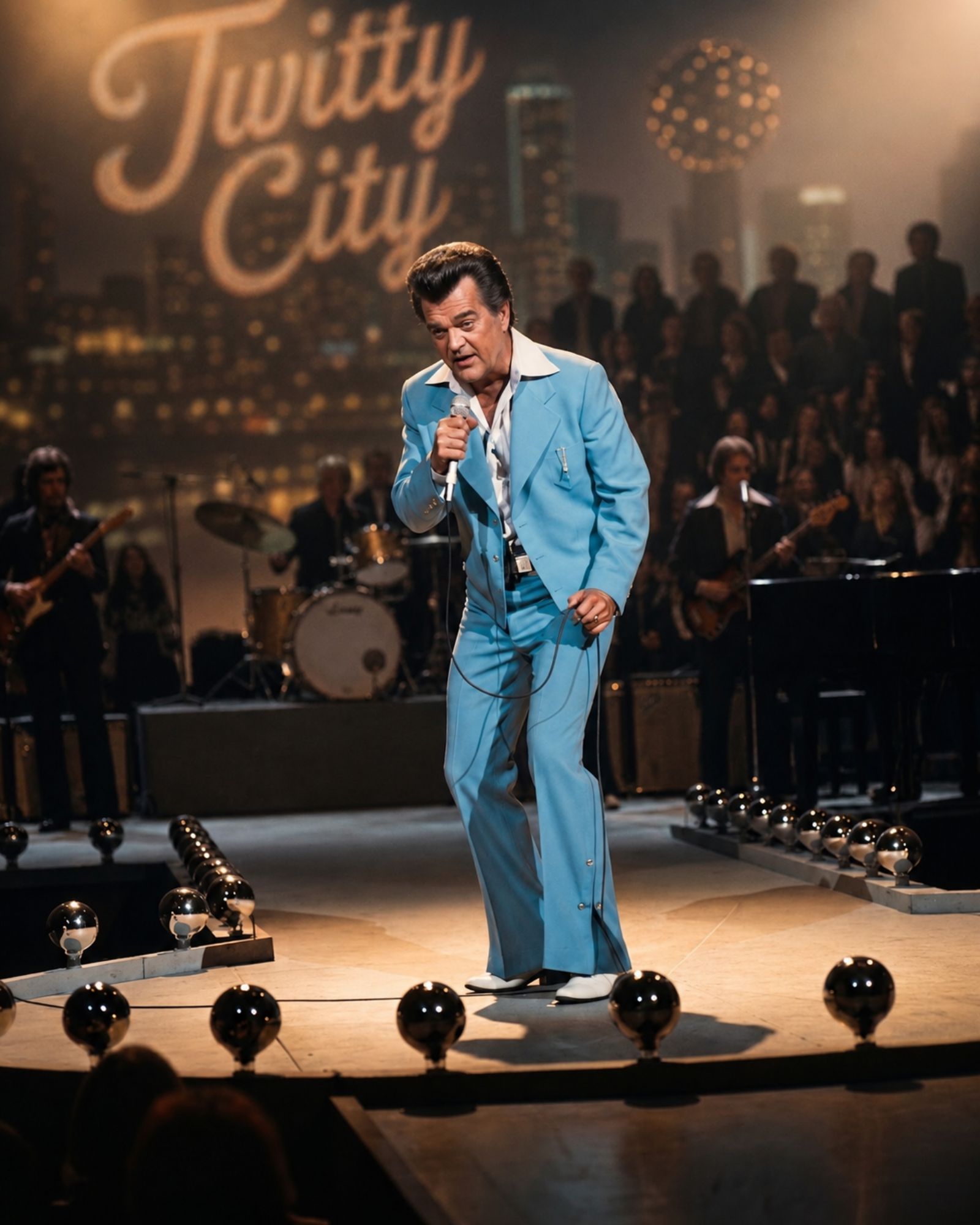
Then came Twitty City in Hendersonville, Tennessee. This was not just a house or a studio. It was a statement. Conway Twitty had built a world around his name, and Twitty City made that world visible. Fans could visit. They could walk through it. They could stand in a place that felt like the physical version of his career.
For many people, Twitty City was more than a celebrity home. It was a destination that made a star feel accessible. It turned a stage name into something you could point to on a map. That mattered. In an era before constant online access, places like this gave fans a rare chance to feel close to the artists they loved. Twitty City was part museum, part shrine, part living reminder that Conway Twitty was not only heard but also built into the landscape.
There was something deeply American about that idea: a man remakes himself, earns his place, and then creates a landmark from his own legend. The name from the map became a city on a map.
Then the Story Changed
Conway Twitty died at 59, and the loss hit hard. The estate ended up in court, and the future of Twitty City began to unravel. The dream that had once seemed so solid started to slip away. The museum closed. The tours stopped. The place that had welcomed fans into Conway Twitty’s world slowly became quieter, until it no longer felt like a destination at all.
Years later, a tornado tore through what remained of Twitty City. Nature finished what time had started. The old mansion faced demolition, and another chapter closed. For people who remembered the place, it was a strange kind of heartbreak. Not just because a building was lost, but because a whole idea was disappearing with it.
Still, one piece survived.
The sign that said “Hello Darlin’” was saved.
What Remains
That sign matters because it carries more than words. It carries an era, a voice, a name, and the memory of a performer who turned reinvention into an art form. Conway Twitty was never just Harold Jenkins with a clever alias. He was a complete creation, built from imagination, talent, and timing. He made people believe a name could become a destination, and a destination could become part of music history.
Today, the map is mostly memory. Twitty City exists now in stories, photographs, and the minds of fans who still hear the songs. But the legacy remains intact in a different way. Every time “Hello Darlin’” plays, every time someone remembers that smooth, unmistakable voice, Conway Twitty returns a little bit.
A name from a map. A city on a map. And, for those who still listen, a memory that never fully leaves the room.