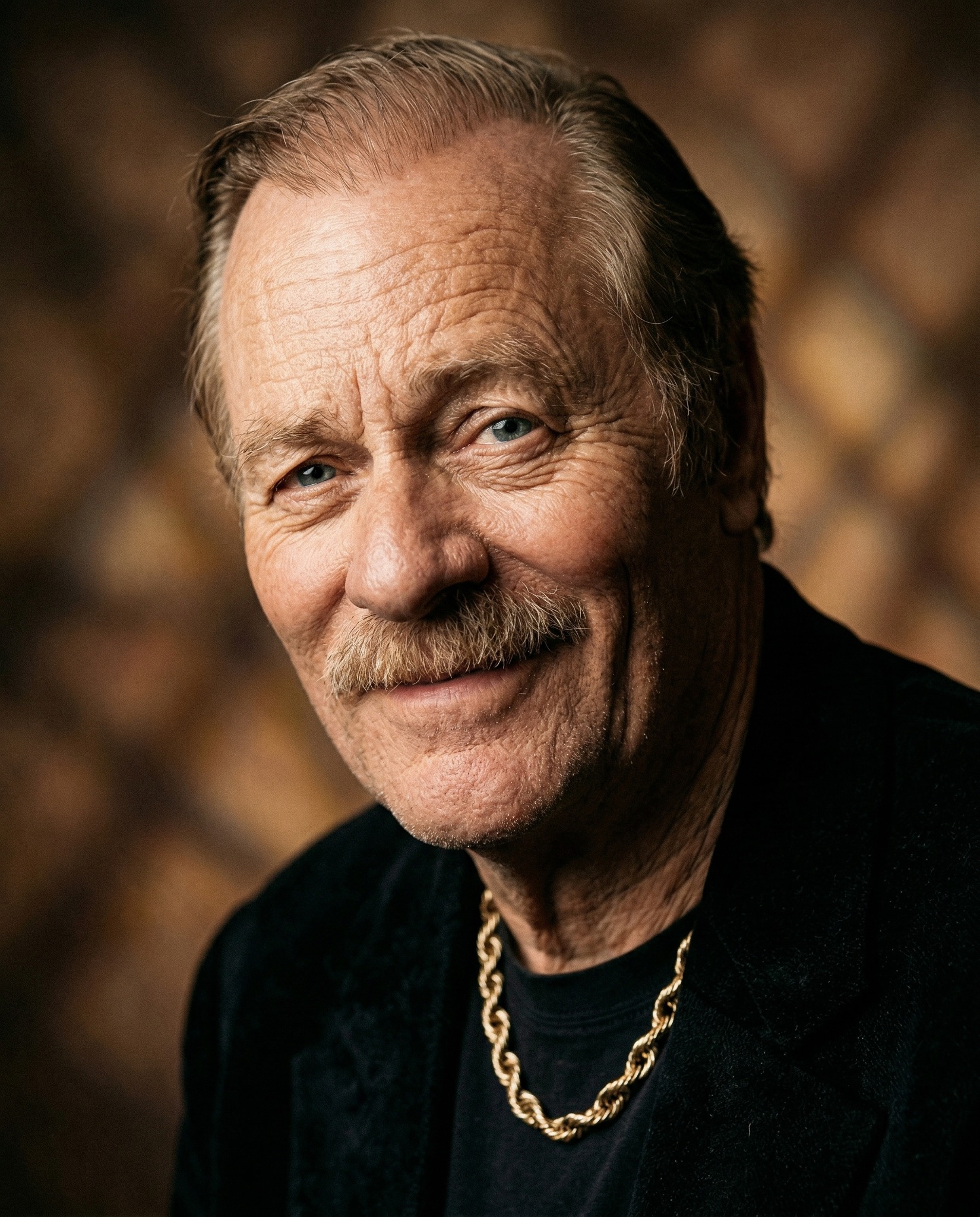
There Are Entire Generations of Country Fans Who Have Never Heard the Name Vern Gosdin
You can’t love what you’ve never been allowed to hear.
That line lingers because it feels true in a way that is almost painful. There are country music fans today who know every word to the biggest modern hits, who can name the stars on current playlists, who can talk about Nashville as if it has always sounded the way it sounds now. And yet many of them have never heard the name Vern Gosdin.
That is not because Vern Gosdin was not important. It is not because his music was not powerful enough to survive. It is because time, radio, and changing tastes quietly pushed him out of reach for a generation that should have known him.
A Voice People Did Not Forget Easily
Vern Gosdin was never just another country singer. He was one of those rare voices that seemed to carry real weather in it. There was sorrow in it, but also strength. When he sang, it sounded like he had lived every line, survived it, and still found a way to make it beautiful.
Tammy Wynette once said Vern Gosdin was the only singer who could hold a candle to George Jones. That kind of praise does not come lightly in country music. Nashville called him “The Voice,” and for good reason. He had a way of making heartbreak sound honest instead of dramatic, ordinary instead of polished. That mattered.
He recorded 19 Top 10 hits. He won CMA Song of the Year for “Chiseled in Stone,” a song that still stands as one of the most devastating reminders that country music can say hard things without raising its voice. George Strait respected Vern Gosdin’s writing enough to record “Today My World Slipped Away,” which says plenty on its own.
Why Younger Fans Missed Him
And still, ask a room full of younger country fans about Vern Gosdin, and too many will look back with confusion.
That is not their failure. It is the result of a music culture that changes quickly and often forgets what came before. By the early 1990s, country radio had largely moved on. New artists arrived with cleaner production, sharper marketing, and a sound built for a different era. The old voices, even the great ones, were no longer in steady rotation.
When that happens, memory gets edited. A new generation grows up hearing only the names that are constantly repeated. If a singer is not on the radio, not in the streaming algorithms, not in the casual conversations at the grocery store or the tailgate, then that singer starts to disappear from public life, even if the music itself never truly left.
That is what happened to Vern Gosdin. He did not stop being great. The culture simply stopped making room for him.
The Kind of Songwriter Country Music Needs
Vern Gosdin wrote and sang songs that felt lived-in. They were about regret, love, loss, pride, and the quiet damage people carry around when nobody is watching. His music did not need flashy tricks. It worked because it was direct.
That is part of why his absence matters. Country music has always claimed to honor truth, but truth can become trendy too. Sometimes the industry rewards polish over honesty, and when that happens, voices like Vern Gosdin’s become even more valuable in hindsight. They remind listeners that emotion does not need decoration to be real.
“Chiseled in Stone” remains one of those songs that can still stop a person in place, not because it is loud, but because it is true.
That is the power Vern Gosdin brought to country music. He did not just sing songs. He made them feel like memories.
What Gets Lost When We Stop Repeating Names
There is something sad about entire generations missing a voice this strong. Not because history must be preserved out of obligation, but because music is supposed to travel. It is supposed to be handed down the way stories are handed down.
When it is not, we lose more than a catalog. We lose context. We lose the chance to hear where modern country came from, and we lose the artists who helped define what honesty in the genre once sounded like.
Maybe that is why Vern Gosdin still matters so much now. In an era where everything is instantly available but not always intentionally shared, his story is a reminder that access is not the same as discovery. A song can exist on a platform and still never truly reach the people who need it.
Maybe the Real Question Is Bigger
Maybe the question is not why younger fans do not know Vern Gosdin.
Maybe the question is why nobody made sure they would.
That is what makes his story feel unfinished. Vern Gosdin earned his place the hard way, through songs that cut deep and a voice that could make a simple line feel like a confession. He was respected by giants, loved by loyal fans, and trusted by fellow artists who knew quality when they heard it. And yet, for too many people, his name never made the handoff into the next generation.
If country music is truly about tradition, then tradition has to be active. It has to be passed along on purpose. Vern Gosdin should not be a secret held by older fans and old radio memories. He should be part of the conversation every time people talk about the greatest voices the genre has ever known.
Because once you hear Vern Gosdin, it becomes hard to understand how anyone ever let him fade from the center of country music history.