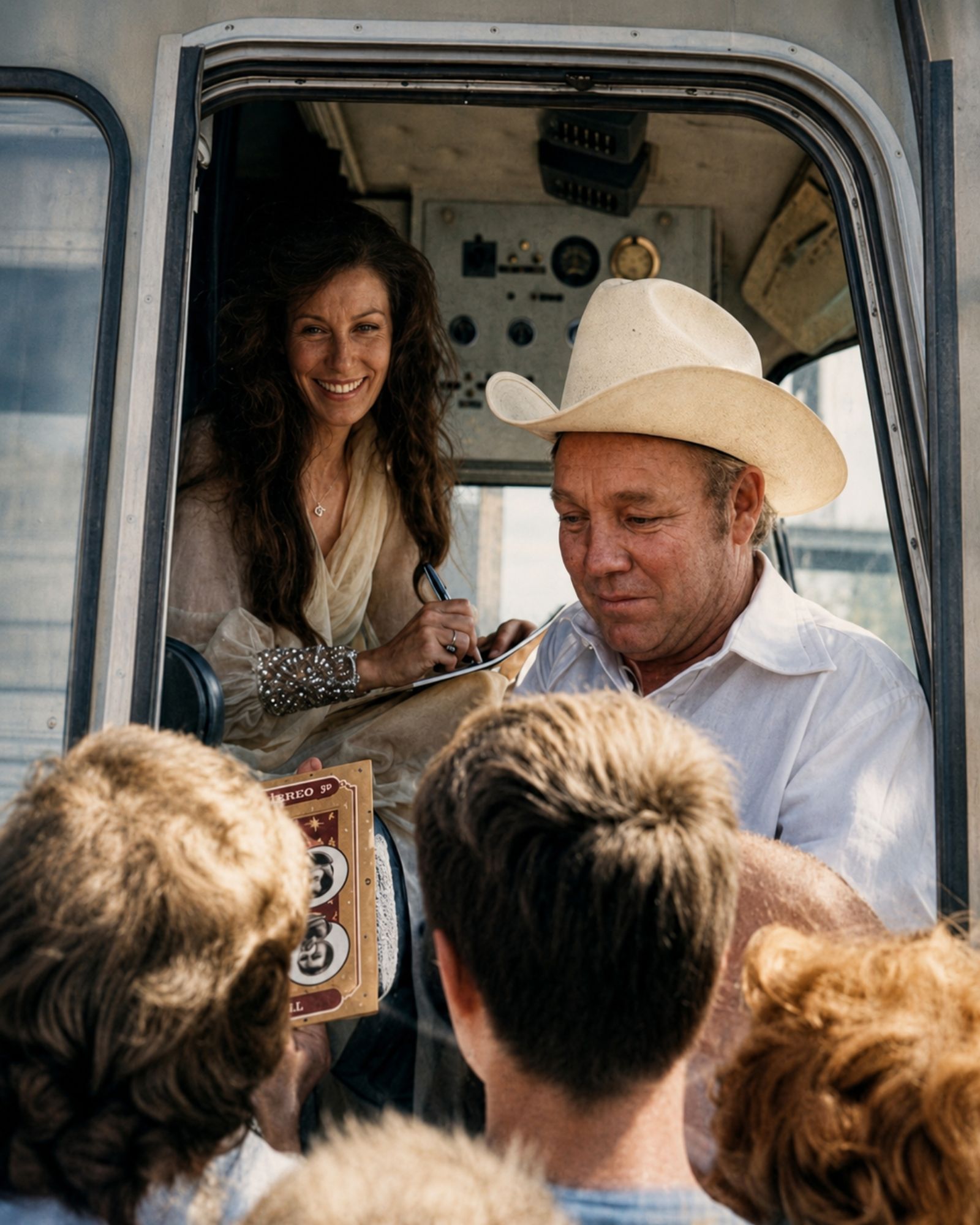
16 #1 HITS — AND SHE GOT HER FIRST ONE BY SLEEPING IN A CAR AND BEGGING RADIO STATIONS ONE BY ONE
In 1960, Loretta Lynn was not a star. She was a 28-year-old mother of four living in Washington State, far from the bright lights of Nashville and even farther from the kind of life most people imagine for a future legend. She had never been to Nashville. She did not have industry connections, expensive equipment, or a polished plan. What she had was determination, a husband who believed in her, and a song she knew deserved to be heard.
That song was “I’m a Honky Tonk Girl”, and it began with a $17 guitar that Loretta Lynn’s husband, Doo, bought her as an anniversary gift. The guitar itself was not perfect. In fact, the neck warped so quickly that Loretta Lynn could hardly keep it in tune. Still, she learned to play it anyway. She practiced, wrote, and kept going, even when the instrument fought her at every step. That kind of start would have discouraged many people. For Loretta Lynn, it became the beginning of everything.
A song with nowhere to go
When Loretta Lynn and Doo found a tiny label willing to press copies of the song, there was no army of promoters waiting to launch it. There was no instant radio buzz. There was just a stack of records, a dream, and an old Pontiac. So Loretta Lynn and Doo loaded the records into the trunk and set off across America, stopping station after station, DJ after DJ, asking for a chance.
They did not travel in comfort. They had no money for hotels, so they slept in the car. They ate bologna sandwiches in parking lots. They lived on hope, exhaustion, and the stubborn belief that if enough people heard the record, somebody would care.
At every stop, Loretta Lynn walked into the station with her single in hand and waited. Sometimes she waited a long time. She sat there until someone agreed to play it. Years later, Loretta Lynn would laugh about it, saying, “I imagine they thought, ‘This girl is going to stay here all night if we don’t play her record.’”
“I imagine they thought, ‘This girl is going to stay here all night if we don’t play her record.’”
The road did the work Nashville had not yet done
By the time Loretta Lynn and Doo finally pulled into Nashville, something remarkable had already happened. “I’m a Honky Tonk Girl” had climbed to No. 14 on the Billboard country chart. Loretta Lynn had not arrived as an unknown dreamer anymore. She had arrived as proof that persistence could travel faster than reputation.
Even then, the story was not simple or glamorous. Loretta Lynn did not even know she had been booked for the Grand Ole Opry. She and Doo parked across the street from the Ryman Auditorium and slept in the car one more night. It was not a red-carpet arrival. It was a hard-earned pause before a life-changing moment.
The next morning, Doo brought Loretta Lynn a box of donuts. That small gesture, quiet and ordinary, must have felt almost unreal against everything else that had happened. Then, that evening, Loretta Lynn walked onto the most famous stage in country music and sang the song that people had once ignored.
One performance changed everything
That moment did more than introduce Loretta Lynn to a national audience. It marked the beginning of a career that would reshape country music for generations. Loretta Lynn never left that world behind. She did not slip in for one lucky song and disappear. She stayed, built a legacy, and went on to earn 16 No. 1 hits, becoming one of the most important voices in the history of the genre.
What makes her story so powerful is not just the success at the end. It is the long, uncomfortable road before it. Loretta Lynn did not wait for permission. She did not wait for the “right” moment. She took the record herself and went looking for the people who might play it. She turned rejection into motion. She turned a sleeping car into a launch pad.
That kind of story still matters because it reminds us that talent alone is not always enough. Sometimes the difference between being overlooked and being heard is the willingness to keep knocking on doors no one opens right away. Loretta Lynn did that with courage and grit, one station at a time.
The question her story leaves behind
Loretta Lynn’s first hit was not just a chart success. It was a lesson in persistence, belief, and the kind of courage that does not look glamorous while it is happening. It looks like fatigue, uncertainty, and another night in a car. It looks like walking into yet another radio station and hoping somebody listens this time.
And yet, that is exactly how a legend began.
What’s the furthest you’ve ever gone just to make someone listen?