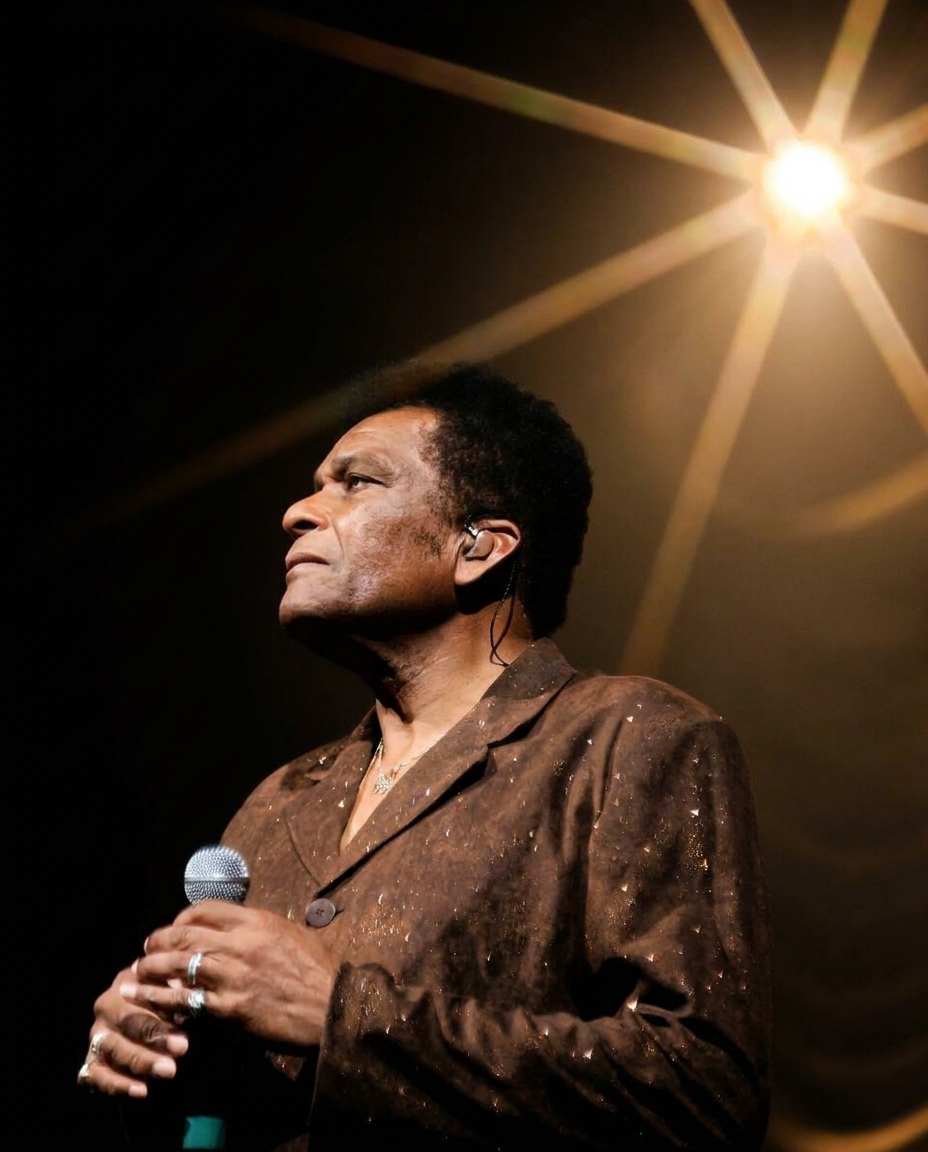
The $10 Guitar That Changed Charley Pride’s Life
In 1948, in the small Delta town of Sledge, Mississippi, a 14-year-old boy did something that might have looked ordinary to anyone passing by. Charley Pride took ten dollars he had earned the hardest way possible and bought his first guitar.
That money had not come easy. It came from picking 400 pounds of cotton under a punishing sun, the kind that didn’t soften for youth, hope, or exhaustion. It came from blistered hands, long rows, and days that started early and ended tired. For Charley Pride, ten dollars was not just ten dollars. It was proof that even a boy born into struggle could still reach for something that belonged to him alone.
Charley Pride was one of eleven children, raised in a sharecropper’s family where work was constant and comfort was rare. Some years, shoes were a luxury. Cotton came before play. Chores came before dreams. The future, at least on the surface, looked like more of the same.
But inside that home, there was one small opening into another world. Every Saturday night, the family’s radio brought in the Grand Ole Opry. The signal crackled through the Mississippi air, carrying voices that sounded far away and somehow close at the same time. Hank Williams sang through the static while the Delta settled into darkness outside.
Charley Pride would lie on the wooden floor with his ear close to the speaker, listening as if the songs were speaking directly to him. He memorized words, phrasing, and feeling. He was not just hearing the music. He was studying it, absorbing it, quietly building a future no one around him could yet imagine.
His brothers laughed. To them, it probably seemed like a strange obsession. His father did not quite understand what drew Charley Pride so deeply to those voices on the radio. But his mother understood something, even if she feared it.
“Black boys don’t sing country, Charley.”
She did not say it sharply. She said it softly, carefully, like a mother placing a hand in front of a fire. It was not ridicule. It was warning. She knew the world her son lived in, and she knew how narrow it could be. In 1948 Mississippi, there were lines everywhere, and most people were expected to stay where they had been placed.
Still, Charley Pride kept practicing.
He practiced after working the fields. He practiced after school. He practiced when his hands hurt and when nobody seemed to understand why he kept chasing a sound that did not seem to belong to him. Maybe that was exactly why he held onto it so tightly. Country music gave him a place to go when the fields felt endless. It carried him beyond Sledge, beyond poverty, beyond all the quiet limits placed on a Black boy in the Deep South.
There is something deeply moving about the image of young Charley Pride smiling at his mother and continuing anyway. Not arguing. Not making speeches. Just learning, listening, and believing. Sometimes the boldest kind of defiance is quiet.
The years that followed would prove just how far that quiet determination could go. Charley Pride would become one of the most successful country singers in history, a voice impossible to ignore, a man who walked onto stages many believed were never built for him. He would wear the rhinestone suits, sing the songs, and earn the applause. He would become exactly what people once said he could not be.
But before the fame, before the records, before the spotlight, there was a boy on a wooden floor in Mississippi listening to a radio. There was a cotton field. There was ten dollars. There was a guitar.
Sometimes history does not begin with a grand entrance. Sometimes it begins with a tired child, a small instrument, and a dream that refuses to stay quiet.
And then came the day Charley Pride stood before his mother wearing a rhinestone suit.
No headlines recorded the moment. No cameras were there to catch her face. Yet it may have been one of the most important scenes of all. The woman who had once tried to protect her son from heartbreak now saw him dressed for the very stage she feared the world would never allow him to reach.
What his mother whispered that day, Charley Pride never repeated. Maybe he wanted to keep it for himself. Maybe some words are too sacred once they have been earned. But you can imagine what lived inside that moment: relief, wonder, pride, and perhaps the quiet recognition that her son had walked straight through the wall the world had built for him.
And it all started with a $10 guitar bought by a boy who refused to let the sound in his heart be silenced.