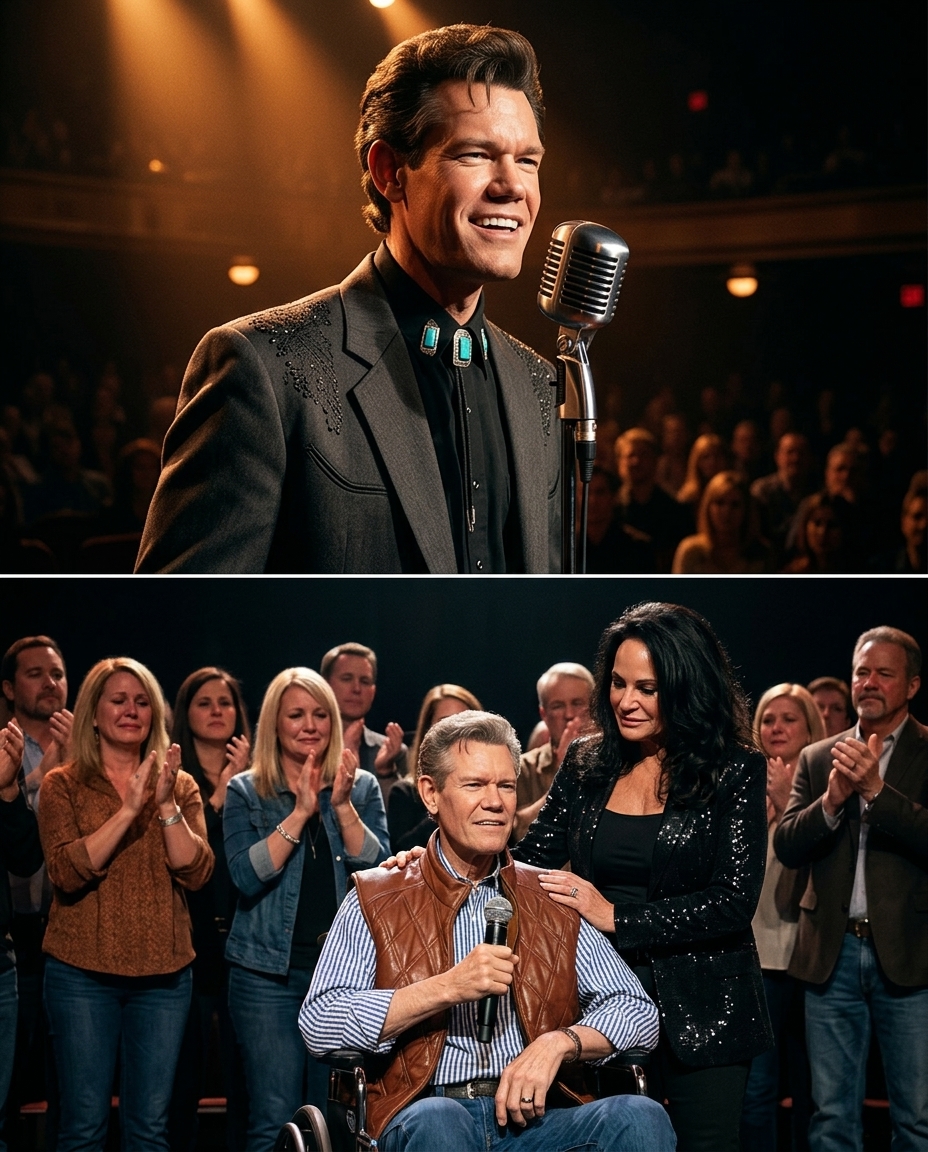
When Randy Travis Brought Country Music Back to Life—and Faced the Silence No One Saw Coming
In the mid-1980s, country music was at a crossroads. The polished sound coming out of Nashville was reaching wider audiences, but many longtime listeners felt something essential was slipping away. The steel guitar, the heartbreak, the plainspoken honesty that once defined the genre seemed to be fading under layers of gloss. Then Randy Travis arrived, and everything changed.
Before the standing ovations, the platinum records, and the Grand Ole Opry reverence, Randy Travis was a young man from North Carolina trying to survive in Nashville any way he could. He worked at The Nashville Palace, doing the kind of jobs nobody dreams about when they picture stardom. He washed dishes, handled whatever needed handling, and kept singing whenever the chance appeared. His voice was impossible to ignore: deep, steady, and unmistakably country. It did not sound trendy. It sounded true.
That truth, oddly enough, became the problem.
Nashville labels kept passing on Randy Travis because they believed he was too country. At a time when many executives were chasing crossover appeal, Randy Travis represented something older and more grounded. He sang with a reedy baritone that felt rooted in church pews, front porches, and hard-lived stories. For decision-makers focused on radio polish, that seemed like a risk. For listeners starving for authenticity, it would soon feel like rescue.
Standing beside Randy Travis during those difficult years was Lib Hatcher, the woman who believed in him long before the industry did. Lib Hatcher managed, pushed, protected, and advocated for Randy Travis when others shut doors in his face. She recognized that what made him unusual was exactly what made him necessary. Without that persistence, country music history might look very different.
The Voice That Changed the Room
When Randy Travis finally broke through, the impact was immediate. Songs such as "On the Other Hand", "1982", and later "Forever and Ever, Amen" did more than climb the charts. They reset the mood of an entire genre. Randy Travis did not come in asking country music to reinvent itself. Randy Travis reminded country music of what it had been all along.
Suddenly, traditional country was not a relic. It was alive. The success of Randy Travis opened the door for a new generation of artists who leaned into fiddle, steel, restraint, and emotional clarity. His rise was not just personal triumph. It was a cultural correction. Randy Travis made it possible for country music to sound country again without apology.
Over the years, Randy Travis delivered hit after hit and became one of the most respected voices in American music. The numbers were remarkable, but they never fully explained his power. Randy Travis sang as if every word had been weighed before it was spoken. There was no rush in his delivery, no need for tricks. That calm confidence became his signature. For many fans, hearing Randy Travis felt less like listening to a performer and more like hearing the genre itself speak.
The Day the Music Changed
Then came 2013.
A devastating stroke nearly took Randy Travis’s life and left lasting damage that stole much of his ability to speak and sing. For a man whose voice had shaped modern country music, the loss felt almost impossible to comprehend. The instrument that carried so much comfort, conviction, and memory was suddenly silenced.
And yet, the story did not end there.
What followed was not a comeback in the usual sense. Randy Travis did not return to reclaim charts or prove critics wrong. Instead, Randy Travis appeared in public with a different kind of strength. Fans watched him stand on the Opry stage, speak only in fragments, and still command the room. The silence around Randy Travis became its own testimony. People were not just reacting to nostalgia. They were witnessing dignity under pressure, grace after catastrophe, and the strange truth that presence can be as powerful as performance.
Randy Travis once helped save country music with his voice. Now Randy Travis moves people with something even quieter: endurance.
More Than a Singer
That may be Randy Travis’s deepest legacy. Yes, Randy Travis revived traditional country at the exact moment it needed saving. Yes, Randy Travis gave the genre some of its most enduring songs. But what lingers today is something larger than a catalog. It is the image of a man who lost nearly everything that made him famous and still found a way to stand in the light.
There is heartbreak in that image, but there is also meaning. Randy Travis reminds the world that a voice is more than sound. Sometimes it is character. Sometimes it is history. Sometimes it is the effect a life leaves on others long after the notes are gone.
Randy Travis may struggle to say a single word now, but the story Randy Travis wrote into country music still speaks with extraordinary force. And in a genre built on pain, faith, survival, and truth, that may be the most country ending of all.