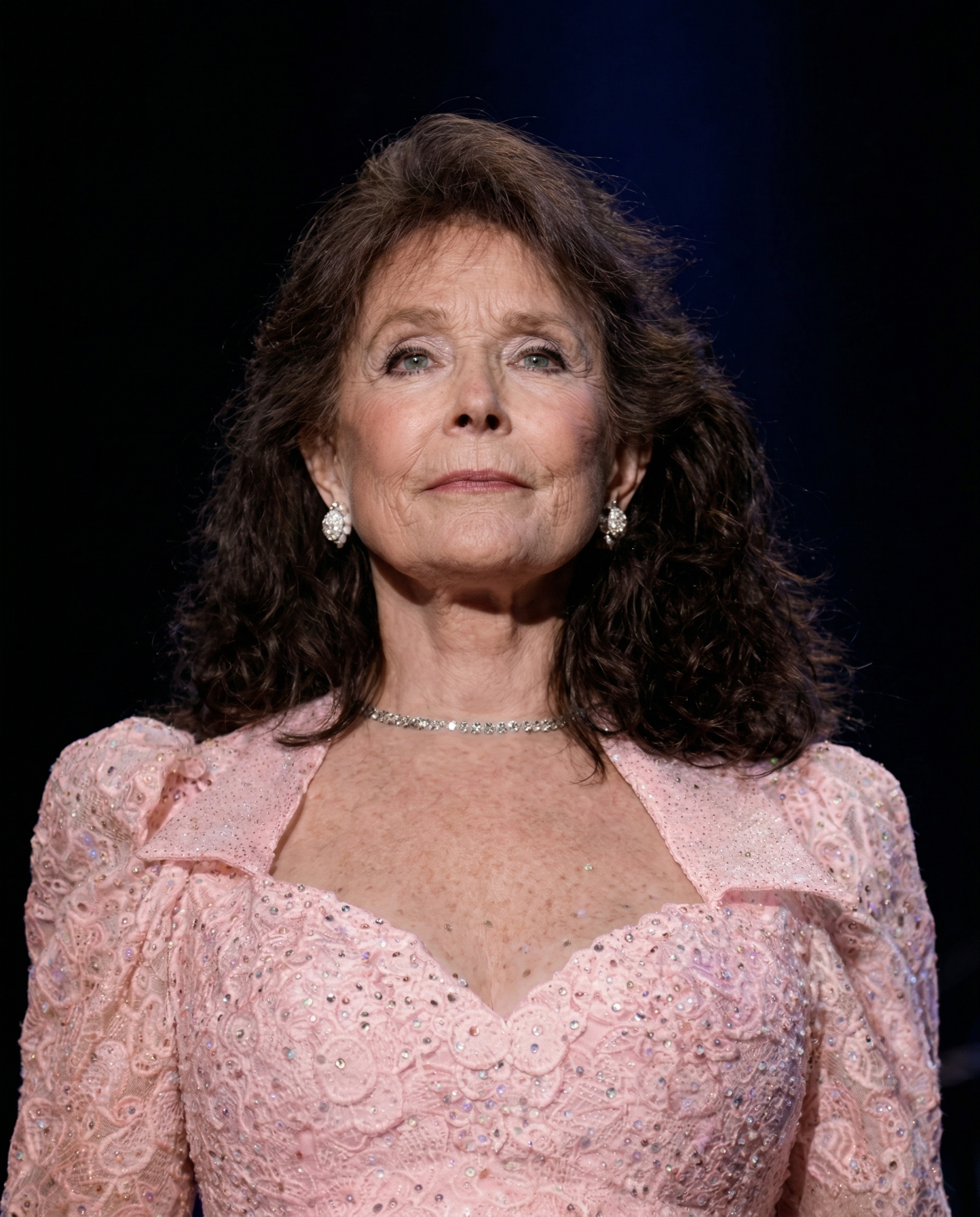
When Loretta Lynn Told the Truth, Country Music Didn’t Know What to Do
There is something unforgettable about the way country music has always treated honesty. When a man sang about jealousy, revenge, heartache, or bad decisions, people called it raw. They called it traditional. They called it country. But when Loretta Lynn stepped into that same emotional territory and sang with the same sharp truth, the reaction changed. Suddenly, the conversation was not about realism. It was about whether Loretta Lynn had gone too far.
That is what makes Loretta Lynn such a lasting figure in country music. Loretta Lynn did not arrive quietly. Loretta Lynn sang like a woman who had lived every line and saw no reason to soften it for anyone’s comfort. That kind of voice could not be ignored, and for some people, it could not be forgiven either.
For years, male artists had built careers on songs about cheating, drinking, wandering eyes, and emotional payback. Those songs were accepted as part of the genre’s rough-edged charm. They were played on the radio. They were celebrated in bars, on front porches, and in living rooms. Nobody rushed to call those men dangerous for singing what many people were already thinking.
Then Loretta Lynn released Fist City, and the tone around the conversation shifted. Here was a woman drawing a line, not with polite sadness, but with warning. Loretta Lynn did not play the victim. Loretta Lynn did not whisper. Loretta Lynn spoke directly, and that directness unsettled people.
It happened again with Rated ‘X’, a song that looked at the way society judged divorced women far more harshly than men. Then came The Pill, one of the boldest songs ever to come out of Nashville at the time. Loretta Lynn sang about motherhood, freedom, marriage, and control over a woman’s own life with a kind of plainspoken courage that made some listeners admire her even more and made others deeply uncomfortable.
Some country radio stations refused to play those songs. That reaction has become part of Loretta Lynn’s legend, but the deeper story is why. It was not simply because the material was shocking. It was because Loretta Lynn was saying things women had often been expected to swallow in silence. Loretta Lynn was not creating scandal for attention. Loretta Lynn was giving voice to realities that had long existed behind closed doors.
Maybe the problem was never that Loretta Lynn was too controversial. Maybe the problem was that Loretta Lynn was too clear.
That clarity is what made Loretta Lynn powerful. Loretta Lynn did not hide behind polished language or vague emotion. Loretta Lynn sang with detail, with humor, with anger, and sometimes with a smile that made the message land even harder. There was nothing abstract about it. Listeners knew exactly what Loretta Lynn meant, and that kind of precision can be more threatening than shouting.
What is striking now is how modern those songs still feel. The subjects Loretta Lynn sang about are not relics from another era. They still live inside conversations about marriage, double standards, dignity, and who gets to speak openly without being punished for it. That is why Loretta Lynn continues to resonate. Loretta Lynn was not simply reacting to a moment. Loretta Lynn was naming patterns that would outlast the decade, the trends, and even the arguments around the songs themselves.
It is easy now to celebrate Loretta Lynn as a pioneer, because history has a way of polishing the rough edges of courage. But in the moment, courage rarely looks comfortable. In the moment, it sounds disruptive. It sounds like a woman refusing to lower her voice just because the room would rather hear something easier.
Loretta Lynn was never “too much.” Loretta Lynn was honest in a space that often praised truth until that truth came from the wrong person. That may be the real reason Loretta Lynn stood apart. Loretta Lynn did not just sing country music. Loretta Lynn challenged country music to admit what it had room for, and what it still feared.
So was Loretta Lynn ahead of her time? Maybe. But there is another possibility that feels even more powerful. Maybe Loretta Lynn was not early at all. Maybe Loretta Lynn was simply too real for some people to handle, and country music is still catching up.