When Strangers Painted the Soul of a Land They Had Never Seen
Some songs feel like they’ve always existed, as if someone simply discovered them and carried them into the world. “Take Me Home, Country Roads” is one of those songs. It sounds like memory. It sounds like a place. It sounds like West Virginia.
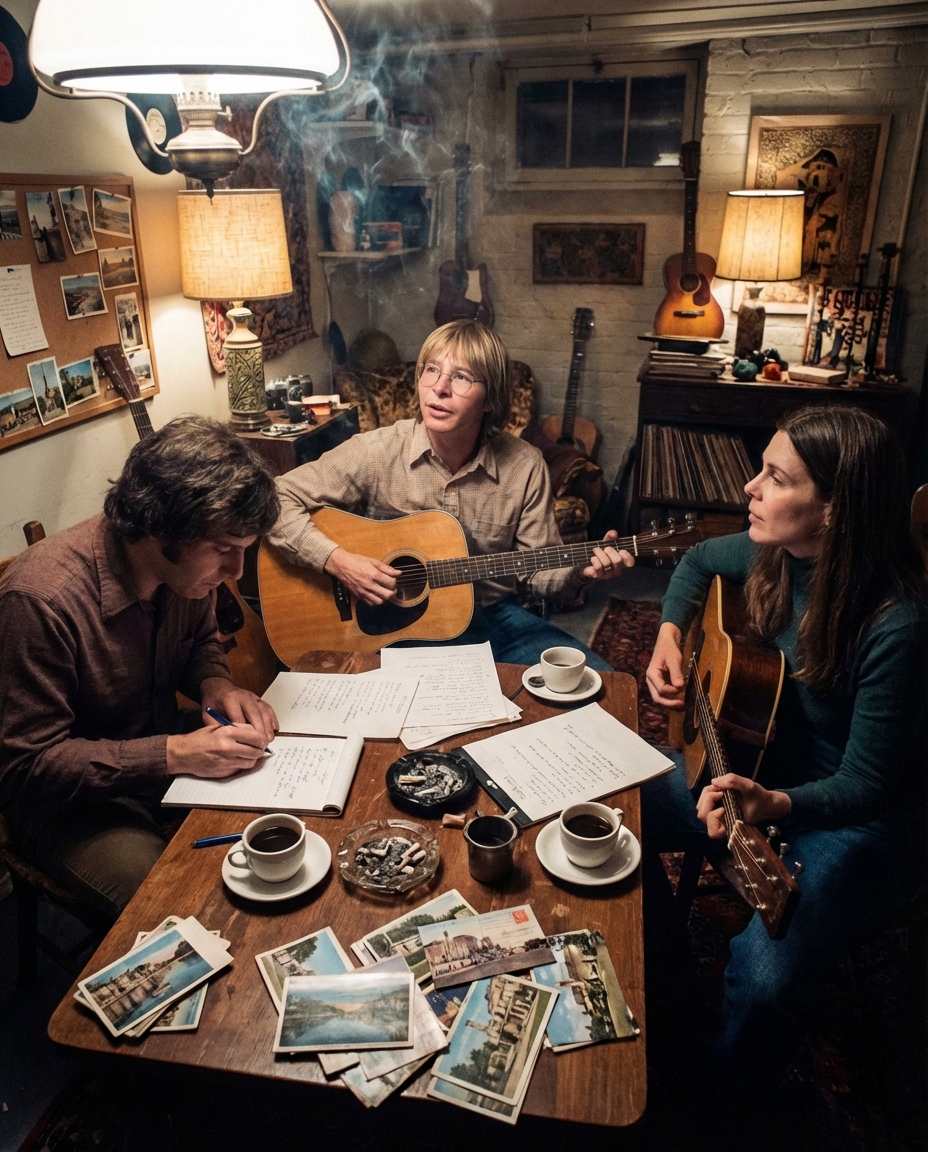
And yet the truth behind it is the kind of irony people argue about at kitchen tables: the song that would become a musical postcard for the West Virginia mountains wasn’t born out on a ridgeline or beside a quiet river. It came together far from the open sky—inside a small, lived-in space in Washington, D.C., in late 1970, with three writers chasing a feeling none of them could physically point to on a map.
A Basement, a Deadline, and a Need to Escape
It was December 1970. Bill Danoff and Taffy Nivert had been working on a melody and fragments of lyrics, the kind that keep slipping away when you try to hold them too tightly. John Denver, then still building his own path, stopped by after a show. The room was ordinary, maybe even cramped, the air thick with that city feeling—close walls, close sounds, the sense that the horizon is always behind a building.
They weren’t writing a tourism brochure. They were writing an escape hatch.
People imagine songwriting as inspiration striking like lightning. Sometimes it’s more like pacing in circles until the right words finally breathe. They chased the idea of a road, of distance, of a place that could carry relief. Not “vacation.” Not “getaway.” Something deeper. Something like home.
The Place Was Real, But the First Spark Wasn’t Where You Think
Here’s the part that surprises people: the images that nudged the song into shape weren’t drawn from West Virginia trips or Shenandoah mornings. The early spark came from scenery and roads much closer to Washington—country drives through Maryland, the kind of rolling landscape that can trick you into forgetting the city is only a short ride behind you. There were also postcards and pictures—little rectangles of someone else’s nostalgia—that helped the writers imagine a home they were craving more than describing.
Then came the turning point: the words.
They tried different state names. Some didn’t fit the music. Some didn’t fit the mouth. Some didn’t fit the feeling. “West Virginia” landed in the melody like it had been waiting there all along. It wasn’t just about syllables—though syllables matter. It was about the way the phrase sounds when you sing it: wide, steady, full of breath. It carried longing without needing extra explanation.
And once that name clicked, everything else suddenly had a place to stand.
They Didn’t Just Write a Song. They Summoned a Home.
There’s a special kind of night when you realize you’re not going to sleep—not because you’re partying, but because something is happening that feels bigger than your plans. They kept working. They shaped lines, tested chords, adjusted the path of the melody until it moved like a car on a familiar road. By morning, the song didn’t feel like a draft anymore. It felt finished in the way finished things sometimes do—quietly, confidently, as if it had simply decided to exist.
What they had built wasn’t a perfect geographic portrait. It was emotional truth dressed in place names. It was a story about belonging, told so simply that listeners could step inside it without needing an invitation.
The First Time It Was Sung, the Room Changed
When “Take Me Home, Country Roads” began to appear in front of audiences—especially in intimate club settings like The Cellar Door—people reacted in a way that surprises even seasoned performers. Not loud at first. More like a sudden stillness. The kind of silence that means everyone is listening and, for a moment, nobody wants to be the first person to move.
Then came the release: applause that didn’t feel polite. It felt grateful. As if the song had named something people hadn’t been able to say out loud.
“Home” can be a place you’ve never seen—if the feeling is real enough.
When a State Chooses a Song Written by Outsiders
Decades later, West Virginia officially adopted “Take Me Home, Country Roads” as a state anthem. That fact alone says something powerful. A place looked at a song written by people who hadn’t stood in its valleys and still said, This is us.
Maybe that’s the secret. The song doesn’t claim to be a survey map. It’s a longing map. It doesn’t demand you prove your roots. It simply offers a road back to wherever you feel understood.
And that’s why, when strangers sing it—at concerts, in bars, at stadiums, on quiet nights when they miss something they can’t name—it still works. Because “Take Me Home, Country Roads” doesn’t just describe a land. It describes the human ache to belong somewhere again.