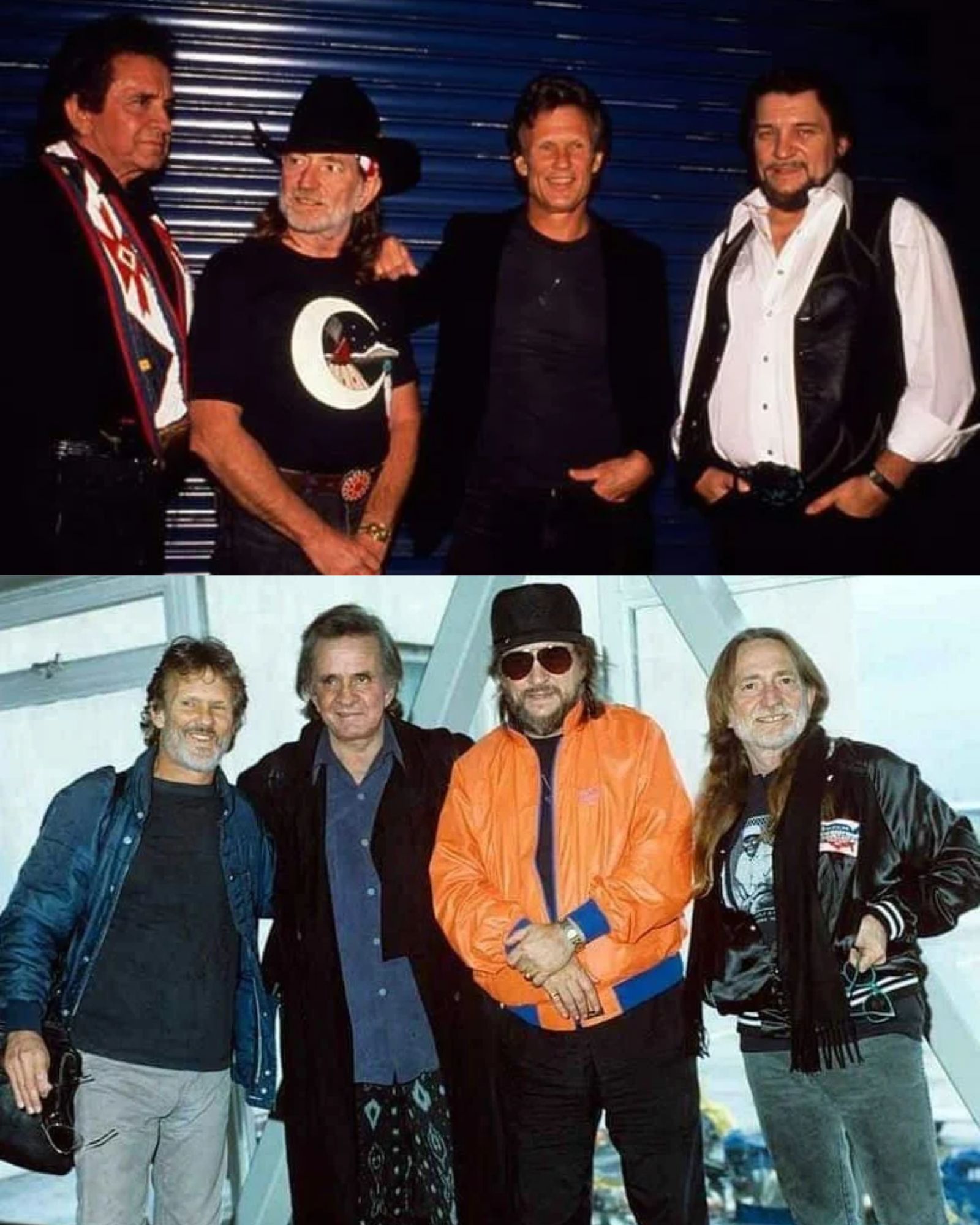
In 1985, Johnny Cash, Waylon Jennings, Willie Nelson, and Kris Kristofferson recorded a song about a man who had been dead for 15 years. Near the end of the recording, Waylon Jennings spoke a name that most country music listeners had never heard before.
That name was Jack.
Jack Prigg was not a famous musician, a Nashville songwriter, or a country star. Jack Prigg was an aging oil driller from West Texas who had helped raise a little boy named Guy Clark.
And that unlikely friendship would eventually become one of the most moving songs The Highwaymen ever recorded.
A Boy, an Old Oil Driller, and a Hotel in Texas
Guy Clark was born on November 6, 1941, in Monahans, Texas. His grandmother, Rossie Clark, operated a small hotel where oil workers, travelers, and other passing characters found a place to stay.
Among the residents was Jack Prigg, an experienced oil driller who had spent decades working in the petroleum industry.
During World War II, Guy Clark’s father was serving overseas. Jack Prigg became the older male figure in young Guy Clark’s everyday life.
Jack Prigg was not related to Guy Clark by blood, but their relationship grew into something remarkably close to that of a grandfather and grandson.
Jack Prigg took Guy Clark along to oil fields and introduced the boy to the rough, colorful world of working men in West Texas.
To the young Guy Clark, Jack Prigg seemed like a character straight out of a Western movie.
The Day Guy Clark Never Forgot
One of the most extraordinary memories came during a visit to an oil rig.
Guy Clark later recalled standing near Jack Prigg when a well suddenly began gushing oil. The pressure was so powerful that it blew the racking board from the top of the drilling structure.
Oil sprayed everywhere as Jack Prigg hurried around the rig.
For a young boy, it was an unforgettable sight. This was not a cowboy adventure invented for a movie. It was part of Jack Prigg’s actual working life.
But Guy Clark remembered quieter moments, too.
Back at the hotel, Jack Prigg would borrow a guitar, and Guy Clark would play the old American folk song “Red River Valley.”
Jack Prigg sometimes became emotional while listening.
Years later, Guy Clark would preserve that image of an aging oil driller remembering a lifetime of experiences while a young boy played guitar nearby.
Those memories eventually became the heart of a song.
The Loss That Inspired a Country Classic
Jack Prigg died in May 1970 at the age of 83.
For Guy Clark, the loss was deeply personal. Jack Prigg had been part of Guy Clark’s life since childhood, offering companionship, guidance, and a view of the world that ordinary classrooms could never provide.
In the early 1970s, Guy Clark transformed those memories into a song called Desperados Waiting for a Train.
The title reflected how Guy Clark had viewed the friendship: an aging oil driller and a little boy imagining themselves as wandering heroes from an old Western.
Jerry Jeff Walker recorded the song for the 1973 album ¡Viva Terlingua!.
In 1975, Guy Clark released a deeply personal version on his debut album, Old No. 1.
The recording told the story of a boy growing older while watching a childhood hero gradually become an elderly man.
It was not a conventional love song. It was about growing up, losing someone important, and realizing that even childhood heroes cannot escape time.
When The Highwaymen Brought Jack Back in 1985
In 1985, Johnny Cash, Waylon Jennings, Willie Nelson, and Kris Kristofferson recorded Desperados Waiting for a Train for their album Highwayman.
Their version reached No. 15 on Billboard’s country singles chart.
Each singer brought a distinctive voice to Guy Clark’s story, but one moment near the end made the recording especially memorable.
After the final verse recalls the old man’s approaching death, Waylon Jennings speaks directly to Jack, as though the old oil driller were still there.
It was a brief moment, but an unmistakably personal one.
Fifteen years after Jack Prigg’s death, four of country music’s biggest legends were sharing the story of a man who had never sought fame.
The Version That Moved Guy Clark Most
There is another surprising detail about this song.
Despite the many celebrated singers who recorded it, Guy Clark once said that one of his favorite interpretations came from Western actor Slim Pickens.
Rather than singing the composition, Slim Pickens recited it as poetry.
Guy Clark considered that interpretation especially moving because the words had originally been shaped as a poem before becoming a song.
That detail reveals something important about Guy Clark’s songwriting. The purpose was never simply to create another country hit. The purpose was to remember someone who mattered.
A Name That Country Music Never Forgot
Jack Prigg never stood beneath the bright lights of the Grand Ole Opry. Jack Prigg never had a record on the charts or received a country music award.
Yet decades after Jack Prigg’s death, Johnny Cash, Waylon Jennings, Willie Nelson, and Kris Kristofferson helped carry Jack Prigg’s memory to listeners around the world.
Guy Clark died on May 17, 2016, but the childhood friendship preserved in Desperados Waiting for a Train remains part of country music history.
And perhaps that is what makes the song so powerful. Behind the famous voices and the unforgettable melody was a simple truth: Sometimes the people who change our lives the most are people the rest of the world never knows.