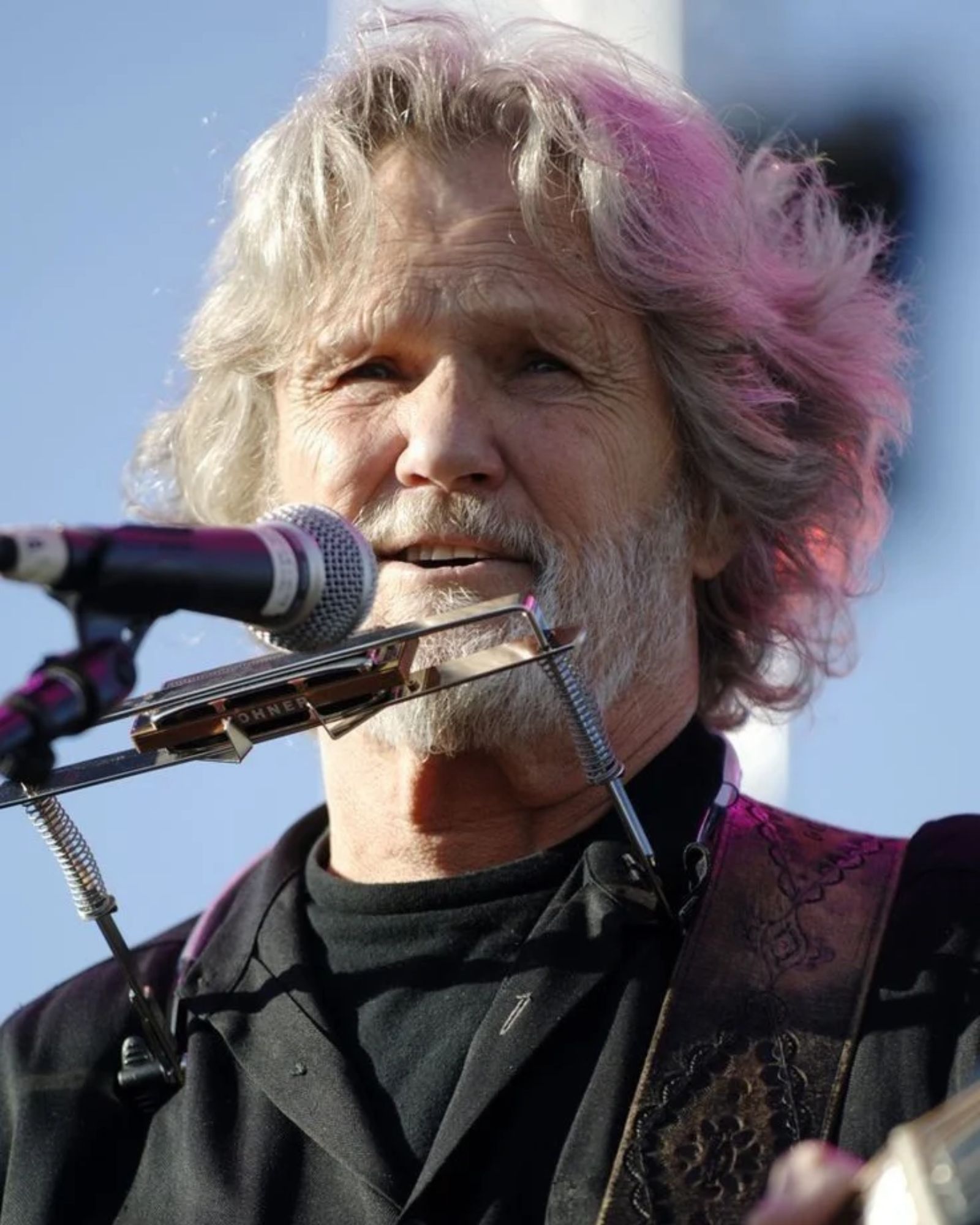
On Saturday, September 28, 2024, Kris Kristofferson died peacefully at home in Maui, Hawaii, surrounded by family. The legendary songwriter, singer, actor, and former Army officer was 88 years old.
Two days later, something quietly meaningful was happening more than 4,000 miles away.
At the Country Music Hall of Fame and Museum in Nashville, people were lining up to sign a memorial guest book. They weren’t waiting for concert tickets or hoping to meet a celebrity. They had come to leave one final message for a man whose words had accompanied them through decades of their lives.
It was a remarkable farewell for someone who had once struggled just to get a Nashville record producer to listen to his songs.
From Sweeping Studio Floors to Country Music History
Long before Kris Kristofferson became a household name, the future songwriter seemed destined for an entirely different life.
Born in Brownsville, Texas, in 1936, Kris Kristofferson attended Pomona College and later studied at Oxford University as a Rhodes Scholar. After returning to America, Kris Kristofferson became an Army captain and helicopter pilot.
A teaching position at West Point was waiting. For someone with that background, a respected military career seemed the natural path.
But Kris Kristofferson wanted to write songs.
In 1965, Kris Kristofferson left the military and moved to Nashville, choosing an uncertain future in music over the security of an established career.
Success did not come immediately.
To help support himself, Kris Kristofferson worked as a janitor at Columbia Recording Studios. While established musicians came through the building, the aspiring songwriter swept floors, emptied ashtrays, and searched for a way into the business.
Bob Dylan was recording the celebrated album Blonde on Blonde at Columbia during this period. Somewhere in the same building, an unknown Kris Kristofferson was cleaning up after recording sessions.
Few people could have imagined what would happen next.
The Songs That Changed Everything
By the late 1960s, Nashville was beginning to recognize Kris Kristofferson’s extraordinary songwriting ability.
Roger Miller recorded one of the songwriter’s most enduring compositions in 1969. Johnny Cash took Sunday Morning Coming Down to No. 1 on the country chart in 1970, and the song earned the Country Music Association’s Song of the Year award.
Ray Price found enormous success with For the Good Times. Sammi Smith turned Help Me Make It Through the Night into another major country hit.
Kris Kristofferson was writing about loneliness, freedom, regret, love, and the complicated choices ordinary people make. The words sounded honest rather than polished for commercial approval.
And one particular composition would carry Kris Kristofferson’s name far beyond country music.
The Handwritten Song That Connected Kris Kristofferson to Janis Joplin
Among the treasures preserved by the Country Music Hall of Fame and Museum were handwritten lyrics for Me and Bobby McGee, the song that became one of Janis Joplin’s most celebrated recordings.
The story behind that song began with a misunderstanding.
Music publisher Fred Foster had suggested that Kris Kristofferson write a song about a woman named Bobbie McKee, who worked as a secretary for songwriter Boudleaux Bryant.
During their telephone conversation, Kris Kristofferson misunderstood the surname as McGee.
The accidental change stayed.
Kris Kristofferson later explained that the song’s emotional inspiration also came from Federico Fellini’s film La Strada, particularly its portrayal of separation, loss, and loneliness.
What emerged was a story about two travelers sharing a brief period of freedom and companionship before going their separate ways.
Roger Miller recorded the composition first, but Janis Joplin would give it an unforgettable new life.
There was one particularly heartbreaking detail.
In a 1999 interview with Terry Gross, Kris Kristofferson recalled that although Janis Joplin had become a close friend, Kris Kristofferson had never heard the finished recording while Janis Joplin was alive.
Record producer Paul Rothchild played it for Kris Kristofferson the day after Janis Joplin died in October 1970.
In March 1971, Janis Joplin’s recording reached No. 1 on the Billboard Hot 100.
A song that began with a misheard name had become an American classic, carrying the voices and memories of two remarkable artists into the future.
The Nashville Farewell That Brought Everything Full Circle
In later years, Kris Kristofferson became a movie star, won a Golden Globe for A Star Is Born, and joined Willie Nelson, Johnny Cash, and Waylon Jennings in the Highwaymen.
In 2004, Kris Kristofferson was inducted into the Country Music Hall of Fame.
That recognition marked an extraordinary distance traveled from the days of cleaning floors at Columbia Studios.
When Nashville learned of Kris Kristofferson’s death in September 2024, fellow musicians, songwriters, and admirers shared their memories. At the museum, ordinary fans had a quieter way to participate: a memorial book waiting for their messages.
There was something fitting about that simple gesture.
Kris Kristofferson had spent a lifetime putting difficult feelings into words for other people. Now those people were finding words of their own to say goodbye.
And nearly six decades after an aspiring songwriter arrived in Nashville with little more than determination, the city that once barely knew Kris Kristofferson’s name was honoring the man who had helped change its music forever.
The songs remained. The stories remained. And for those who had found a little of their own lives in Kris Kristofferson’s words, the memories would remain, too.