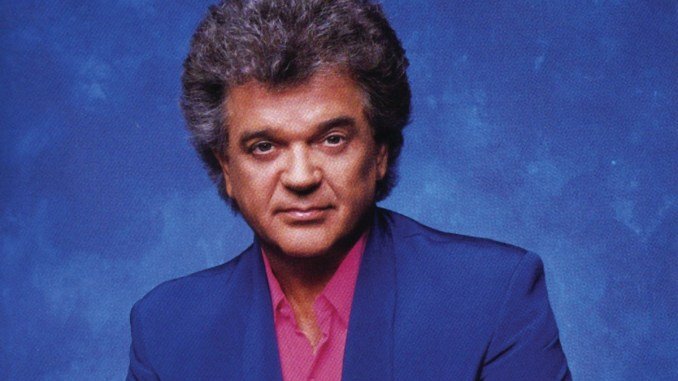
“Hello Darlin’”: The Two Words That Followed Conway Twitty Into Space
Two words. That was all Conway Twitty needed to make a room listen. Before the melody of “Hello Darlin’” begins, he speaks its title as though someone he once loved has just walked through the door. The greeting is warm, but there is a hesitation behind it. In the seconds that follow, an entire history of love and regret comes into view.
Released in 1970, the song became one of the defining recordings of Twitty’s career. Its journey is remarkable, too: five years later, a version he recorded in Russian was played during a historic meeting of American and Soviet spacecraft.
Before Country Radio Called Him Its Own
Conway Twitty was born Harold Lloyd Jenkins in Mississippi. Long before “Hello Darlin’,” he found fame with the 1958 pop hit “It’s Only Make Believe.” For a while, audiences knew him as a rock and roll star, but country music had always mattered to him. He continued writing country songs even during his pop years.
When he moved toward country in the mid-1960s, acceptance did not come immediately. Some country disc jockeys were skeptical of a singer who had already made his name in another style. Twitty kept recording. By 1968, “The Image of Me” had reached the country Top Ten, and “Next in Line” gave him his first country number one.
That persistence gave “Hello Darlin’” its setting. He had already shown he belonged on country radio. Now he was about to sing a story listeners would carry with them for decades.
A Conversation That Hurts to Hear
Twitty wrote “Hello Darlin’” himself. At its heart is an encounter many people dread: running into someone they once loved after the relationship has ended. The man in the song tries to manage an ordinary conversation. He asks how she is doing and attempts to hide how much he misses her. His composure only makes the sadness clearer.
The spoken opening is what makes the moment feel so close. There is no grand introduction to warn the listener that a heartbreak song is coming. Twitty simply says hello, and the music grows around a feeling that has already begun. His delivery leaves room for the listener’s own memories: an unexpected meeting, a familiar face, the words that never came out at the right time.
“Hello Darlin’” reached number one on the country chart in 1970. Twitty would have many more hits, including celebrated duets with Loretta Lynn, but those opening words remained among the most recognizable sounds of his career.
From a Country Record to an Orbiting Spacecraft
In 1975, Apollo commander Tom Stafford asked Twitty to record the song in Russian for the Apollo–Soyuz mission. The project brought American astronauts and Soviet cosmonauts together in orbit at a time when cooperation between their countries carried special meaning. Twitty worked on the language and recorded a version known as “Privet Radost.”
NASA’s mission chronology places the playing of the Russian recording on July 19, 1975, shortly before the spacecraft undocked. The song about a difficult personal reunion had become part of a very different meeting: two crews reaching across a political divide above Earth.
It is a striking chapter in the song’s life, but its appeal still begins with the small, human scene Twitty wrote. You do not have to know anything about spaceflight to understand the feeling in that first greeting.
The Voice Behind the Greeting
Twitty went on to build an extraordinary country career, with forty number one Billboard country hits. He died in 1993 at age 59. Recordings, however, have their own way of keeping a voice near. Play “Hello Darlin’” today, and the years between the listener and 1970 seem to narrow as soon as he speaks.
Perhaps that is why the song lasts. It captures the awkward courage it takes to face someone who once knew your heart, and the pain of realizing that a simple hello can still mean so much more.
What memory comes back to you when you hear Conway Twitty say “Hello Darlin’”?