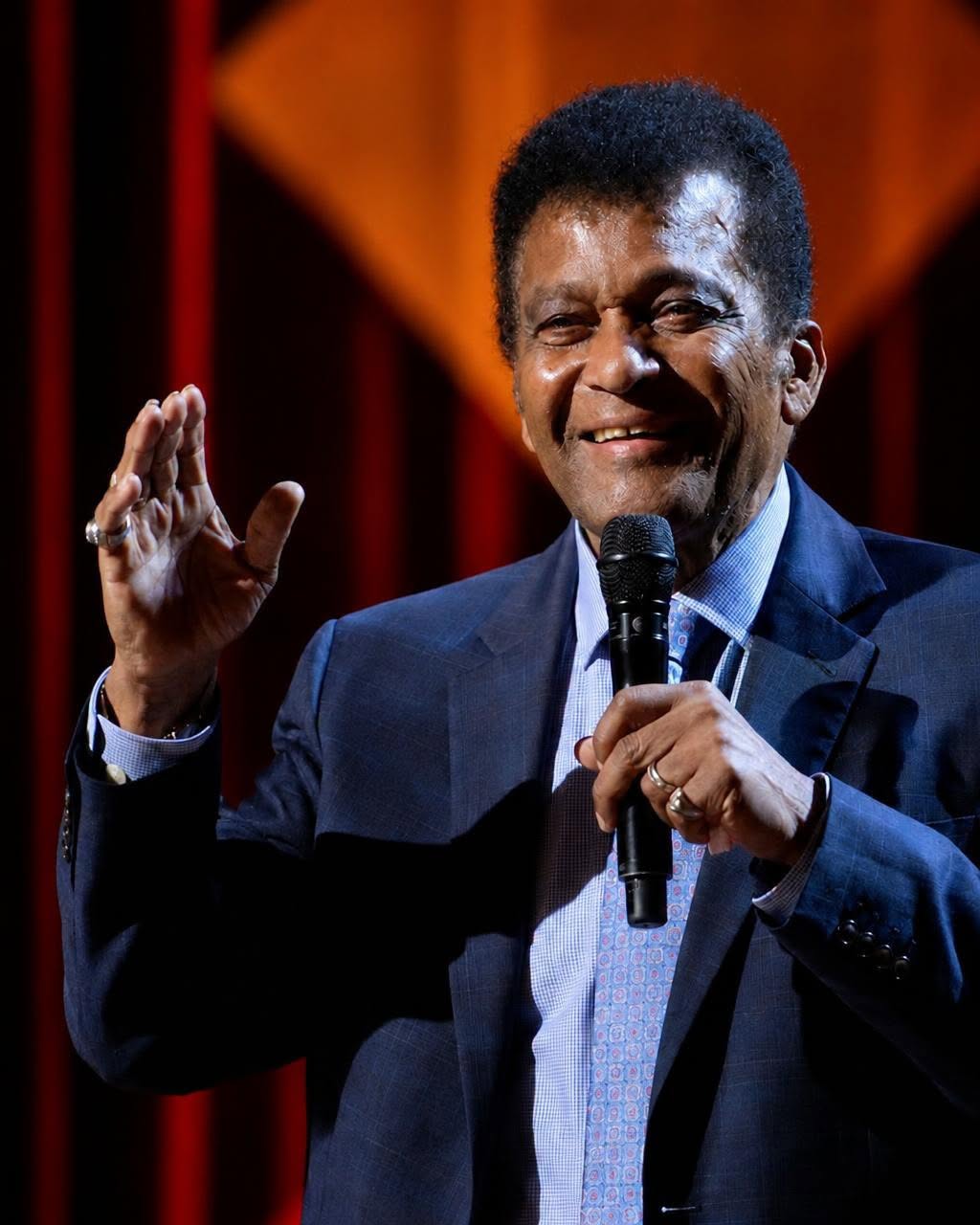
Charley Pride and the Quiet Power of a True Song
Charley Pride never needed to force a song into feeling important. He had a way of singing that made honesty seem effortless, as if the music already knew where it belonged. When he sang “Kiss an Angel Good Mornin’,” he did not push for drama. He did not raise the volume just to hold attention. He smiled, settled into the melody, and let the words carry the feeling.
That was part of what made Charley Pride so unforgettable. His voice was warm and steady, and it carried a calm confidence that could fill a room without ever shouting for it. People did not just hear the song; they felt invited into it. A love song in Charley Pride’s hands could seem personal, even in a huge arena, because he sang it like a conversation instead of a performance.
A Final Moment That Felt Like a Full Circle
On November 11, 2020, Charley Pride was honored with the Willie Nelson Lifetime Achievement Award at the CMA Awards in Nashville. During the show, Jimmie Allen introduced him, and the two performed “Kiss an Angel Good Mornin’” together. That appearance became Charley Pride’s final public performance. The moment carried extra weight because it was not built around spectacle. It was built around respect, memory, and a song that had already lived many lives by then.
There was something moving about how naturally Charley Pride handled it. Even at 86, he delivered the song with the same easy grace that had helped define his career. He did not seem to be proving anything. He simply sang, and the room listened.
Why His Style Still Matters
Charley Pride understood something that many performers spend years chasing: a song does not need to be exaggerated to be meaningful. Sometimes the strongest emotion is the one that sounds lived-in. A steady voice can be more powerful than a dramatic one. A gentle smile can say as much as a long speech.
That is why so many people still return to his performances. They feel close, familiar, and sincere. Charley Pride did not make love songs larger than life. He made them believable. And in doing that, he gave them a kind of lasting truth.
He never seemed to be trying to impress anyone. He just sang like someone who trusted the song to do its own work.
Maybe that was the secret all along. Charley Pride never had to force a song to sound true, because he already knew how to let truth lead.