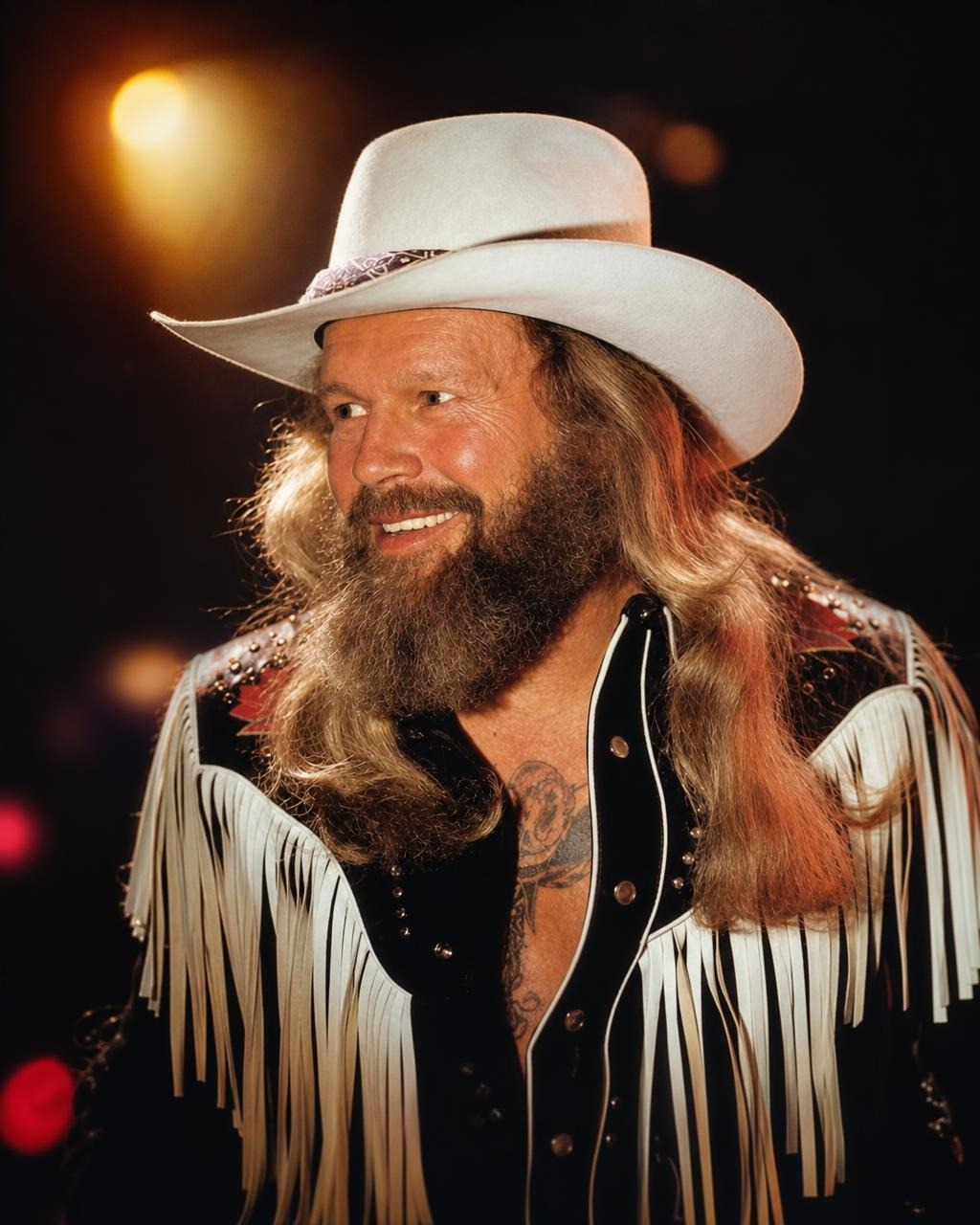
David Allan Coe and the Songs Prison Could Not Silence
David Allan Coe’s life was shaped by hard breaks, long stretches of trouble, and a stubborn kind of creativity that refused to disappear. In the early 1960s, he entered the Ohio State Penitentiary and spent years behind bars before his release in 1967. But even in solitary confinement, he said, the music stayed with him. The walls could limit his body, yet they could not keep his mind from writing songs.
Writing in Silence
Coe later described prison as a place where time dragged and freedom vanished, but imagination still had room to move. When guards isolated him in “the hole,” he could not pick up a guitar or sit at a piano. Still, he kept composing in his head, shaping lines and melodies one by one until they became something real. For him, songwriting was not a hobby. It was survival.
That detail gives his early career a different weight. The songs that began in prison were not born in comfort or inspiration seminars. They came from waiting, loneliness, and an insistence on hearing music where others might have heard only silence.
From Prison to Nashville
After his release, David Allan Coe headed to Nashville with the rough-edged material he had carried out of prison. Those songs became the basis for his first album, Penitentiary Blues, released in 1970. It did not make him an overnight star, but it announced something lasting: a voice that could turn damage into art.
His early records built a reputation for honesty and grit. Coe was not polished, and he did not sound like he was trying to be. That was part of the appeal. He wrote from the perspective of a man who had lived the stories he sang about, and audiences could hear that in the edges of his voice.
The Songs That Found Their Audience
Over time, other artists helped carry David Allan Coe’s writing even further. Tanya Tucker took “Would You Lay With Me (In a Field of Stone)” to No. 1. Johnny Paycheck made “Take This Job and Shove It” into a working-class anthem. Coe also found his own defining moments with “You Never Even Called Me by My Name” and “The Ride”, songs that secured his place in country music history.
His career was never simple, and neither was his public image. But the music remained the center of the story. Prison took years from David Allan Coe. It did not take the songs.
A Final Note
David Allan Coe died on April 29, 2026, at the age of 86. By then, the man who once wrote songs in isolation had already outlived the worst chapters of his own past through the work he left behind. The story of David Allan Coe is not only about hardship. It is also about how creativity can survive conditions meant to destroy it.
Even when David Allan Coe was alone, the music was still there. And in the end, that music carried his name far beyond the prison walls that tried to hold him.