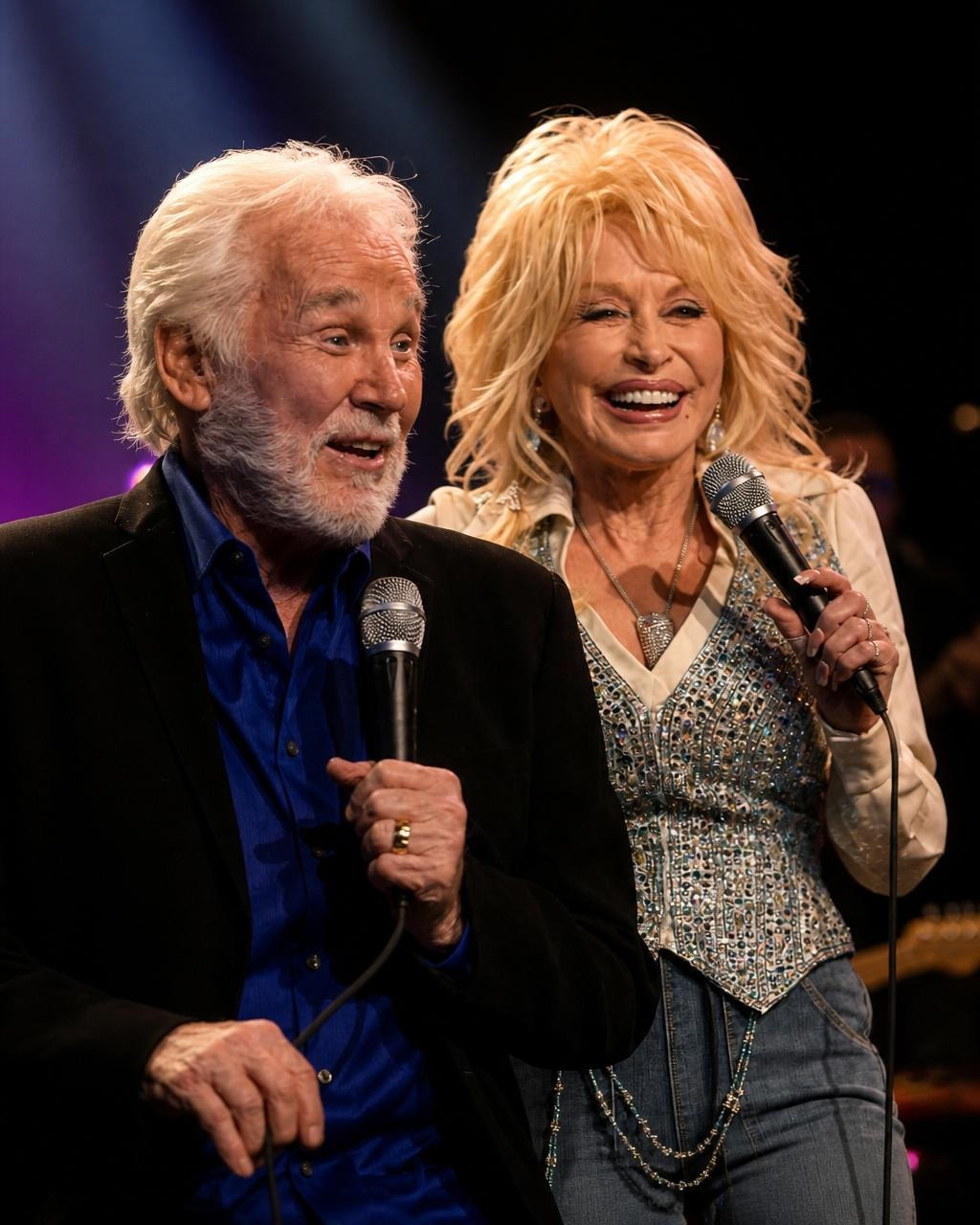
Dolly Parton and Kenny Rogers: The Friendship That Never Needed a Love Story
For more than 30 years, people kept asking the same question about Dolly Parton and Kenny Rogers: were they ever more than friends? The answer, from both of them, was always no. And somehow, that made the bond between them feel even stronger.
Their connection became part of country music history in 1983, when “Islands in the Stream” reached No. 1 and turned into one of the most famous duets ever recorded. Fans heard chemistry right away. Dolly Parton heard it too, but she understood something important: a little mystery can make a performance unforgettable.
Kenny Rogers often laughed about the rumors. He said the flirting between them felt “more electric” because they never crossed the line. In his telling, that was the secret. A romance might have changed the magic, and neither one wanted to risk that.
A Final Duet With a Quiet Kind of Heartbreak
Years later, they recorded what became their final duet, “You Can’t Make Old Friends.” The song carried the weight of real life: two old friends looking at time, memory, and the fear of losing each other. Dolly Parton once told Kenny Rogers, “I want you to know I can’t sing at your funeral.” It was a joke, but it also sounded like a truth wrapped in humor.
Kenny Rogers loved telling that story. He would joke that Dolly Parton was acting as if he would go first, but he understood exactly what she meant. The line was funny because it came from love, and because both of them knew how fragile friendship can be when it lasts long enough to matter.
The Last Time They Sang Together
Their final live performance together came on October 25, 2017, at Kenny Rogers’s farewell concert in Nashville. Dolly Parton surprised him by stepping onto the stage and singing “I Will Always Love You.” It was not flashy. It was not forced. It felt like a goodbye between two people who had shared decades of applause, rumors, and laughter.
When Kenny Rogers died in March 2020 at age 81, Dolly Parton did not answer with a song first. The next morning, she appeared on camera holding a photograph of the two of them. She spoke simply, saying her heart was broken and that she would always love him.
What Made Their Story Different
Some friendships survive because two people never confuse chemistry with destiny. Dolly Parton and Kenny Rogers seemed to understand that better than most. They gave the world duets, jokes, and years of easy affection, but they protected something deeper than a headline.
That may be why their story still resonates. It was never really about whether they became a couple. It was about trust, timing, and knowing exactly what not to risk. In the end, the friendship was the romance the audience never fully understood, but always felt.