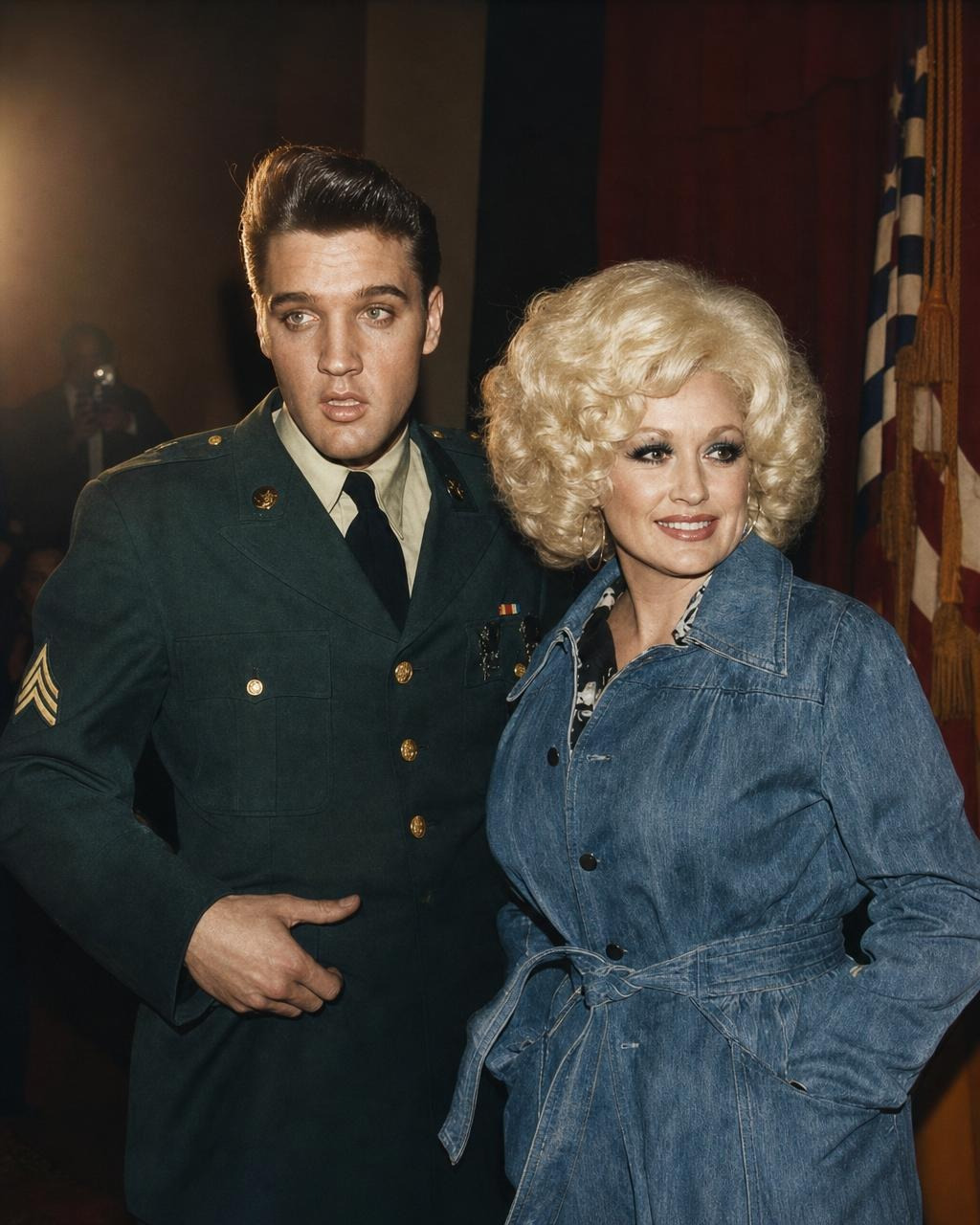
The Night Dolly Parton Said No to Elvis Presley
Before “I Will Always Love You” became one of the most famous songs in American music, it began as something much more personal: a farewell. Dolly Parton wrote it in 1973 as she was ending her long professional partnership with Porter Wagoner, the mentor who had helped launch her career. The song was not about romance in the usual sense. It was Dolly Parton trying to leave with honesty, gratitude, and dignity intact.
That decision changed everything.
At the time, Dolly Parton’s recording became a major country hit and proved that she could stand on her own. But the song’s journey was far from over. When Elvis Presley expressed interest in recording it, the opportunity seemed enormous. The King wanted the song, and that alone could have tempted almost anyone to say yes immediately.
But there was a catch: the deal required Dolly Parton to give up half the publishing rights. That meant surrendering control over a song she had written from the deepest part of her own life. Dolly Parton said no.
It was not a cold business decision. It was painful. Dolly Parton reportedly cried that night, torn between the thrill of hearing Elvis Presley sing her work and the fear of losing ownership of something irreplaceable. She understood what the publishing rights meant. They were not just legal paperwork. They were protection, credit, and future security.
Years later, that choice would prove wise in a way even Dolly Parton could not have predicted. The song would return in 1992 through Whitney Houston’s unforgettable version for The Bodyguard, becoming a global phenomenon and creating a new generation of listeners who thought they were hearing a love song for the first time. In reality, they were hearing a song born from a goodbye Dolly Parton had once needed to make in her own career.
That is what makes the story so powerful. Dolly Parton did not refuse Elvis Presley because she lacked faith in the song. She refused because she believed in it too much to give away its future.
Sometimes the hardest no is the one that protects the life you have not yet lived.
Dolly Parton’s story is still remembered because it carries a simple truth: great art can come from heartbreak, but it still deserves to be owned by the person who created it. In saying no, Dolly Parton protected more than a song. She protected her voice, her work, and the quiet right to benefit from both when the world finally caught up.