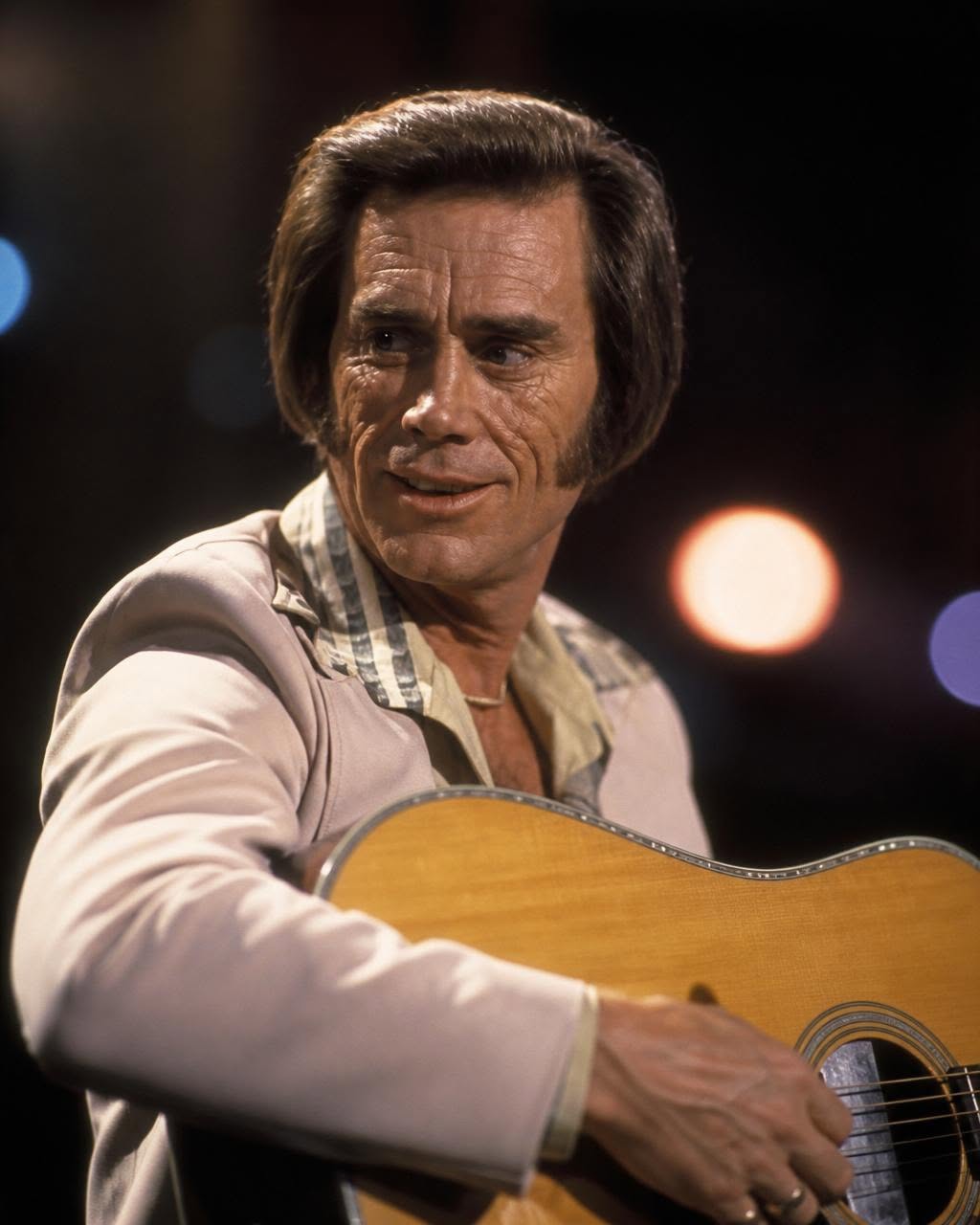
They Called Him “No Show Jones” and Expected Him Dead by 50. Then He Spent the Next 31 Years Showing Up.
By the late 1970s, George Jones looked like a man who had already lost the fight. He was down to 97 pounds, trapped in a cycle of alcohol, cocaine, missed concerts, arrests, and broken promises. Fans who once waited eagerly for his voice now wondered if he would appear at all. In country music circles, the nickname spread fast: No Show Jones.
It was a cruel label, but it came from real frustration. George Jones was one of the greatest singers in country music history, yet his life had become a mess of cancellations and chaos. He was hearing voices, losing money, and disappearing when people needed him most. Many around him quietly believed he might not survive long enough to see 50.
The Voice That Refused to Disappear
Even then, something about George Jones could not be erased. His voice was too distinctive, too honest, too painful in the best possible way. When he sang, it sounded like every regret he had ever carried was sitting right there in the room with him. That was part of why fans loved him, and part of why they kept hoping he would somehow come back.
In 1980, that hope found a song.
“He Stopped Loving Her Today” Changes Everything
George Jones did not think “He Stopped Loving Her Today” was the right song. He felt it was too sad and too long. But once it was recorded and released, the reaction changed everything. The song reached No. 1, won a Grammy, and became one of the most famous country songs ever recorded.
For George Jones, it was more than a hit. It was a lifeline. It pulled his career back from the edge and reminded the world why his voice mattered so much. After years of being known for what he failed to do, he was suddenly being celebrated for what only he could do.
One song did not solve his problems, but it opened the door to a different future.
Love, Relapse, and the Long Road Back
Still, a single hit could not fix a life that had been unraveling for years. George Jones needed more than applause. He needed someone willing to stay when things got difficult again. That person was Nancy. She stood by him through relapses and setbacks, helping him keep fighting for a better life when the old patterns tried to pull him back.
The road was not smooth. Recovery is rarely a straight line, and George Jones lived that truth publicly. But Nancy’s presence gave him something he had been missing for a long time: accountability, stability, and a reason to keep trying after the applause faded.
For a man who had spent years vanishing from stages and from responsibility, showing up became its own kind of victory.
The Crash That Could Have Ended It All
Then came 1999, another moment that could have become the final chapter. After drinking again, George Jones crashed his SUV into a concrete bridge and nearly died. It was the kind of accident that forces a hard conversation with life itself. In the hospital, he made a promise to God that he would never drink or smoke again.
This time, he kept the promise.
That decision changed the rest of his story. Not because it made everything easy, but because it gave him a new direction. George Jones did not become a different person overnight. He became something more meaningful: a man who had finally decided to stay present.
Showing Up Again and Again
In the years that followed, George Jones kept performing. He continued to step onto stages into his 80s, singing for audiences that still felt the weight of his voice. The same man once mocked as “No Show Jones” became known for showing up when it mattered most.
That is what made his story so powerful. It was not a perfect redemption tale. It was not a clean, polished comeback. It was messier than that, and more human. George Jones lost years to self-destruction, but he also found a way to spend more than three decades proving that he could be there for the music, for the fans, and for himself.
A Legacy Built on Persistence
When George Jones died in 2013 at 81, the Grand Ole Opry House filled with artists honoring him. Nashville had once thought he might never make it to 50. Instead, he lived more than three decades beyond that, long enough to witness the respect and love that his talent had always deserved.
His story is still remembered because it is not just about fame or failure. It is about a man who was written off, then found a way back. For years, George Jones could not show up. Then he spent 31 years proving that he could.
And in country music, that may be his greatest performance of all.