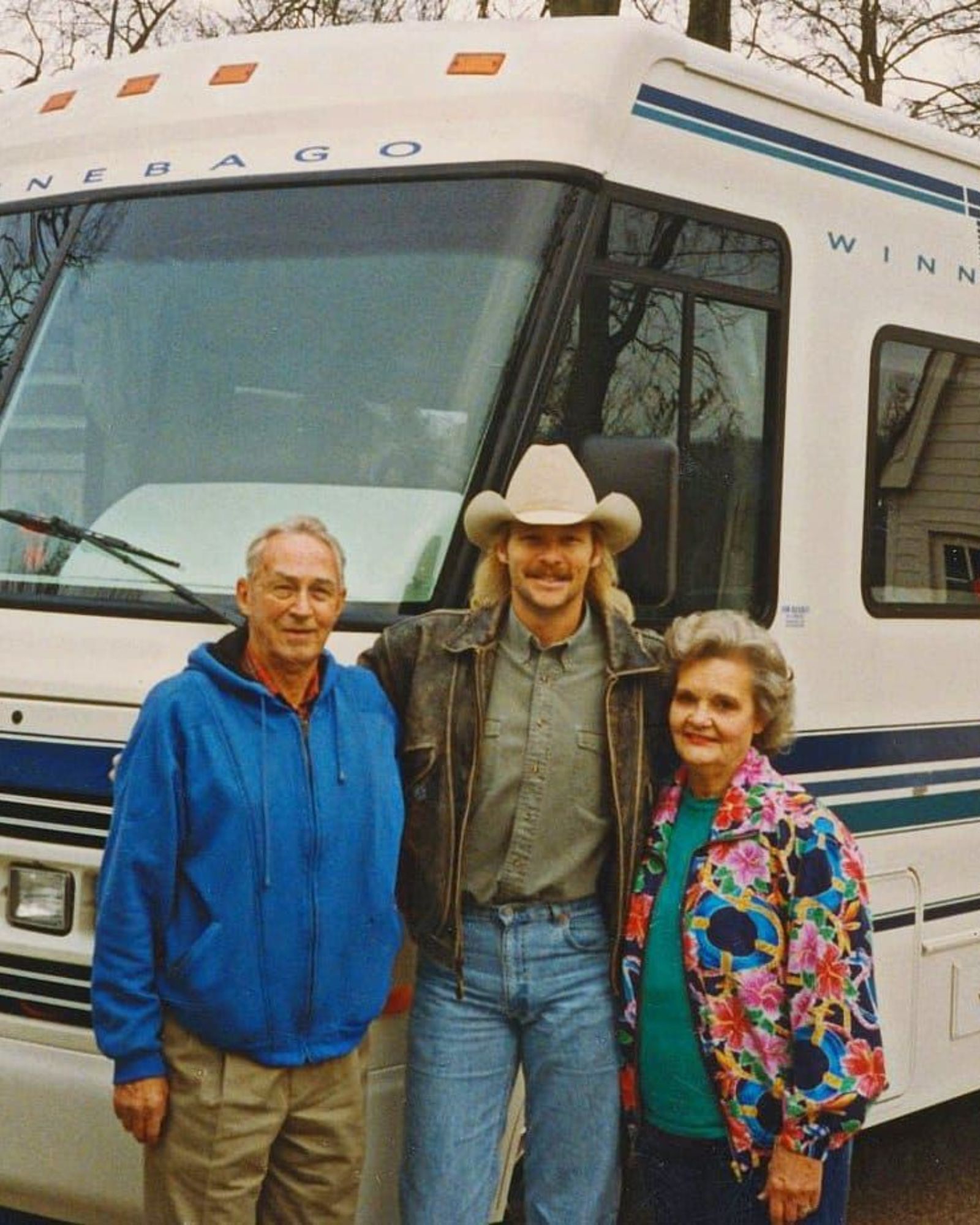
Alan Jackson Wrote His Father’s Eulogy, Then Told Everyone It Was Just a Song
When Alan Jackson released “Small Town Southern Man” in 2007, it sounded like a simple country song at first listen. Warm, familiar, and full of quiet detail, it seemed to capture the life of a man who lived honestly and worked hard. To most people, it was just another moving story-song from one of country music’s most trusted voices.
But for anyone who listened closely, the song felt deeply personal. It was not fiction dressed up as memory. It was a life story. And the man at the center of it was not imaginary. He was Daddy Gene, Alan Jackson’s father.
A Song That Sounded Like Home
“Small Town Southern Man” painted a picture of a life built in one place, over many years, with steady hands and ordinary sacrifice. It described a man who married young, stayed close to home, worked as a mechanic at the Ford plant, and raised a family with quiet strength. The details were specific, almost startlingly so. A house. Four daughters. Then, unexpectedly, a son.
That son was Alan Jackson.
The song never needed to say his father’s name because the truth was already there in every line. It was the kind of tribute that did not announce itself with drama. Instead, it arrived gently, like a memory you recognize only after it has already moved you.
The Father Alan Jackson Understood Later
Daddy Gene died in 2000, and Alan Jackson was left with the familiar ache that comes when someone important is suddenly gone. Like many people, Alan Jackson did not fully understand his father while he was still alive. The older generation often keeps its feelings tucked away. They provide, they work, they stay steady, and they say less than they mean.
Years later, Alan Jackson put it into words that many fans never forgot: “I learned more about my daddy after he died than I did when he was alive.”
That sentence explains why “Small Town Southern Man” hits so hard. It is not just a song about a Southern father. It is a son looking back with clearer eyes, realizing that love was always there, even when it was never spoken loudly.
Why Alan Jackson Called It Just a Song
When interviewers asked Alan Jackson about the meaning behind the track, he often kept it modest. He did not turn the spotlight into a personal confession. He did not frame it as a dramatic family reveal. Instead, he described it as a song about small-town life.
That choice says a lot about Alan Jackson. Some artists explain everything. Alan Jackson trusted the music to do the talking.
By calling it “just a song,” he protected the emotion inside it. He also gave listeners room to bring their own fathers, grandfathers, and hometown memories into the story. The song became bigger than one family, even though it began with one.
“Small Town Southern Man” felt universal because it came from something true.
The Hidden Eulogy
In many ways, the song works like a eulogy that was never labeled as one. A traditional eulogy is spoken at a funeral, where grief and gratitude are shared openly. Alan Jackson did something quieter and perhaps more lasting. He wrote his father’s life into a song and let the world find it on its own.
That kind of tribute carries a special kind of power. It does not end after the service. It lives on in radio play, in playlists, in late-night listening sessions, and in the hearts of people who never met Daddy Gene but still feel like they know him.
The beauty of the song is that it honors a very ordinary kind of greatness. Not fame. Not fortune. Just consistency, family, and a life rooted in place. Those are the qualities that often go unnoticed until it is too late.
Why the Story Still Matters
There is something deeply human about realizing how much of a parent’s story you only understand after they are gone. Alan Jackson turned that feeling into music without making it loud or sentimental in the wrong way. He kept it plain, honest, and direct.
That is why the song continues to matter. It reminds listeners that the people who raise us do not always leave behind speeches. Sometimes they leave routines, habits, values, and a way of living that makes sense only in hindsight.
Alan Jackson did not write a formal eulogy for Daddy Gene. He did something more lasting. He hid one inside a country song and let the truth do what truth always does: find its way home.
“Small Town Southern Man” is more than a hit. It is a memory set to music, a quiet act of love, and a son’s way of saying what he may not have said enough while his father was still here.