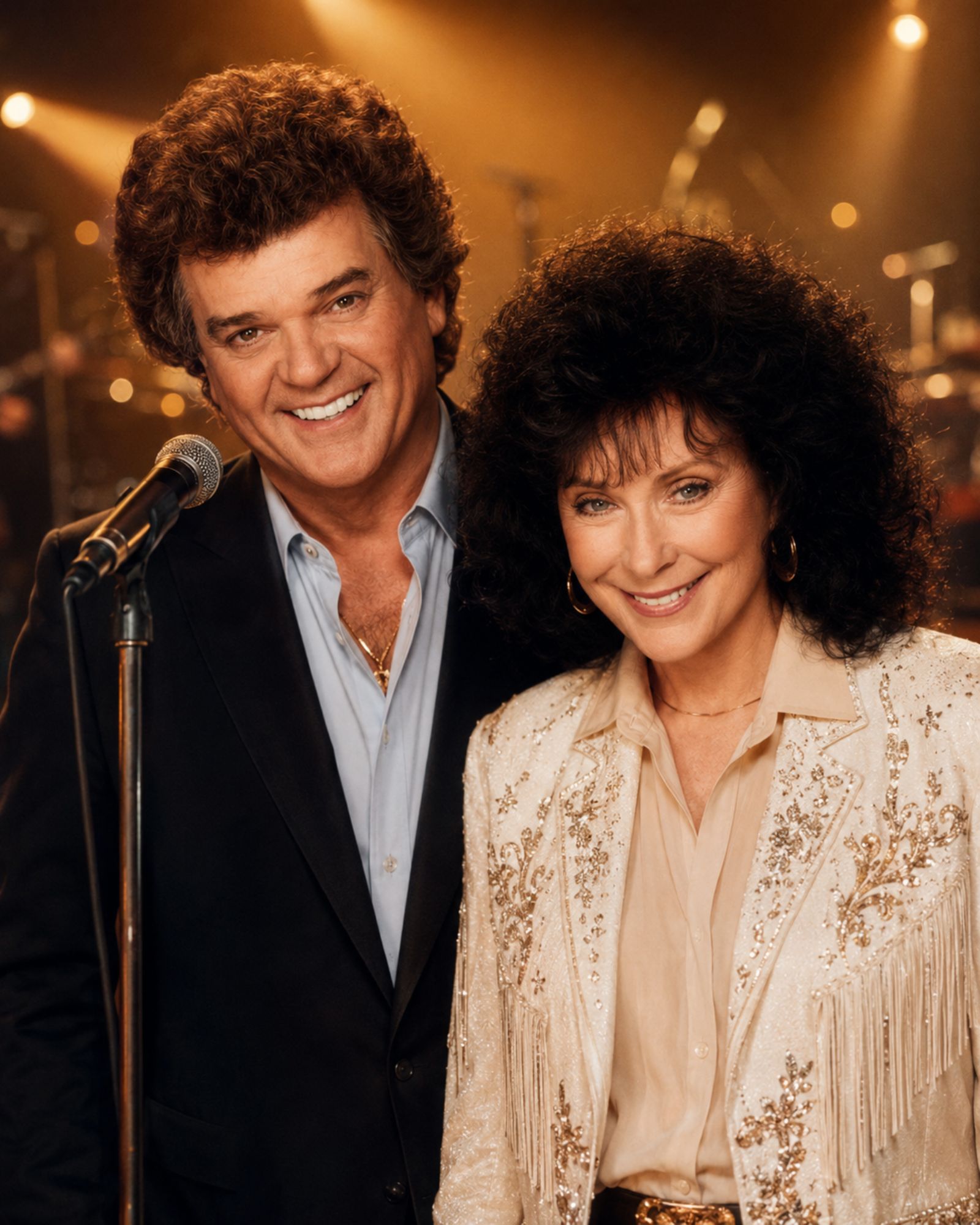
Conway Twitty and Loretta Lynn: The Duet That Felt Too Real to Be Fiction
In 1971, two of country music’s biggest names walked into a studio and recorded a song that would change the way people heard duets forever. Conway Twitty and Loretta Lynn did not arrive as a manufactured pair. They came with their own histories, their own scars, and their own impossible chemistry. When they stood near each other at the microphone, the room seemed to understand something before anyone said a word.
Conway Twitty had already lived more than one musical life. Born Harold Lloyd Jenkins, he first found success in rock and roll, turning “It’s Only Make Believe” into a massive hit. But the bright lights of that world never fully fit him. He eventually turned his attention toward country music, where his voice sounded less like a performance and more like a confession. By the time he crossed paths with Loretta Lynn, Conway had already proven he could reinvent himself and still sound completely authentic.
Loretta Lynn’s story carried a different kind of power. She had married young, raised children early, and learned to make music from the ordinary struggles of everyday life. One of her first guitars had been a $17 Harmony her husband bought from a Sears catalog. That detail says a lot about Loretta Lynn’s journey. She did not enter music through privilege or polish. She entered it through determination, grit, and a voice that could make hard truths sound unforgettable.
The Studio Moment That Changed Everything
When Conway Twitty and Loretta Lynn recorded “After the Fire Is Gone,” they were singing about a love affair that had already crossed the line of good judgment. It was a song about longing, regret, and the kind of emotional risk people try to hide from the world. The subject matter was bold, but the delivery made it even more compelling. These were not distant storytellers describing a situation from far away. Their voices made the story feel immediate.
Some songs are written to entertain. Others sound like they were meant to expose a secret.
Owen Bradley, the legendary producer behind the session, hit record and captured something that could not be manufactured twice. Conway Twitty and Loretta Lynn did not need to be told to stand close. They seemed to understand, almost instinctively, how to balance tension and tenderness. The result was a duet that felt intimate without ever losing its musical grace.
A Number One Hit With Lasting Power
“After the Fire Is Gone” went to No. 1 and won a Grammy, but its impact went beyond awards and chart positions. The song opened the door to one of the most successful duet partnerships in country music history. Conway Twitty and Loretta Lynn went on to record 11 studio albums together and win four straight CMA Vocal Duo awards. That kind of run does not happen by accident. It happens when two artists discover a shared language that fans immediately believe.
The public never stopped wondering about the connection between Conway Twitty and Loretta Lynn. That curiosity was part of the magic. They were never husband and wife, never a real-life romance in the way some listeners imagined, but the performances gave people enough emotional truth to wonder otherwise. Their voices carried a kind of honesty that made every lyric land a little deeper.
Why the Pair Worked So Well
Conway Twitty brought smooth confidence, while Loretta Lynn brought sharp honesty and emotional fire. Together, they created a balance that felt both warm and risky. One voice could sound like a promise, while the other sounded like the moment before a decision. That contrast gave their duets a living pulse.
Country music has always made room for stories about love, regret, and human weakness. But Conway Twitty and Loretta Lynn made those stories feel personal in a way that few other artists could match. They did not just sing about complicated feelings. They made listeners feel the complication itself.
Decades later, their work still stands as a reminder that great duets are not only about harmony. They are about tension, trust, and the strange electricity that happens when two voices meet at exactly the right moment. In 1971, Conway Twitty and Loretta Lynn walked into a studio and sang about a love that had already gone too far. The world listened, believed them, and never forgot it.