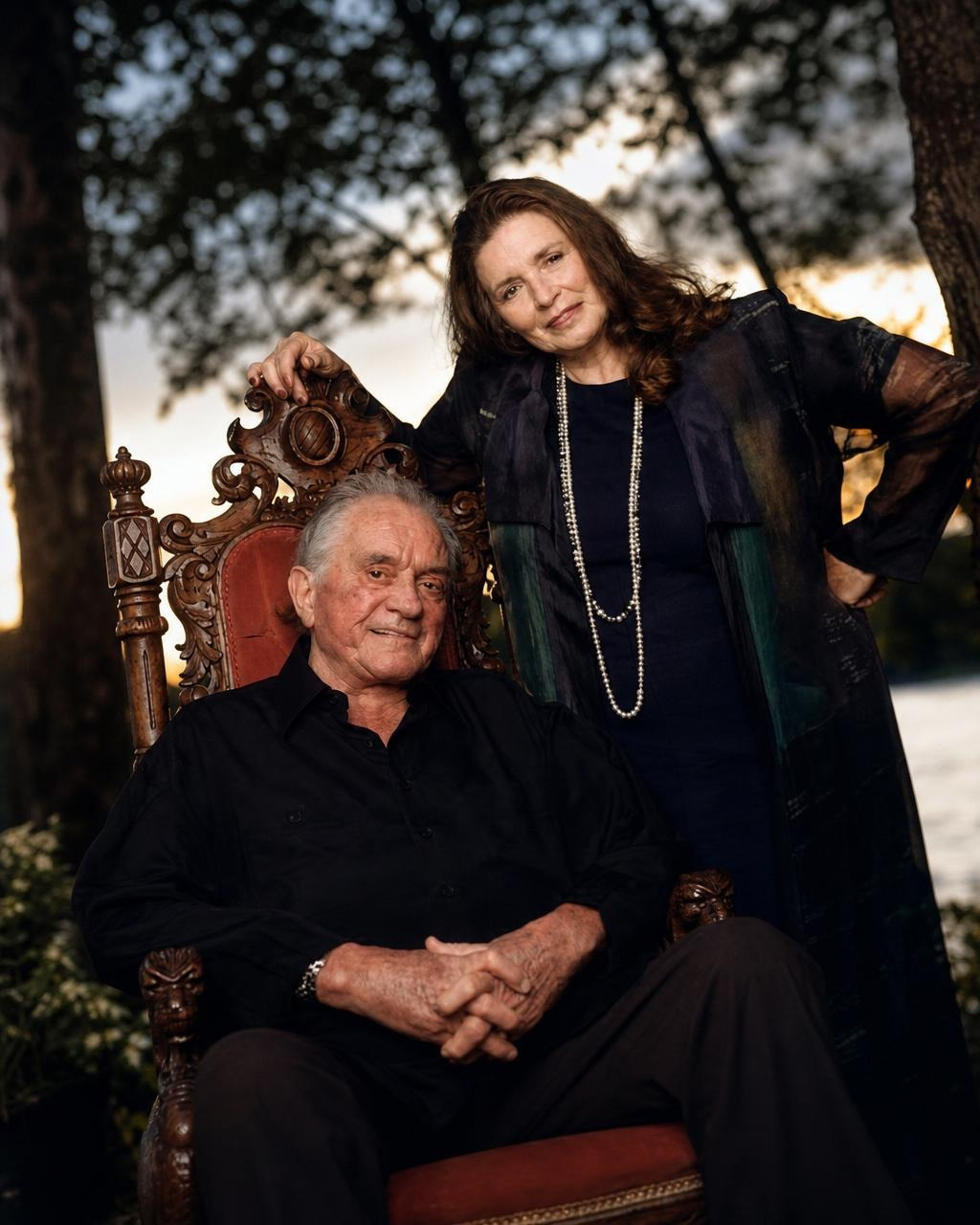
When Country Music Said Goodbye to Johnny Cash
On September 15, 2003, First Baptist Church in Hendersonville, Tennessee, filled with quiet grief and deep respect. Family members, close friends, and some of the most recognizable names in country music gathered there to say goodbye to Johnny Cash. The room held more than mourning. It held history.
Johnny Cash was not just a performer. He was the Man in Black, a voice that seemed to speak for prisoners, soldiers, working people, the lonely, and anyone who had ever felt left behind. For nearly fifty years, he made pain sound honest. Songs like “Folsom Prison Blues,” “I Walk the Line,” “Ring of Fire,” and “Sunday Morning Coming Down” did more than climb charts. They told the truth in a way people could feel in their bones.
A Life Marked by Love and Loss
But by the time of the funeral, the legend had become something even more human. Johnny Cash had spent the last months of his life carrying a grief that never fully left him after the death of June Carter Cash in May 2003. Friends said he kept reaching for her, as if love itself could still bridge the distance between them.
That loss seemed to change the way people heard his final work. In 2002, Johnny Cash released American IV: The Man Comes Around, an album that would become one of the most powerful closing chapters in music history. When listeners heard his version of “Hurt”, it no longer felt like a simple cover song. It felt like a final confession, raw and fragile, as if Johnny Cash were looking straight at his own life and speaking without disguise.
“I’ll be with you soon.”
According to Al Gore, Johnny Cash said those words after visiting June’s grave. Whether heard as a promise, a prayer, or a husband’s aching hope, the moment captured what many already understood: Johnny Cash and June Carter Cash belonged to each other in life, and now they seemed destined to rest together in death.
The Farewell in Hendersonville
At First Baptist Church, the service reflected that same tenderness. It was not a grand performance, even though the guest list could have filled a stadium. It was a farewell shaped by memory, faith, and music. Those present came not just to honor a celebrity, but to remember a man who had stumbled, fought, recovered, and kept singing.
There was sadness, of course, but also gratitude. Johnny Cash had left behind a body of work that felt larger than any one era. He had sung with the hard edge of gospel, the discipline of country, and the ache of someone who knew exactly how broken life could be. Yet he never sounded defeated. That was part of his power. He made endurance sound beautiful.
A Lasting Voice
Three days after the funeral, Johnny Cash was laid to rest beside June Carter Cash. It felt fitting, almost inevitable. The story of Johnny Cash was never only about fame. It was about love, loss, redemption, and the strange comfort of a voice that could carry sorrow without losing dignity.
Even now, his songs still feel alive because they were never polished into something false. They were lived-in. They sounded like a man who had seen the worst and still believed in mercy.
Do you remember the first Johnny Cash song that made you feel like he had lived every word?