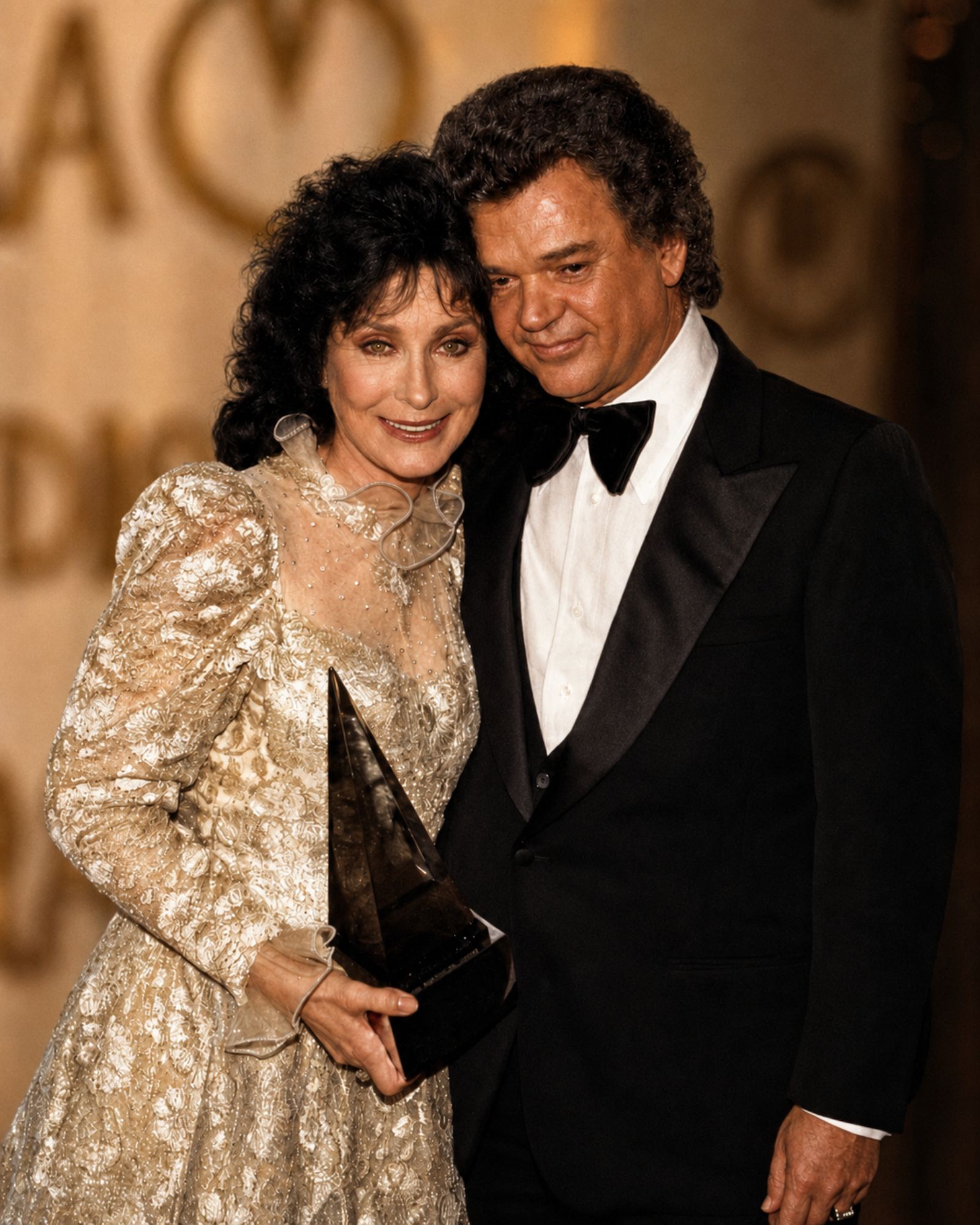
They Didn’t Need a Real Affair: Conway Twitty and Loretta Lynn Made Every Duet Sound Like One
Conway Twitty and Loretta Lynn never had to convince anyone they had chemistry. The moment their voices met, the song already felt like a secret. He brought that smooth, low, almost dangerous tenderness. She answered with warmth, wit, and a kind of emotional honesty that made every line feel like it came straight from a real conversation. Together, they created something country music had rarely heard before: duets that sounded personal, intimate, and just a little risky.
That was the genius of Conway Twitty and Loretta Lynn. They did not need an actual scandal to keep people listening. They understood tension. They understood longing. They understood how to make a listener lean in and wonder what had happened before the song started and what might happen after it ended.
A Partnership Built on Timing and Instinct
When Conway Twitty and Loretta Lynn first began recording together, it was clear almost immediately that the pairing worked. Their voices were different enough to spark interest, yet close enough in emotion to feel natural. Conway Twitty sang like a man holding back just enough to make you curious. Loretta Lynn sang like a woman who had already seen the truth and was not afraid to say it out loud.
That balance gave their duets a special kind of electricity. They were not just harmonizing. They were reacting to each other. Every phrase seemed to carry subtext. Every pause felt loaded. Fans heard that connection and filled in the blanks themselves.
The best duets do not just sound good together. They sound like two people with history.
Conway Twitty and Loretta Lynn mastered that feeling without ever making it feel forced. Their songs moved with ease, but the emotional tension underneath them never disappeared. That was part of the appeal. The audience could hear fun, flirtation, frustration, and affection all at once.
Why the Songs Felt So Real
Part of the magic came from the way Conway Twitty and Loretta Lynn performed. Conway Twitty had a voice that seemed to lean closer with every line. Loretta Lynn had a voice that could sound playful one moment and deeply wounded the next. Put them together, and you got a conversation that felt bigger than the melody.
Take “After the Fire Is Gone,” for example. The song does not need extra drama because the performance creates its own. The two singers sound like people standing at the edge of a decision they know is going to change everything. “Lead Me On” carries a different kind of tension, softer but no less powerful. Then there is “Louisiana Woman, Mississippi Man,” which brings the chemistry into a brighter, more teasing space. The song feels like a smile with consequences.
That was the key. Conway Twitty and Loretta Lynn were not pretending to be perfect. They were singing about emotions that sounded messy, human, and familiar. Listeners believed them because the feelings were believable.
More Than a Rumor, More Than a Performance
Of course, people talked. When Conway Twitty and Loretta Lynn recorded songs that sounded this intimate, fans naturally wondered if there was more going on behind the scenes. That curiosity became part of the legend. But the real answer is even more interesting: they did not need a real affair to make the songs work.
They understood how to sell the feeling of one.
That is what made their partnership so memorable. The songs lived in that space between flirtation and heartbreak, between playfulness and danger. The listener could believe anything because the performance gave them room to believe it. In that sense, Conway Twitty and Loretta Lynn were not just singing duets. They were building little dramas that lasted three minutes at a time.
A Legacy That Still Feels Hard to Match
Decades later, Nashville still looks back at Conway Twitty and Loretta Lynn as one of the great duet pairings in country music history. Their songs remain a standard for chemistry, storytelling, and emotional timing. Many artists can sing together. Far fewer can make a listener feel like they are overhearing something they were not supposed to hear.
That is why the partnership still stands out. Conway Twitty and Loretta Lynn made country duets feel alive in a new way. They gave the genre romance, tension, humor, and heart without ever needing a real-life confession to back it up. The voices did all the work. The emotion did the rest.
And maybe that is the real reason people kept listening. Conway Twitty and Loretta Lynn did not just perform love songs. They performed possibility. They made every duet sound like a story that had already begun before the first note, and that is a rare kind of magic.
They didn’t need a real affair. Conway Twitty and Loretta Lynn made every duet sound like one.