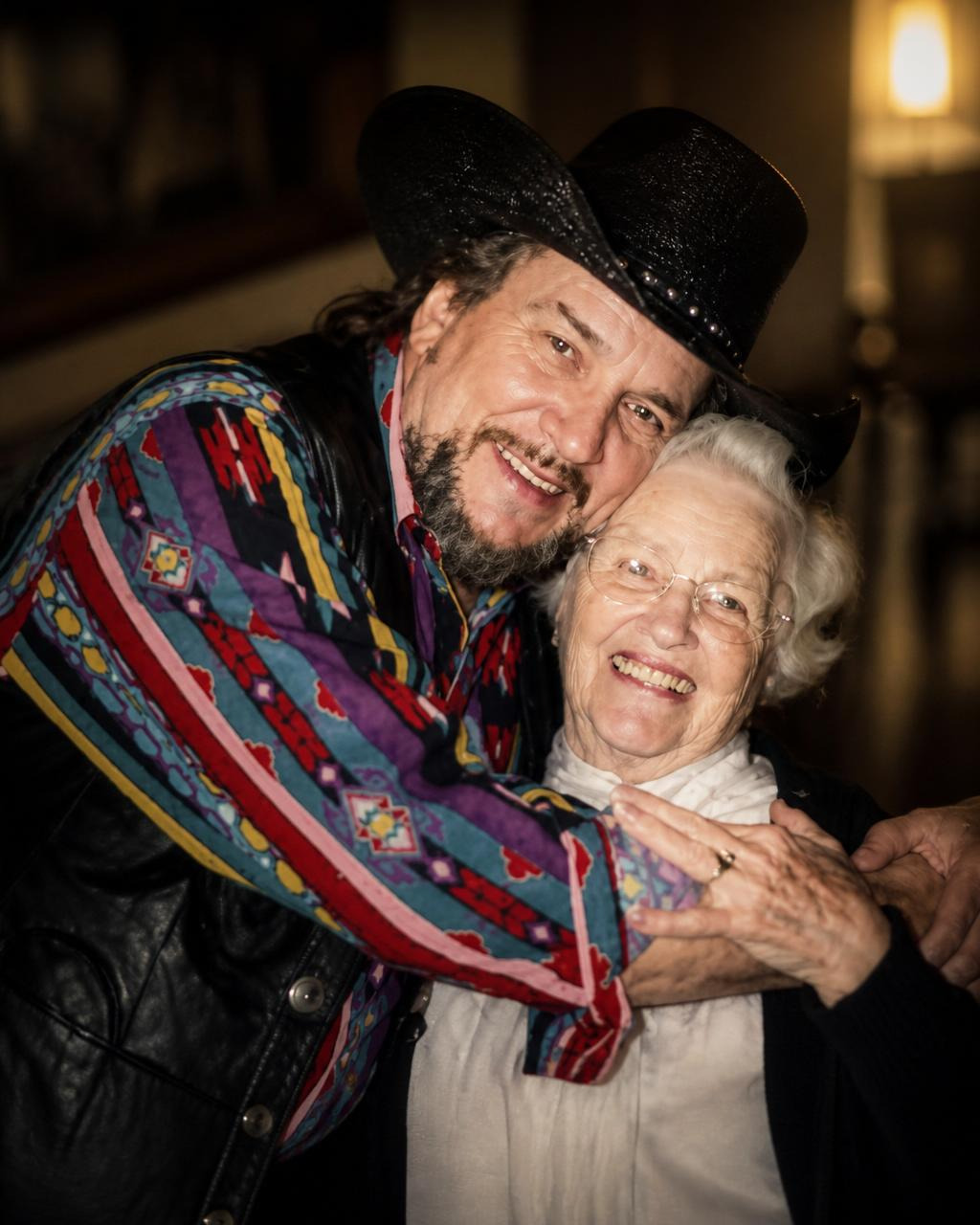
Before Waylon Jennings Became a Legend, a Mother in Littlefield, Texas, Believed First
Long before Waylon Jennings became a defining voice in country music, long before the outlaw image and the millions of records, his story began in a small Texas town with a mother who refused to let a child’s love of music be brushed aside. In Littlefield, Texas, Lorene Beatrice Shipley saw something simple and powerful in her son: he wanted to play.
She was not trying to build a legend. She was just trying to support her boy. That kind of love does not always look dramatic at the time. Sometimes it looks like scraping together money for a used guitar. Sometimes it looks like telling a child to keep going after someone says he does not have what it takes. In Waylon Jennings’s early life, that steady belief mattered more than anything else.
A Used Stella Guitar and a First Song
When Waylon was eight years old, Lorene Beatrice Shipley bought him a used Stella guitar. It was not fancy. It was not new. It was simply enough to begin. On that guitar, she taught him his first song, “Thirty Pieces of Silver.” That moment mattered because it made music feel real inside the Jennings home. It was not a hobby for later. It was part of everyday life now.
Waylon loved the guitar so much that he kept borrowing instruments from relatives, just to keep playing. He wanted to learn, even if the path was messy. He wanted sound, even if he had to make do with whatever was available. For a child like that, an old guitar could become a whole world.
One mother’s quiet stubbornness can open a door that changes everything.
The School Said No, But Lorene Said Keep Going
Not everyone saw promise in the young Waylon Jennings. The school kicked him out of music class and said he lacked ability. That kind of judgment can stay with a child for years. It can turn into shame, or silence, or quitting before the real work begins.
But Lorene Beatrice Shipley did not flinch. She did not let someone else’s opinion become the final word. Instead, she ordered him a Harmony Patrician guitar. It was a practical act, but also a deeply emotional one. It said: if the world will not make room for your music, we will make room at home.
That was the lesson Lorene kept teaching. Talent can be recognized late. Confidence can be built slowly. A parent’s faith can carry a child through the years when nobody else sees what is coming.
How a Name Became Part of the Story
There is another detail in Waylon Jennings’s story that reveals how much Lorene shaped his path. She was the one who changed his name. A Baptist preacher had assumed that “Wayland” honored a Baptist college. Lorene, a Church of Christ woman, wanted no part of that assumption. So she changed one letter. Waylon.
It may sound small, but names matter. A name can reflect identity, faith, family, and the way a person is introduced to the world. In this case, one letter carried a mother’s quiet determination. Lorene Beatrice Shipley did not make a speech about it. She simply made the change.
From Littlefield to the Radio
By the time Waylon Jennings was fourteen, he was already on the radio. That early start did not happen by accident. It grew out of the hours he spent playing, the support he received at home, and the refusal to let criticism close the door on him. His journey was not smooth, but it was moving forward.
By twenty-one, he was playing bass for Buddy Holly. That was a major step, one that put him much closer to the center of the music world. The kid from Littlefield, raised by a mother who believed in a used guitar and a stubborn hope, was suddenly part of something bigger than the local scene.
The Frozen Night That Changed Everything
Then came the night in 1959 that would become one of the most remembered moments in American music history. On a frozen night in Iowa, tragedy struck a group of young musicians, and everything shifted. The loss changed lives, altered careers, and left a permanent mark on the story of rock and country music alike.
For Waylon Jennings, that night became a dividing line. It was not the end of his story, but it was one of the moments that reshaped it. The path ahead would be different, harder in some ways, and destined for a new kind of legacy.
The Beginning Behind the Famous Name
People often remember the fame: the records, the influence, the sound that helped define an era. But before all of that, there was Lorene Beatrice Shipley in Littlefield, Texas, believing in a son who loved music. There was a used Stella guitar. There was a first song. There was a school that said no, and a mother who answered with action.
That is where the story truly starts. Not with the headlines. Not with the awards. Not with the legend. It starts with a mother who saw possibility before anyone else did, and with a boy named Waylon who kept playing because she made sure he could.
And sometimes, that is how music history begins: quietly, at home, with one person refusing to let talent go unheard.