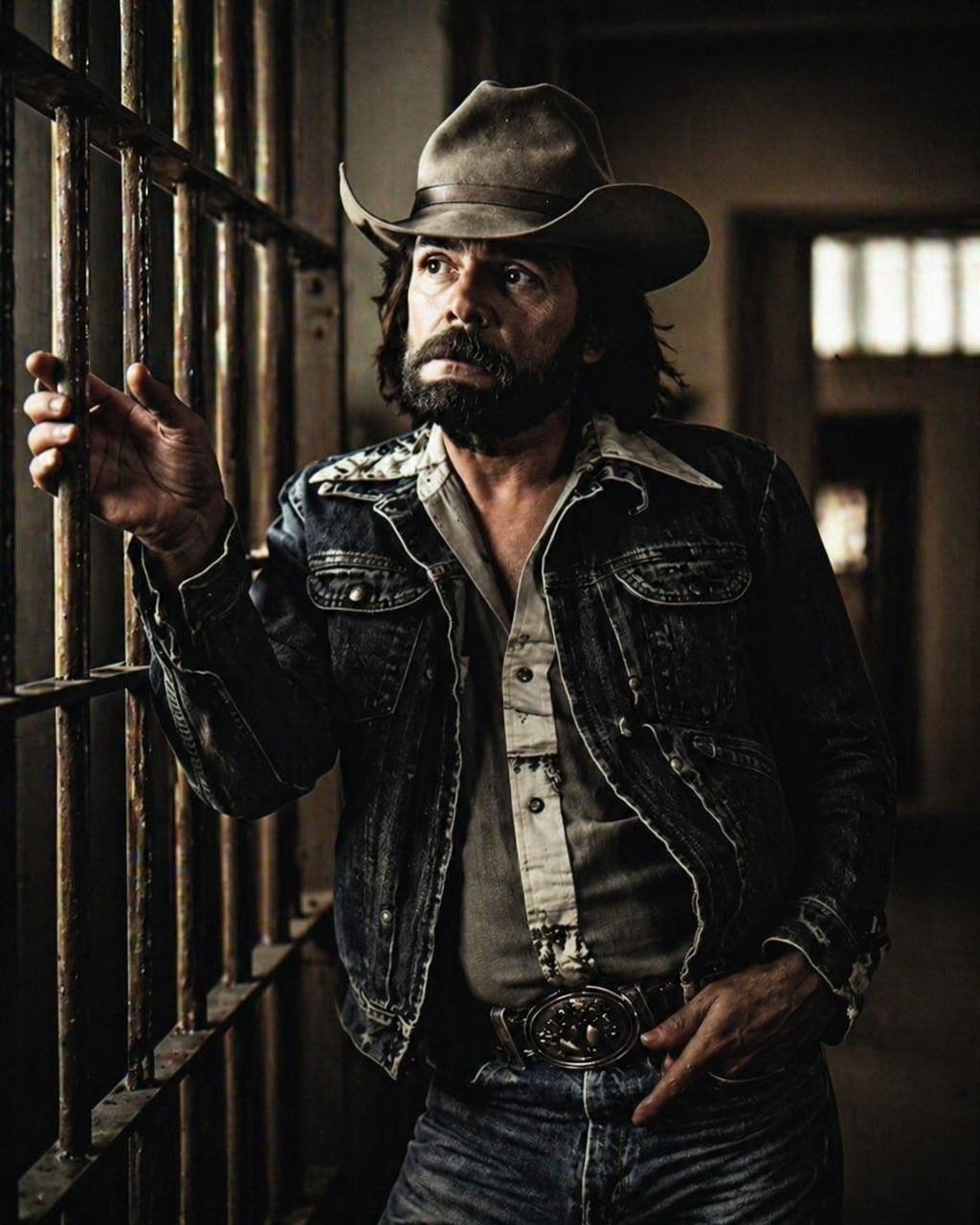
Johnny Paycheck’s Long Road Out of the Darkness
Johnny Paycheck built a career on hard songs, hard living, and a voice that sounded like it had already survived the worst of the night. But in December 1985, one violent moment inside an Ohio bar became more than another outlaw-country headline. It became the turning point of a life that had been running at full speed toward ruin.
The place was the North High Lounge in Hillsboro, Ohio. The date was December 19. What began as an argument reportedly connected to turtle soup ended with Johnny Paycheck pulling a small gun and grazing Larry Wise across the scalp. The injury was not fatal, but the consequences were enormous. The man who had once sung “Take This Job and Shove It” now faced the kind of sentence no song could soften.
Johnny Paycheck was eventually sentenced to prison. To the outside world, the story looked simple: another country singer swallowed by fame, anger, alcohol, and bad choices. Newspapers wrote about the fall. Fans whispered about whether Johnny Paycheck was finished. By then, Johnny Paycheck was no young rebel anymore. Johnny Paycheck was a man in his late forties, carrying years of trouble behind his eyes.
A Voice Locked Behind Bars
Prison has a way of stripping a man down to what is left when the applause disappears. There were no spotlights there. No cheering crowds. No stage door waiting open. For Johnny Paycheck, the silence may have been louder than any honky-tonk band he had ever stood in front of.
Stories from that period often describe Johnny Paycheck as a man forced to look inward. The bottle was no longer a shield. The road was no longer an escape. The old outlaw image, once useful on album covers and in barroom songs, could not answer the questions that followed him into a cell.
“I went in there a sinner. I came out something I can’t explain.”
Whether remembered as a confession, a reflection, or a broken man trying to describe grace, the words fit the shape of Johnny Paycheck’s final chapter. Prison did not erase what happened. It did not undo the fear, the shame, or the damage caused that night in Hillsboro. But it did give Johnny Paycheck something fame never had: stillness.
The Coffee, the Bible, and the Question
One of the most human details in the story is the image of a chaplain visiting Johnny Paycheck on Sunday mornings. A cup of coffee. A quiet conversation. A Bible offered not as a prop, but as a lifeline. In stories like this, redemption rarely arrives as thunder. Sometimes it walks in softly, wearing ordinary shoes, carrying something warm in its hand.
There is also the haunting mystery of one question said to have reached Johnny Paycheck in January 1988. The question was never widely known. Maybe that is why it feels so powerful. Some questions are not meant for headlines. Some are meant only for the man who needs to hear them.
Perhaps the question was not about prison at all. Perhaps it was about the man Johnny Paycheck had been before the records, before the arrests, before the anger became a habit. Perhaps it was simply this: Who are you when the music stops?
Walking Out Changed
In 1991, Johnny Paycheck received clemency from Ohio Governor Richard Celeste. When Johnny Paycheck walked out, the public saw a country star returning to freedom. But the deeper story was quieter. Johnny Paycheck did not return as the same man who had gone in.
By many accounts, Johnny Paycheck tried to live differently after prison. The wildness that once chased him through bars and courtrooms seemed to lose its grip. The final decade of Johnny Paycheck’s life was not a glamorous comeback story. It was smaller than that, and maybe more meaningful. Johnny Paycheck carried his past, but Johnny Paycheck also carried faith, regret, and the strange peace of a man who knew he had been spared more than once.
Johnny Paycheck died in 2003 after years of declining health. The end was not wrapped in fame. It was humble, painful, and deeply human. George Jones, a friend who understood both country music glory and country music wreckage, helped pay for Johnny Paycheck’s care. That detail says a lot about the world Johnny Paycheck came from: rough men, wounded men, men who failed loudly but sometimes loved quietly.
The Song Beneath the Scandal
The shooting at the North High Lounge remains part of Johnny Paycheck’s story, and it should not be softened into legend. A man was hurt. A life was changed. Johnny Paycheck paid a price for what happened.
But the story does not end in that bar. It moves through prison walls, Sunday coffee, a Bible, and the possibility that even a man known for defiance can be broken open by grace. Johnny Paycheck’s life was messy, troubling, and unforgettable. Yet in the final telling, Johnny Paycheck was not only the outlaw who fell. Johnny Paycheck was also the man who walked out carrying something heavier than a bottle and lighter than guilt: the hope that he was not beyond redemption.