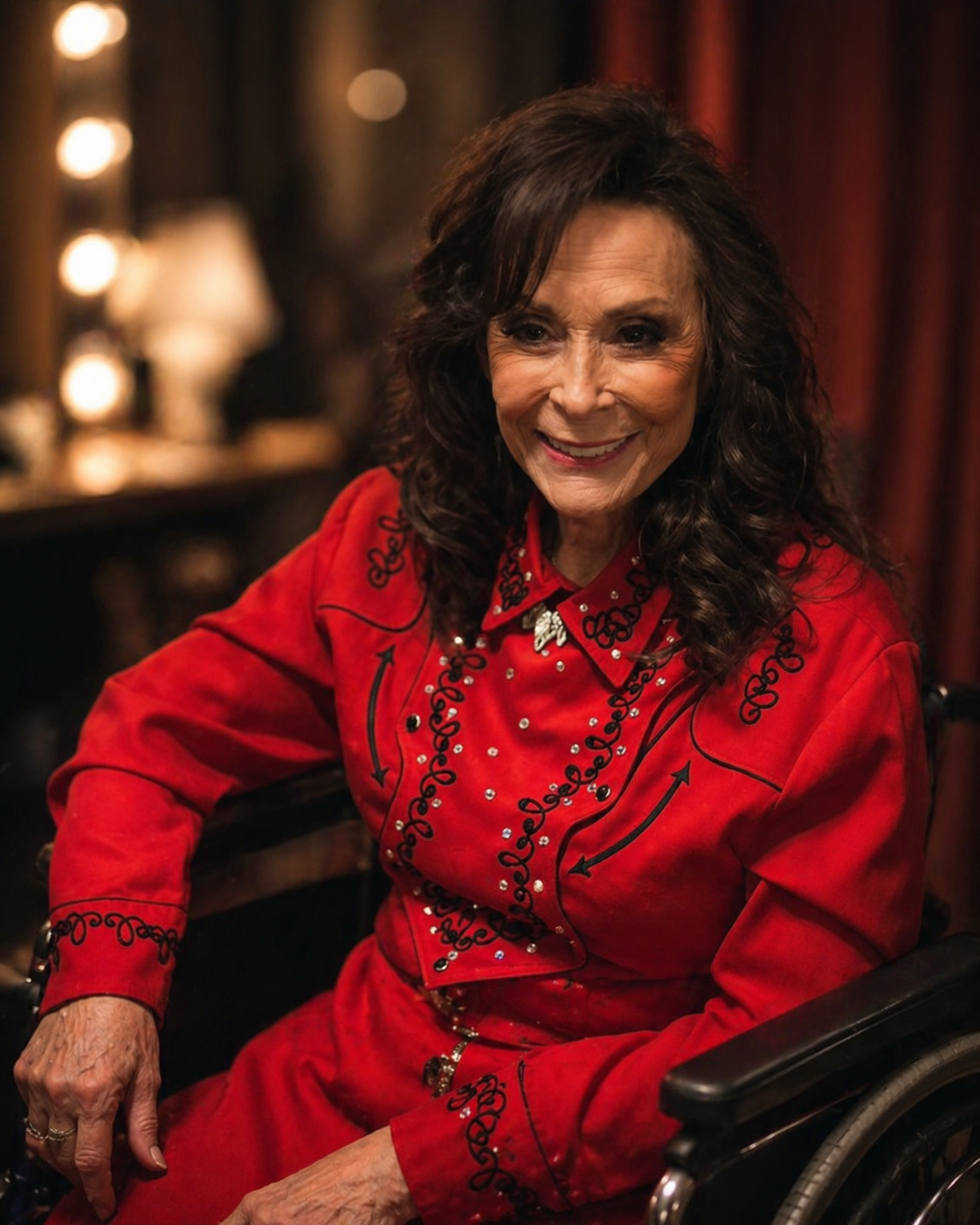
Loretta Lynn Was Still Woman Enough Until the Very End
In May 2017, the music world held its breath when Loretta Lynn suffered a stroke at her ranch in Hurricane Mills, Tennessee. For an artist who had spent nearly six decades on the road, singing to crowds who felt like family, the moment landed with a painful kind of silence. Overnight, the stage lights dimmed. The tour dates stopped. The woman who had built a life on motion was suddenly forced to be still.
Loretta Lynn was 85 years old then, but age had never been the first thing people noticed about Loretta Lynn. What people noticed was the voice. What people remembered was the nerve. What people loved was the way Loretta Lynn could walk into a song and tell the truth without dressing it up for anyone.
For many fans, the stroke felt like the end of an era. It was difficult to imagine country music without Loretta Lynn standing somewhere near the center of it, reminding everyone that a woman from Butcher Hollow, Kentucky, could change the sound of Nashville simply by refusing to stay quiet.
The Fall That Could Have Ended Everything
Eight months after the stroke, Loretta Lynn faced another setback. Loretta Lynn fell and broke her hip, adding another painful chapter to an already difficult recovery. For anyone else, that might have been the final sign to rest, step away, and let the past speak for itself.
Doctors and loved ones had reason to worry. The road had already been taken from Loretta Lynn. Her body had been through more than enough. A quieter life would have been understandable. After all, Loretta Lynn had nothing left to prove.
But that was never how Loretta Lynn seemed to measure a life.
Loretta Lynn had spent her career singing through things that other people whispered about. Poverty. Marriage. Motherhood. Jealousy. Birth control. Pain. Pride. Survival. Loretta Lynn did not become Loretta Lynn by accepting someone else’s idea of when a woman should stop speaking.
Sometimes the final chapter is not the quietest one. Sometimes it is the chapter where everything that came before gathers its strength.
Still Woman Enough
In March 2021, at 88 years old, Loretta Lynn released her 50th studio album, Still Woman Enough. The title alone felt like a statement. It was not just a phrase. It was a reply to anyone who had assumed time, illness, or injury could decide the ending for Loretta Lynn.
The album title reached back into Loretta Lynn’s own history. It carried the weight of a woman who had once pushed country music into conversations it had tried to avoid. Decades earlier, Loretta Lynn had written songs that made room for working women, poor women, angry women, tired women, and women who were simply brave enough to tell the truth.
With Still Woman Enough, Loretta Lynn was not chasing trends. Loretta Lynn was reminding listeners where so many of those trends began. The album felt less like a comeback and more like a witness statement. Loretta Lynn was still here. Loretta Lynn still had a voice. Loretta Lynn still had something to say.
Three Generations Singing Back
One of the most powerful moments on the album came with the title track, where Loretta Lynn was joined by Reba McEntire, Carrie Underwood, and Tanya Tucker. The pairing was more than a musical collaboration. It felt like a circle closing.
Reba McEntire, Carrie Underwood, and Tanya Tucker represented different chapters of women in country music. Each artist had built a career with strength, personality, and a willingness to stand firm in a demanding industry. Beside Loretta Lynn, their voices carried a deeper meaning. They were not just singing with Loretta Lynn. They were singing back to Loretta Lynn.
It sounded like gratitude. It sounded like respect. It sounded like daughters, sisters, and successors standing beside the woman who had helped widen the door before many of them ever walked through it.
That is what made Still Woman Enough so moving. The album was not only about survival after a stroke or a broken hip. It was about legacy. It was about the long echo of one woman’s courage and how far that echo had traveled.
The Last Word
Loretta Lynn died 19 months after the release of Still Woman Enough. That fact gives the album a quiet weight now. What once felt like a declaration has become something closer to a farewell, though not a sad one. Loretta Lynn did not leave behind an album that sounded defeated. Loretta Lynn left behind an album that stood up straight.
There is something deeply fitting about that. Loretta Lynn’s story was never polished into perfection. Loretta Lynn’s story was hard work, family, grief, humor, stubbornness, and songs sharp enough to cut through polite silence. Loretta Lynn came from coal country and carried that truth with Loretta Lynn everywhere.
So was it stubbornness that brought Loretta Lynn back after the stroke? Was it defiance? Was it faith in the work? Maybe it was all of those things. Or maybe it was simpler than that.
Maybe Loretta Lynn kept going because that was the only way Loretta Lynn knew how to be.
By the end, Loretta Lynn had already written more than songs. Loretta Lynn had written a way for other women to stand a little taller, speak a little louder, and believe that their stories mattered. Still Woman Enough was not just the name of Loretta Lynn’s final studio album. It was the truth Loretta Lynn had been singing all along.