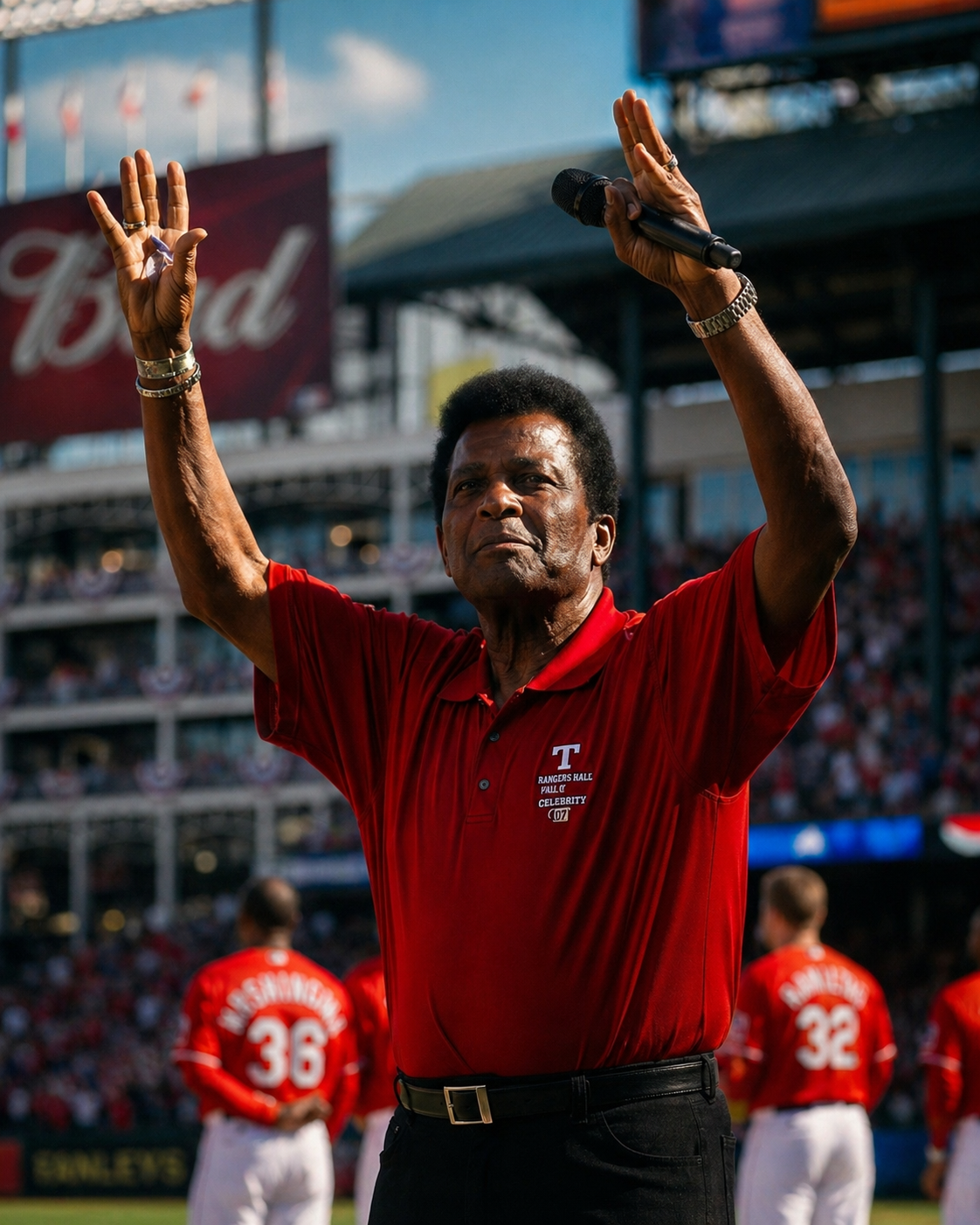
They Paid Charley Pride $10 to Sing Before a Baseball Game. Decades Later, He Owned the Team.
In 1960, Charley Pride was far from the spotlight.
He was working long shifts at a smelter in Montana, earning around $100 a week. It was hard labor—hot, exhausting, and repetitive. Molten metal, smoke, sweat, and the kind of days that leave a man too tired to think. But Charley Pride carried something inside him that no factory could burn away.
After work, Charley Pride played baseball for a local semi-pro team. Baseball had always been one of his first loves. He dreamed of making it big on the field long before the world knew his name through music. He pitched wherever he could, chasing innings under wide Montana skies.
One evening, a team manager heard Charley Pride humming near the dugout.
The manager looked over and asked a simple question: “You can sing?”
Charley Pride nodded.
That night changed everything.
The team offered Charley Pride an extra $10 per game to sing “The Star-Spangled Banner” before first pitch. It may not sound like much now, but in those days it mattered. More importantly, it gave Charley Pride something money could not buy—a microphone, an audience, and a chance.
There was another reality in that moment too.
Charley Pride was the son of sharecroppers from Mississippi. A Black man standing in front of mostly white crowds in small-town Montana during a tense era in America. Some people applauded warmly. Some stayed silent. Some were unsure what to make of him.
But Charley Pride sang anyway.
He sang with calm confidence. He sang with discipline. He sang like someone who knew life was bigger than the room in front of him.
From Dugouts to National Stages
Years passed, and the baseball player with the smooth voice became one of country music’s most important stars.
Charley Pride broke barriers in Nashville through talent, patience, and undeniable songs. He built a career that included hit records, sold-out crowds, and a place in country music history. Yet he never forgot the game that had once given him a side job and a chance to be heard.
Then came 1974.
Charley Pride walked onto the field at Super Bowl VIII and sang the national anthem for the entire nation. The same man once paid $10 before small-town ballgames now stood before millions.
It did not stop there.
Charley Pride also sang at the World Series, major league ballparks, and countless big events across America. Every anthem carried echoes of those early Montana nights when nobody knew what was coming.
Sometimes the smallest stage is where the biggest story begins.
The Team He Once Sang For
Most people would call that enough of a full-circle story.
But Charley Pride’s story had one more turn left.
In 2010, Charley Pride became part owner of the Texas Rangers. Think about that for a moment. A man once paid a few dollars to sing before a baseball game eventually owned part of a Major League Baseball franchise.
That kind of journey cannot be planned. It can only be lived.
Charley Pride was no longer the young man hoping for innings or extra cash. He was a respected artist, businessman, and symbol of perseverance.
The Final Anthem
In July 2020, Charley Pride returned once more.
He sang the anthem at the first game ever played in the Rangers’ brand-new stadium. But the stands were empty. The Covid pandemic had silenced the crowds. No cheers. No packed seats. Just a legend, a microphone, and a song that had followed him through decades.
It was quiet, almost haunting.
Five months later, Charley Pride passed away after complications related to Covid.
The voice that had carried through dugouts, arenas, and stadiums was gone—but not forgotten.
A Name on the Field
Today, the Rangers’ spring training complex includes Charley Pride Field.
It is more than a sign. It is a reminder.
A reminder that greatness does not always begin where people expect. Sometimes it starts after a factory shift. Sometimes it begins with a manager overhearing a tune. Sometimes it grows from $10 and a dusty baseball diamond.
Charley Pride’s life was never only about music or baseball.
It was about endurance, grace, and refusing to let the limits of the moment define the future.
From singing before the game… to owning the team.
Not many stories can say that.