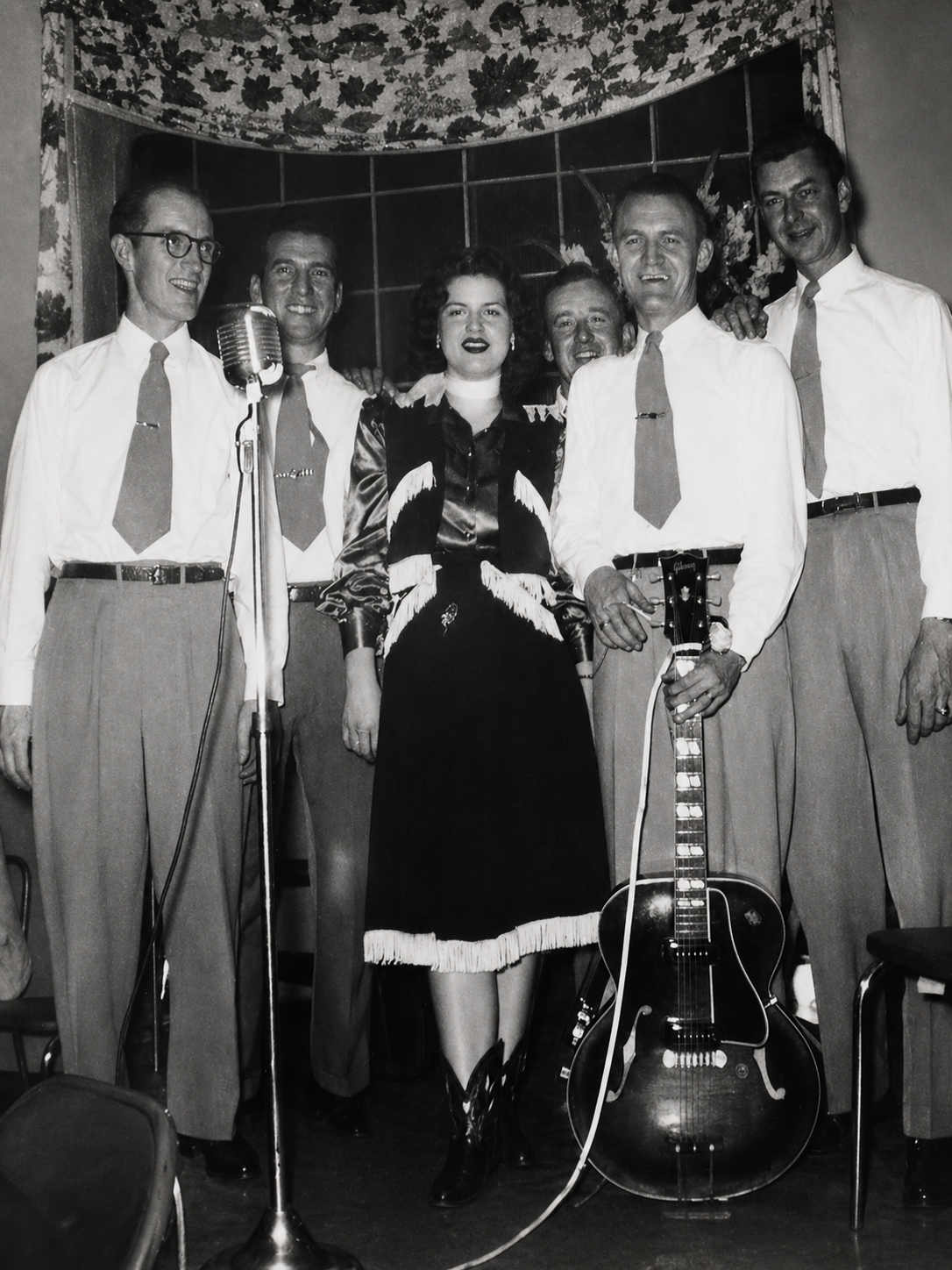
She Slept in a Car Outside the Grand Ole Opry — And They Still Said No
Before the standing ovations, before the gold records, before the name Patsy Cline became part of country music history, there was a teenage girl sitting in a parked car outside the Grand Ole Opry.
Patsy Cline was only fifteen when she begged her mother to drive hours to Nashville for an audition. It was not a glamorous trip. There was no hotel room waiting. No money for comfort. Just hope, determination, and a mother willing to believe in her daughter.
That night, the two of them slept in the car near the most famous stage in country music. For Patsy Cline, it must have felt like sleeping beside a castle wall, knowing everything she wanted was only a few steps away.
Then morning came.
The Opry listened. And then the answer was no.
Too young, they said. And in those days, a girl singing solo was still something many in the industry did not fully embrace. Patsy Cline was sent home carrying the same dream she arrived with — only heavier now.
Back to Real Life
Rejection did not pause the bills. Patsy Cline returned to Virginia and went back to work. She butchered chickens at a poultry plant. She poured sodas at a drugstore. She sang late into the night in smoky bars, then woke early for jobs that actually paid enough to survive.
It was a hard rhythm. Work. Sing. Sleep. Repeat.
Even home was not always kind. Years later, relatives admitted Patsy Cline never truly felt accepted in her own town. She was talented, ambitious, outspoken, and unwilling to shrink herself to make others comfortable.
That can make life lonely before it makes life legendary.
She Refused to Wait for Permission
Many people spend years waiting to be chosen. Patsy Cline chose herself.
She kept pushing, kept singing, kept showing up where opportunities might exist. Eventually, doors began to crack open. She signed deals that offered little money and almost no protection. Like many artists of that era, she gave more than she received.
But what Patsy Cline lacked in leverage, she made up for in presence.
Then came a song she did not even want.
I Fall to Pieces was handed to her by producers who believed it could be a hit. Patsy Cline reportedly doubted it. She recorded it anyway.
It climbed to No. 1.
Then came Crazy, written by a young Willie Nelson. At first, Patsy Cline was unsure again. The melody was difficult. The phrasing was unusual. But once she stepped to the microphone, everything changed.
What she resisted became what the world could never forget.
Crazy went on to become one of the most beloved recordings in American music history and a jukebox favorite for generations.
More Than a Star
Success did not harden Patsy Cline. It revealed her generosity.
She encouraged younger women trying to survive the same industry she had battled. Loretta Lynn often spoke of Patsy Cline’s kindness and guidance. Patsy Cline helped Dottie West during difficult times and was known for quietly stepping in when others needed support.
She also moved fast because life was moving fast.
Within a short span, Patsy Cline performed at Carnegie Hall, the Hollywood Bowl, and in Las Vegas. The girl who once slept in a car outside Nashville was now standing on stages many artists only dreamed of seeing.
The Last Flight
On March 5, 1963, Patsy Cline died in a plane crash at only thirty years old.
Her life was brief. Her voice was not.
At her grave, the words read: Death Cannot Kill What Never Dies: Love.
It is difficult to imagine a more fitting line. Because decades later, Patsy Cline still lives anywhere a heartbroken song is played in a kitchen, a diner, a highway radio, or a lonely jukebox in the corner of a room.
The Night That Matters Most
People remember the hits. They remember the glamour. They remember the legend.
But perhaps the most important moment came earlier — a mother and daughter sleeping in a car outside the Grand Ole Opry after being told no.
That was the night the world thought it had closed a door.
It had no idea it was only delaying someone unstoppable.