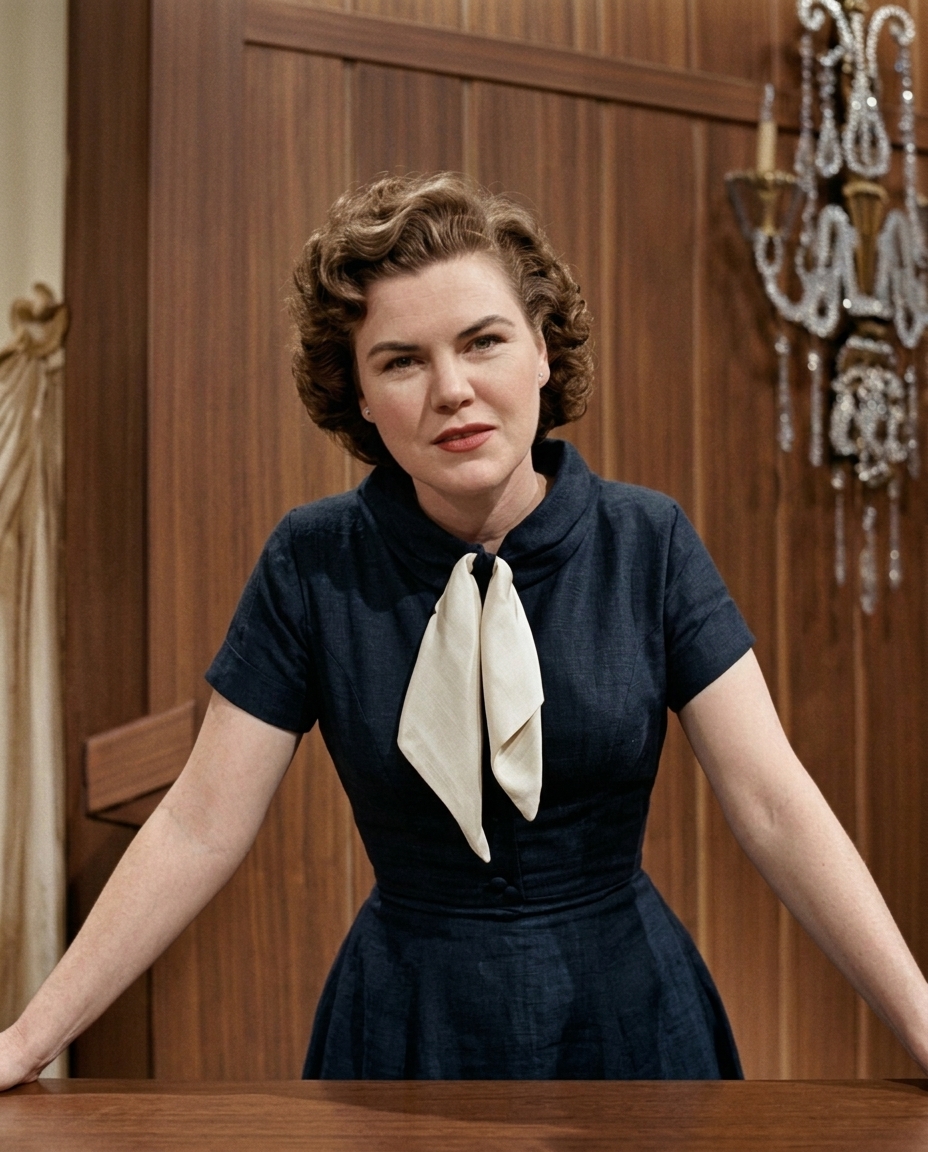
The Night Patsy Cline Walked Onto the Stage and Changed Everything
“I can’t do it, Mama.”
The words came out as a whisper.
Backstage at the Arthur Godfrey talent show on January 21, 1957, 24-year-old Patsy Cline stood frozen in the wings. The curtain was only a few feet away, but it may as well have been a thousand miles.
The stage lights pouring through the opening looked blinding. Beyond them sat a national television audience. Millions of people. Patsy Cline had spent most of her life singing in small clubs, local radio stations, and tiny Virginia dance halls. Just a few years earlier, Patsy Cline had been scrubbing floors in drugstores and working long hours to help her family survive.
Now, suddenly, everything rested on the next two minutes.
Patsy Cline later admitted she was terrified.
“I was scared to death.”
Her knees shook so badly she thought she might fall. Her hands felt cold. For a moment, Patsy Cline truly believed she could not walk out there.
Standing beside her was her mother, Hilda.
Hilda had been there through every hard year. Hilda had watched Patsy Cline sing in church as a little girl. Hilda had watched Patsy Cline leave school to help support the family. Hilda had watched Patsy Cline work jobs all day and then sing all night, hoping somehow that one day somebody would hear what she heard.
Now that day had arrived.
Patsy Cline looked at Hilda and whispered again that she could not do it.
No one knows exactly what Hilda said in that moment.
Patsy Cline never revealed it. Not in interviews. Not to friends. Not even years later, when people begged her to tell the story. Whatever Hilda whispered remained between mother and daughter forever.
But everyone who was there remembered what happened next.
Hilda placed a hand on Patsy Cline’s back and gently pushed her toward the curtain.
The young woman who stepped onto that stage looked calm from the outside. Inside, she was still terrified.
The announcer introduced Patsy Cline. The orchestra waited. For one long second, the room seemed completely still.
Then Patsy Cline made a decision that would change her life.
Instead of performing the safer ballad she had originally planned, Patsy Cline chose a new song. A strange, lonely, slightly mysterious song called “Walkin’ After Midnight.”
It was not an obvious choice. The song had only recently been written. Even some people around Patsy Cline were unsure about it. But something about the melody fit her voice. It carried sadness, longing, and quiet strength all at once.
As Patsy Cline began to sing, the fear slowly disappeared.
The trembling in her hands faded. The nervous young woman from backstage vanished. In her place stood a singer who sounded older than her years, someone who could take a simple line and make it feel like the saddest thing in the world.
By the time Patsy Cline reached the chorus, the audience was silent.
Not distracted. Not restless. Silent in the way people become silent when they know they are witnessing something they will remember for the rest of their lives.
Then came the final note.
For a split second, there was complete stillness.
And then the theater exploded.
The applause came so hard and so fast that the Arthur Godfrey show’s famous applause meter could not handle it. The needle slammed all the way to the top. People kept cheering anyway.
The audience demanded that Patsy Cline sing the song again.
Three million people watching at home had just seen an unknown singer become a star in real time.
Everything changed after that night. “Walkin’ After Midnight” became Patsy Cline’s first major hit. Record labels suddenly wanted the singer they had barely noticed before. The young woman from Winchester, Virginia was no longer just another contestant on a television show.
Patsy Cline had become Patsy Cline.
Yet maybe the most powerful part of the story happened before the music ever started. A frightened daughter standing backstage. A mother who refused to let fear win. A few quiet words that stayed secret forever.
Whatever Hilda whispered, it was enough to carry Patsy Cline through the curtain — and into history.