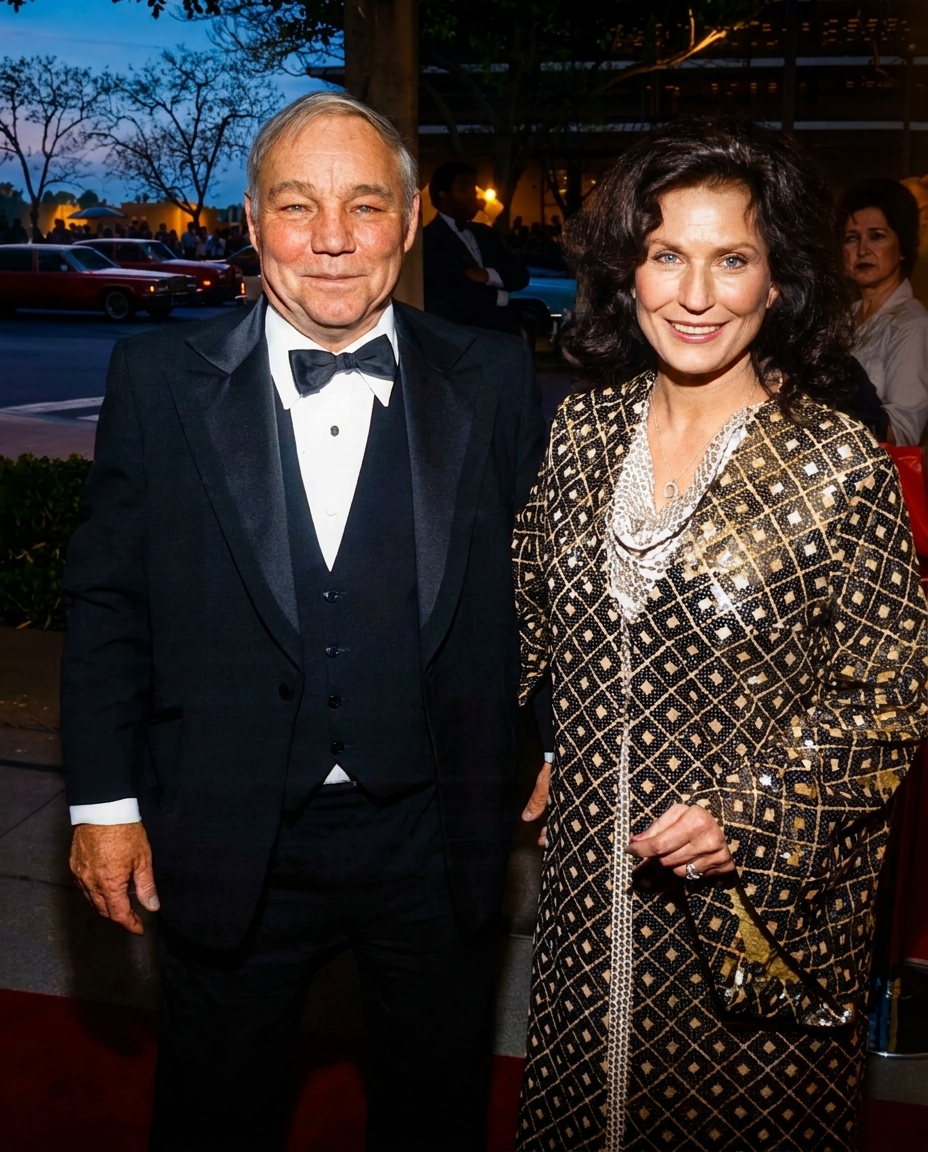
Loretta Lynn Turned a Difficult Marriage Into Country Music Truth
Loretta Lynn never tried to convince anyone that her marriage was perfect. Long before celebrities spoke openly about private pain, Loretta Lynn was standing on a stage telling the truth in front of thousands of people.
One of the most unforgettable things Loretta Lynn ever said about her husband, Doolittle “Mooney” Lynn, was simple and sharp: “He never hit me one time that I didn’t hit him back twice.” The line shocked people because it was so direct. But it also sounded exactly like Loretta Lynn — tough, stubborn, wounded, and determined not to be erased.
Loretta Lynn married Doolittle Lynn when she was still a teenager. By the time Loretta Lynn was in her twenties, she had several children, very little money, and a husband who could be loving one moment and impossible the next. Doolittle Lynn encouraged Loretta Lynn to sing, bought Loretta Lynn a guitar, and pushed Loretta Lynn toward music. But Doolittle Lynn also drank, argued, disappeared, and brought chaos into the house.
That complicated truth followed Loretta Lynn for the rest of her life. Loretta Lynn never pretended Doolittle Lynn was all bad. Loretta Lynn also never pretended the marriage was easy. Instead, Loretta Lynn did something far more powerful: Loretta Lynn wrote about it.
The Fights Became Songs
Many of Loretta Lynn’s most famous songs sound less like fiction and more like pages torn from a private diary.
“Fist City” was one of the clearest examples. The song was written after another woman showed too much interest in Doolittle Lynn. Instead of staying quiet, Loretta Lynn turned the anger into a warning set to music.
You better move your feet, if you don’t want to eat a meal that’s called Fist City.
The song was playful on the surface, but there was real fire underneath it. Listeners believed every word because Loretta Lynn sounded like someone who had actually stood in a kitchen, furious, with her heart breaking and her pride still intact.
Then there was “Don’t Come Home A-Drinkin’ (With Lovin’ on Your Mind).” That song captured a different side of the marriage: the exhaustion of waiting up for someone who came home late, drunk, and expecting everything to be fine.
When Loretta Lynn sang that song, women all over the country heard themselves in it. The words were plain. The frustration was real. There was no polished Hollywood version of marriage in that song. There was only a woman who was tired of being ignored.
“You Ain’t Woman Enough (To Take My Man)” came from the same place. It was another song born from jealousy, pride, and the constant pressure of protecting a marriage that never felt secure. Loretta Lynn did not sing like someone begging to be chosen. Loretta Lynn sang like someone drawing a line.
Why The Songs Felt Different
Country music already had heartbreak songs before Loretta Lynn arrived. But Loretta Lynn changed something important. Loretta Lynn wrote from the middle of the problem, not from a safe distance after everything was over.
Other singers often made pain sound elegant. Loretta Lynn made it sound honest.
There were songs about birth control, double standards, loneliness, cheating, and the pressure of being a wife and mother while trying to keep part of yourself alive. Nashville sometimes worried those songs were too blunt. Radio stations occasionally refused to play them.
But listeners loved them because the songs felt real. Women heard Loretta Lynn singing the things they whispered only to sisters and close friends. Men heard a woman speaking with a kind of strength that country music had not always allowed.
Loretta Lynn did not survive a hard marriage by pretending it did not hurt. Loretta Lynn survived by turning that hurt into something useful.
The Marriage Never Became A Fairy Tale
Loretta Lynn and Doolittle Lynn stayed married for nearly fifty years, until Doolittle Lynn died in 1996. The marriage never transformed into a neat love story with a perfect ending. There were still old scars, old arguments, and memories that never completely disappeared.
But there was also something undeniable: without that difficult, complicated marriage, some of the most honest songs in country music might never have existed.
Loretta Lynn once said that if Doolittle Lynn had not put Loretta Lynn through so much, there would not have been nearly as many songs.
That may be the strangest truth of all. Loretta Lynn took the hardest parts of life — anger, betrayal, fear, survival — and gave them back to the world as music. Not cleaned up. Not softened. Just true.