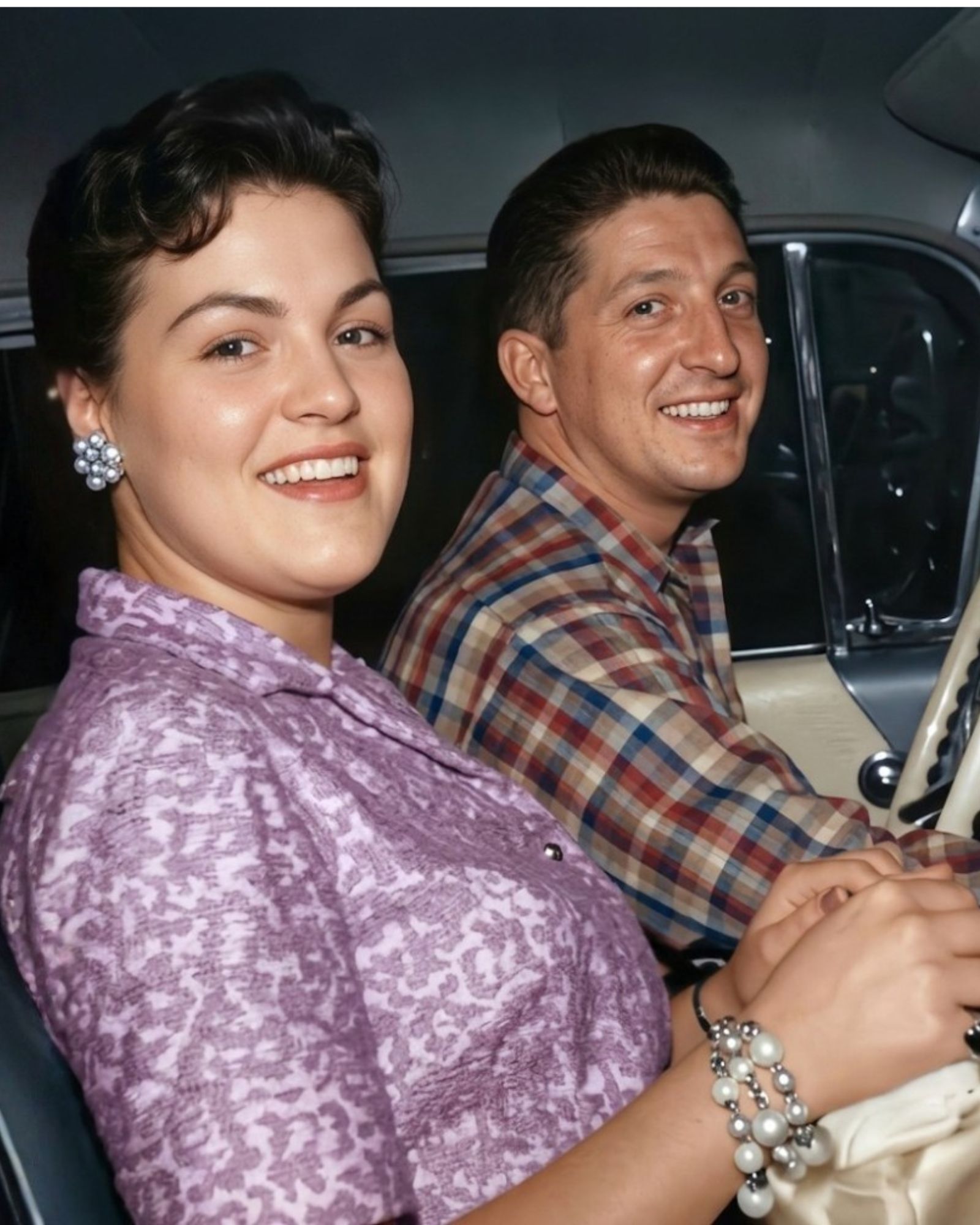
She Turned Him Down on the Dance Floor in 1956 — But One Year Later, She Married Him
It did not begin like a love story people would have predicted.
In 1956, in Winchester, Virginia, Patsy Cline was working a room filled with music, smoke, chatter, and the kind of restless energy that lived in dance halls of that era. Patsy Cline was not there to be swept away by a stranger. Patsy Cline was there to sing, to work, and to hold the attention of a crowd the way only Patsy Cline could.
Then Charlie Dick walked up and asked Patsy Cline to dance.
The answer was quick and cold. Patsy Cline shut it down with a line that became part of the legend: “I’m working!”
That should have been the end of it. A brief, forgettable rejection in a crowded room. But Charlie Dick was not the kind of man who backed away just because the first door stayed closed. There was something bold about Charlie Dick, something persistent that might have annoyed most people and somehow intrigued Patsy Cline instead.
Maybe it was the confidence. Maybe it was the fact that Charlie Dick kept showing up. Maybe Patsy Cline saw, underneath the stubbornness, a man who was completely taken with her before the whole world had fully caught up.
Whatever it was, the spark did not go out.
From a Hard No to a Fast Love
Within a year, Patsy Cline and Charlie Dick were married. It happened quickly, the way some great country stories do. There was no polished fairy tale around it. No perfect beginning. No gentle glide into domestic peace. What Patsy Cline and Charlie Dick built was real from the start, and real love is rarely neat.
The marriage brought joy, pressure, chaos, laughter, and strain all at once. Patsy Cline was not just a wife. Patsy Cline was becoming something much bigger: a voice people could not forget. As the records reached farther and the crowds grew louder, the balance inside the marriage became harder to hold steady.
Charlie Dick loved Patsy Cline deeply, but that love often came tangled with jealousy, pride, and fear. Fame changes the air around a person. It invites strangers in. It pulls time away. It turns private pain into public pressure. Patsy Cline was rising, and Charlie Dick was left trying to understand what it meant to be married to a woman the world wanted a piece of.
They argued. They made up. They hurt each other. They came back together. Then they did it again.
And through all of it, there was real devotion.
The Sound of a Life Being Lived
Patsy Cline did not sing like someone guessing at heartbreak. Patsy Cline sang like someone who had walked straight through it and came out carrying every bruise. That is part of why the voice still reaches people now. It never sounds borrowed. It sounds lived in.
Marriage, motherhood, touring, money worries, long nights, and emotional storms all fed the woman behind the microphone. Patsy Cline and Charlie Dick had two children, and in between the demands of family life and Patsy Cline’s exploding career, they kept trying to hold on to each other.
It was messy. It was passionate. It was often unstable. But it was never empty.
When Patsy Cline sang of longing, regret, and the kind of love that leaves marks, people believed every word. They still do. The power in Patsy Cline’s music did not come from polish alone. It came from experience. Every fight, every reunion, every moment of tenderness and disappointment seemed to find its way into that voice.
That may be why Patsy Cline never just sounded good. Patsy Cline sounded true.
After 1963, Everything Changed
Then came 1963, and with it, the kind of loss that freezes a story in place.
Patsy Cline died far too young, and when Patsy Cline was gone, the music world mourned a star. But Charlie Dick did not lose a symbol. Charlie Dick lost the woman from that dance hall, the woman who had once brushed him off, the woman who later built a life with him full of noise and tenderness and scars and devotion.
After that, Charlie Dick never remarried.
That single fact says more than a hundred polished tributes ever could. Life moved forward, but some part of Charlie Dick seemed to stay with Patsy Cline. For years, Charlie Dick carried the memory, the grief, and the unfinished conversation that only widowed love seems to understand.
There was also a quieter promise in the years that followed. Charlie Dick continued protecting Patsy Cline’s memory, speaking of Patsy Cline not as a perfect saint from a golden past, but as the real woman Charlie Dick had loved. Not flawless. Not easy. Just unforgettable.
That may be the promise most people never heard about. Charlie Dick kept Patsy Cline close, not by rewriting the truth, but by refusing to let the truth be forgotten. The fierce love. The difficult days. The laughter. The trouble. The bond that began with rejection and somehow turned into one of country music’s most haunting love stories.
A Love Story That Never Smoothed Itself Out
There is something strangely moving about the way it all started. Patsy Cline said no. Charlie Dick stayed interested anyway. A year later, they were married. Six years later, the story was cut short. And yet it never really ended.
Because when people listen to Patsy Cline now, they are not just hearing a great singer. They are hearing a woman who lived fully inside love’s contradictions. And somewhere in the background of that voice is Charlie Dick, the man from the dance floor who would not take one rejection as the final word.
Some love stories are beautiful because they are perfect. This one lasts because it was not. It was loud, complicated, tender, and unfinished.
And maybe that is why it still hurts a little to remember it.
Patsy Cline turned Charlie Dick down in 1956. One year later, Patsy Cline married Charlie Dick. The world got the songs. Charlie Dick kept the silence afterward. And in that silence, the love story somehow became even harder to forget.